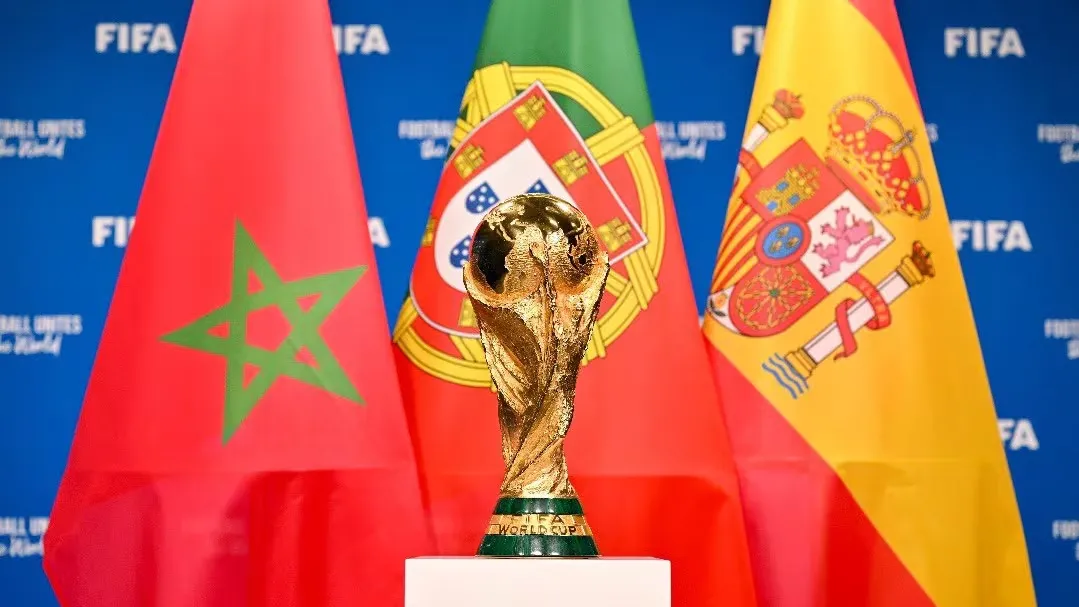

The Spanish journalist Roberto Gómez has revealed in the show "La Tribu" on Radio Marca that FIFA is set to conduct inspections of various Spanish facilities before the end of the year. Among the stadiums currently involved in preparations are renowned venues such as the Santiago Bernabéu, Metropolitano, Camp Nou, Mestalla, Gran Canaria, San Mamés, Reale Arena, and Stage Front Stadium. These inspections are crucial as they will determine the suitability of these locations for hosting the 2030 World Cup.
According to Gómez, the current trend suggests a distribution for the 2030 World Cup comprising 16 stadiums: eight in Spain, six in Morocco, and two in Portugal. However, this arrangement is not yet finalized, as the different venues will need to be meticulously evaluated and approved by FIFA, with a decision expected by the year's end. Gómez indicated that FIFA's delegation is likely to visit the three countries in late October, or possibly even earlier, to thoroughly assess the venues, pitches, and overall facilities.
In addition, Gómez announced a forthcoming visit from FIFA President Gianni Infantino to the Moncloa Palace for a meeting with Spanish Prime Minister Pedro Sánchez. While the exact date of this meeting has not been officially confirmed, it is expected to align with the institutional agenda related to the World Cup 2030 organization.
Spain's Potential Venues for the 2030 World Cup
Gómez has also outlined the eight Spanish venues still in contention for the project: Santiago Bernabéu, Camp Nou, Mestalla in Valencia, Gran Canaria, San Mamés in Bilbao, Reale Arena in San Sebastián, Metropolitano, and Stage Front Stadium of Espanyol. The Metropolitano Stadium, home to Atlético de Madrid, has garnered particular attention, as Gómez suggests it may undergo significant developments in the bid process and could "likely be reintegrated" into the list of selected Spanish sites for the World Cup. This prospect would further enhance Madrid's significance in the Spanish hosting framework.
Initially, Spain had proposed eleven stadiums across nine cities, including Camp Nou and Stage Front Stadium in Barcelona, San Mamés in Bilbao, Reale Arena in San Sebastián, Santiago Bernabéu and Metropolitano in Madrid, La Cartuja in Seville, La Romareda in Zaragoza, La Rosaleda in Malaga, Gran Canaria, and Riazor in La Coruña. However, the withdrawals of Malaga and La Coruña have been confirmed, primarily due to the high costs associated with renovation works. The absence of Seville and Zaragoza from Gómez's recent list has raised eyebrows, as no explanation has been provided for their potential exclusion at this time.
Awaiting the Final Decision
The fact that the 16 venues designated to host the World Cup still require inspection and evaluation underscores that the process remains open until final validation. As Gómez pointed out, "FIFA's visit will be crucial for assessing the condition of the stadiums and finalizing the definitive allocation for an event of historical significance for Spanish football." Meanwhile, Morocco is also making significant strides in its preparations, with the construction of the Grand Stade Hassan II progressing, along with other strategic facilities like the International Broadcasting Centre in Casablanca, which spans approximately 6.6 hectares.
This upcoming FIFA inspection tour could clarify one of the most contested aspects of this World Cup: the allocation of the final match. In recent weeks, Spain has been vocal in advocating for its candidacy. From the national team's coach Luis de la Fuente to RFEF President Rafael Louzán and Prime Minister Pedro Sánchez, the message has been consistent: Madrid aims to host the final match of the 2030 World Cup. "We won a World Cup in South Africa, we won a World Cup in the United States. It is high time that Spain wins a World Cup at home. We will do everything possible to make this happen, you can be sure of that. We have all the necessary conditions for the final to take place in Spain," asserted Sánchez. Rafael Louzán was even more emphatic, stating, "Where else would it be played if not in Spain?" The final decision now rests with FIFA, which must visit the venues, review the infrastructures, and finalize the World Cup 2030 stadium map before determining how to balance the ambitions of both Spain and Morocco for hosting the final.
As reported by sport.le360.ma.