
Spain Deploys Troops Following Migrant Crisis in Ceuta
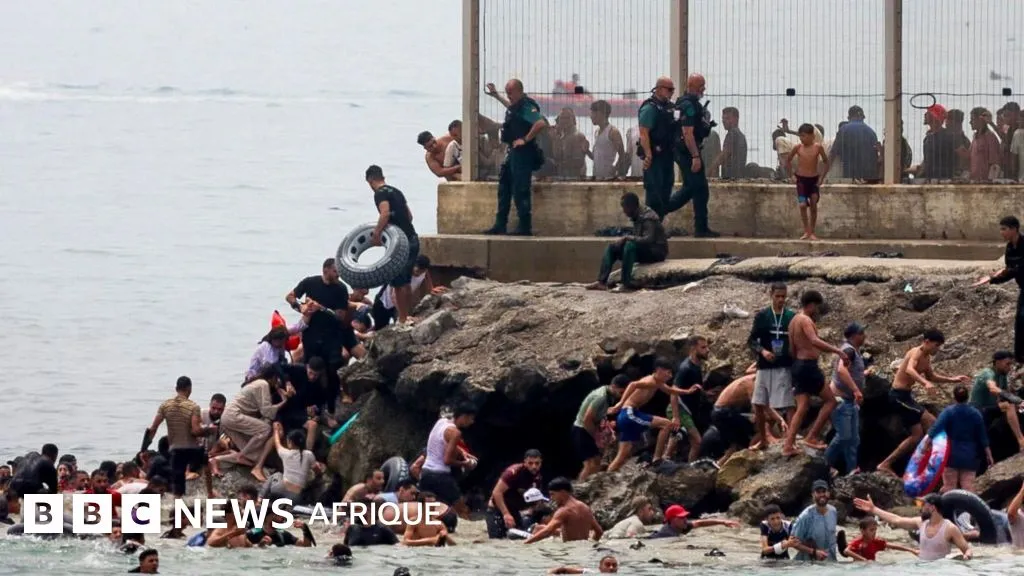
Spain has dispatched military troops to bolster security in its North African enclave of Ceuta after a sudden influx of thousands of migrants who swam across from Morocco on Thursday. Tragically, at least 18 individuals drowned during their perilous attempt to reach Ceuta. Local authorities had previously appealed to Madrid for assistance due to a spike in crossing attempts, but chaos erupted as border controls reportedly malfunctioned. This incident comes on the heels of a ruling by Spain's Supreme Court earlier this month, which stated that migrants intercepted at sea while attempting to reach Ceuta or Melilla (another Spanish enclave) cannot be summarily returned to Morocco.
The Spanish Interior Ministry has accused human trafficking networks of exploiting this crisis to encourage an increase in undocumented migration. In a statement, the ministry announced that military forces would reinforce the Civil Guard in maintaining order and security within Ceuta. Additionally, the ministry indicated that it is working closely with Moroccan authorities to ensure the swift return of all individuals who crossed into Ceuta.
Continued Tensions and Political Implications
Ceuta, located on Morocco's northern coast, is separated from mainland Spain by the Strait of Gibraltar and has long been a critical crossing point for migrants attempting to reach Europe. Alongside Melilla, Ceuta has historically been a contentious issue in diplomatic relations between Morocco and Spain, with Madrid asserting that these territories are integral parts of Spain, enjoying the same status as semi-autonomous regions on the continent.
Reports indicate that crossing attempts persisted through the night from Friday to Saturday, leading to clashes between police and migrants. Local authorities estimate that between 300 and 400 additional individuals crossed into Melilla from Morocco during this period. The Italian government has responded to this crisis by considering 'extraordinary measures,' including the potential suspension of the Schengen agreement with Spain, despite the absence of a shared land border between the two nations. As the number of migrants attempting to reach Ceuta surged, thousands descended concrete embankments to leap into the sea, swimming around the pier marking the border, which soon became littered with life jackets and flippers as some celebrated their arrival while others tragically drowned.
The surge in illegal crossings from Morocco has raised questions about the underlying causes and the extent of Moroccan authorities' efforts to curb this trend. Spanish Prime Minister Pedro Sánchez is expected to visit Ceuta on Friday, pledging to restore normalcy immediately. However, the local reception centers for migrants are overwhelmed, and local authorities are criticizing Madrid for its slow response.
Juan Jesús Vivas, the leader of Ceuta, has expressed that this influx is straining resources and has urged the Spanish government to intervene. This situation has also sparked a political dispute with Italy, where Prime Minister Giorgia Meloni has suggested suspending the Schengen agreement with Spain, emphasizing that uncontrolled illegal immigration poses a significant threat to Europe’s border security. These remarks were echoed by Italian Foreign Minister Antonio Tajani earlier in the day. In response, Spanish Foreign Minister José Manuel Albares accused Tajani of politicizing immigration issues and described such statements as inappropriate for a partner nation expected to show European solidarity instead of partisan demagoguery.
As reported by bbc.com.