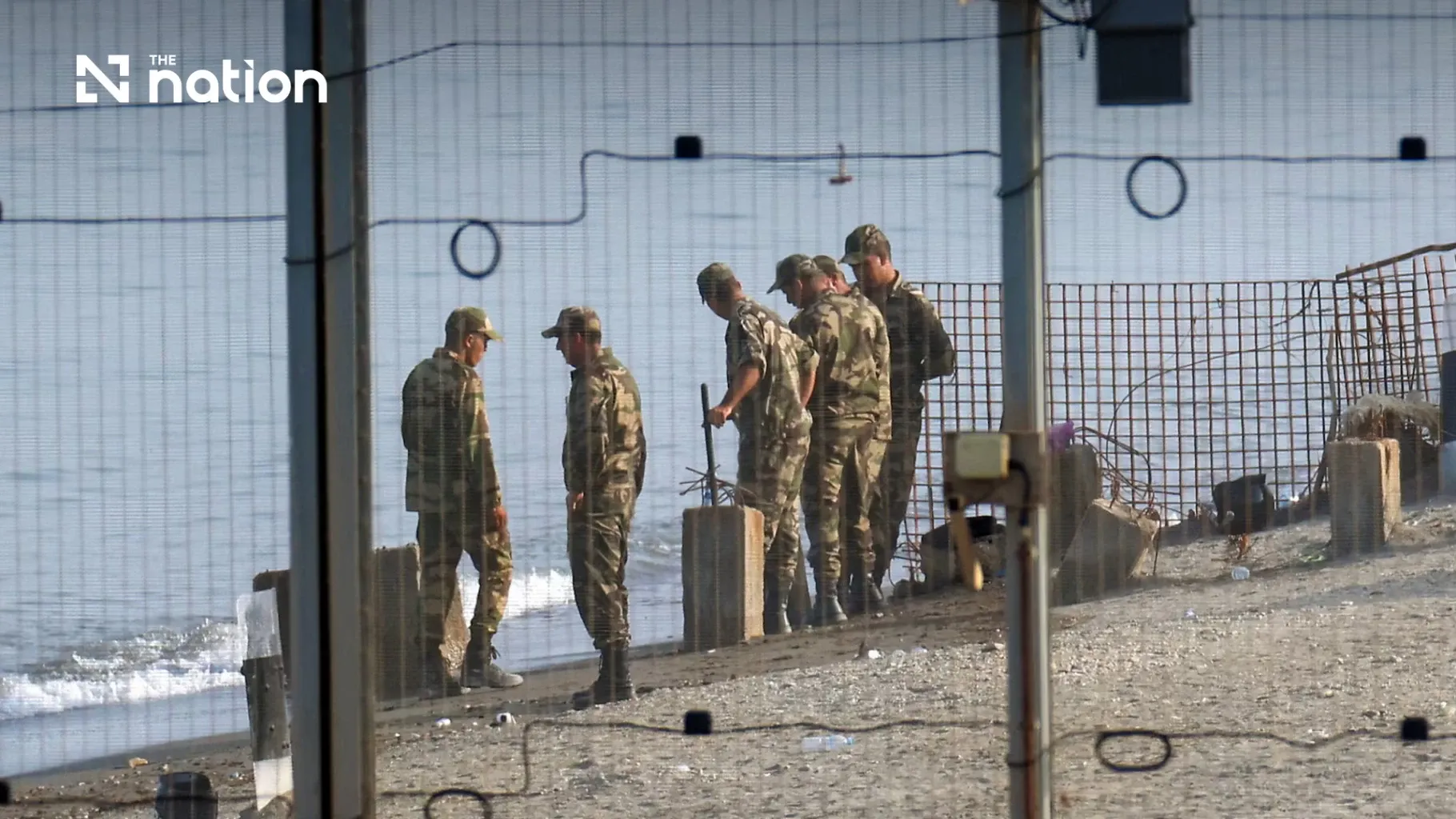

In response to a surge in migrant crossings, Spain has significantly bolstered its security measures in the North African enclave of Ceuta. This comes after social media messages suggested that migrants should attempt another mass border crossing on August 15, just two weeks following a chaotic event during which tens of thousands entered Ceuta from Morocco. On Friday evening, the Spanish government deployed military personnel around supermarkets and government buildings, while local police increased their patrols throughout the enclave. In total, Spain has dispatched over 500 additional police officers from the mainland, with the Interior Ministry indicating that these reinforcements will remain in place for as long as necessary to maintain order.
The recent security measures were prompted by the alarming events of July 30, when more than 72,000 individuals crossed into Ceuta, resulting in at least 96 fatalities during the perilous attempts, as reported by Spanish government estimates cited by Reuters. In the aftermath, Spain has not only increased police presence but has also implemented a maritime barrier to further secure the area. Interior Minister Fernando Grande-Marlaska emphasized that the authorities would continue to deploy the necessary personnel to restore normalcy and prevent a recurrence of the tragic events witnessed last month. Currently, around 5,000 migrants remain in Ceuta, and Spanish officials have begun screening asylum applications, with the majority being rejected.
Grande-Marlaska further stated that those who entered Ceuta irregularly would generally not be permitted to stay, travel to mainland Spain, or obtain legal status, with exceptions only in cases of extreme vulnerability. Those without legal standing will be returned to Morocco. In parallel, Morocco has also intensified its security measures along its border, monitoring social media for calls to action regarding the upcoming mass crossing. The Moroccan Interior Ministry has warned that both organizers and participants could face legal consequences. Local reports indicate that heightened security measures have been implemented near Ceuta and Melilla, Spain's other North African enclave, including the installation of new razor wire along border fences. Moreover, authorities have prevented several groups from boarding transportation heading north from major cities.
In light of the challenges faced during the crossings, some young Moroccans who successfully navigated the perilous journey have cautioned others against attempting similar crossings. Driss Sadik, a 22-year-old from Fez, recounted his five-hour swim to Ceuta, urging others to reconsider their decisions due to the hardships they would encounter. Adil Jamil, a 17-year-old who also participated in the mass crossing, shared that while there may be few opportunities upon arrival, the desire for a better future drives many to take the risk. The crisis has exacerbated divisions within the European Union regarding migration policies and has fueled anti-immigration sentiments among far-right factions. Notably, most individuals who entered Ceuta during the crisis eventually returned to Morocco voluntarily.
The motivations behind the attempts to reach Ceuta are deeply rooted in economic hardship, limited opportunities, and the spread of misleading information through social media. Reports indicate that many young Moroccans spend years seeking migration opportunities, grappling with poverty, inadequate public services, and scarce employment prospects. Official data highlights that approximately a quarter of Moroccans aged 15 to 24 are neither engaged in education, employment, nor training. Interviews with migrants reveal that many see the chance to reach Europe as an opportunity for personal improvement or to support their families. Seventeen-year-old Adil Jamil reflected on the risks of migration, stating that the journey represents a chance to build a future that he feels is unattainable in his homeland. This surge in crossings has been further fueled by social media posts regarding a Spanish court ruling that limits immediate pushbacks of migrants intercepted at sea. While this ruling does not guarantee the right to remain in Spain, it has led some to believe that swimming to Ceuta could prevent their immediate return. Spanish authorities attribute the increase in crossings to criminal networks that exploit the ruling and disseminate false information, while officials have noted that the growing online presence and videos of successful crossings have motivated more individuals to attempt the dangerous journey.
As reported by nationthailand.com.