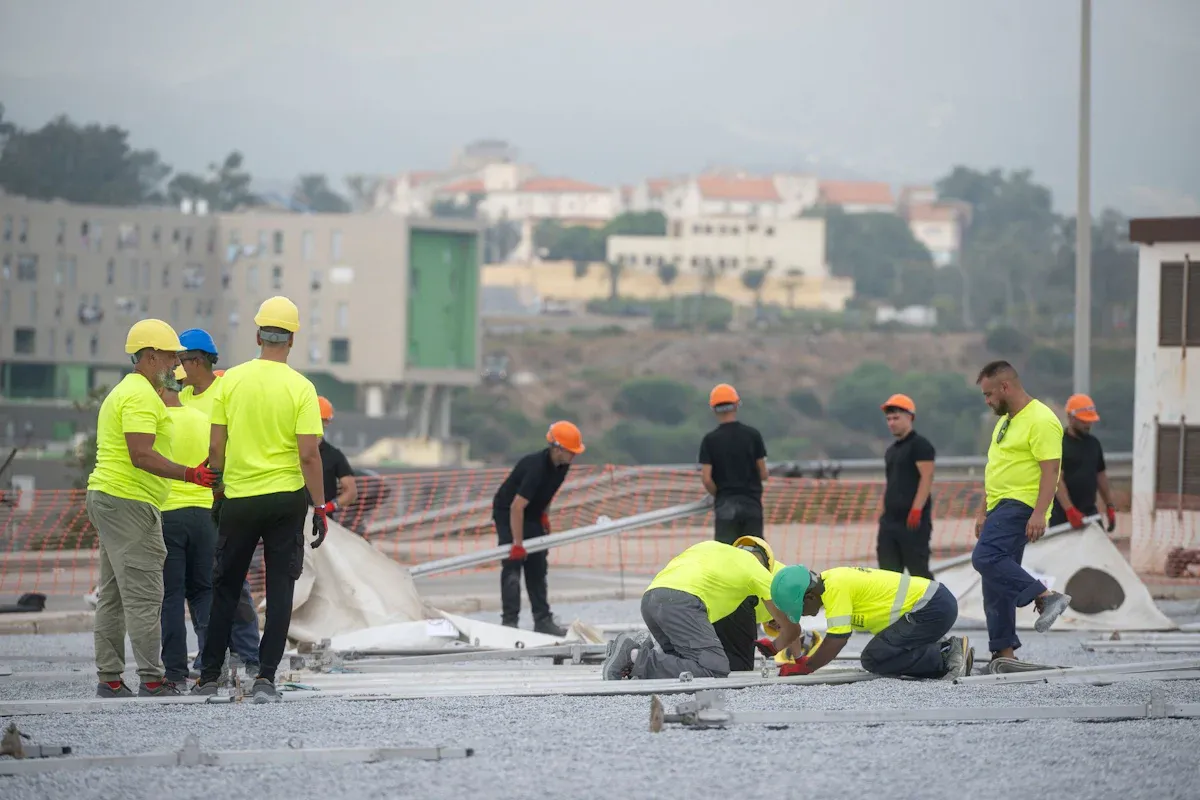

Spain's Central Government Assumes Control Over Ceuta's Migrant Camp
In a significant move that has raised eyebrows and sparked local dissent, the Spanish central government has taken control of the port area in Ceuta, a Spanish enclave located in North Africa, to establish a temporary migrant camp. This decision comes amid ongoing tensions regarding the management of migrants in the region, particularly following a surge in arrivals over the summer months. Transport Minister Óscar Puente signed the order that permits the setup of a tent camp specifically designated for migrants, circumventing opposition from local authorities who have vehemently opposed such measures, citing concerns over the port's critical role in supplying the enclave and its proximity to a large fuel depot.
The regional government, led by President Juan Jesús Vivas, expressed strong disapproval of the proposal, arguing that the construction of the camp would jeopardize both the local economy and safety. They have previously rejected alternative accommodation options such as repurposing a decommissioned factory, an old military hospital, and sports centers for temporary housing of migrants. Protests have also erupted in various neighborhoods, including Los Rosales, where another facility is being developed to accommodate approximately 900 individuals.
Rising Tensions and Local Protests
The backdrop to these developments includes a remarkable influx of migrants, with around 72,000 individuals reportedly arriving in Ceuta from Morocco over the course of two days at the end of July. While many returned shortly after crossing, around 5,000 remained, with 1,200 of them being minors. This situation has understandably incited frustration among the local population, which numbers just over 83,000 residents, leading to demonstrations and, alarmingly, instances of violence directed at migrants. Many locals, supported by the regional administration, are calling for immediate deportations back to Morocco, despite Spain's legal obligation to conduct extensive individual assessments of each case, a process that is often lengthy and complicated.
The Spanish government, under the leadership of Prime Minister Pedro Sánchez, is currently facing considerable pressure to handle the migration crisis effectively. Doubts have been raised regarding the government's claims that the Moroccan authorities played no role in the sudden surge of arrivals, adding another layer of complexity to an already fraught situation.
As reported by sueddeutsche.de.