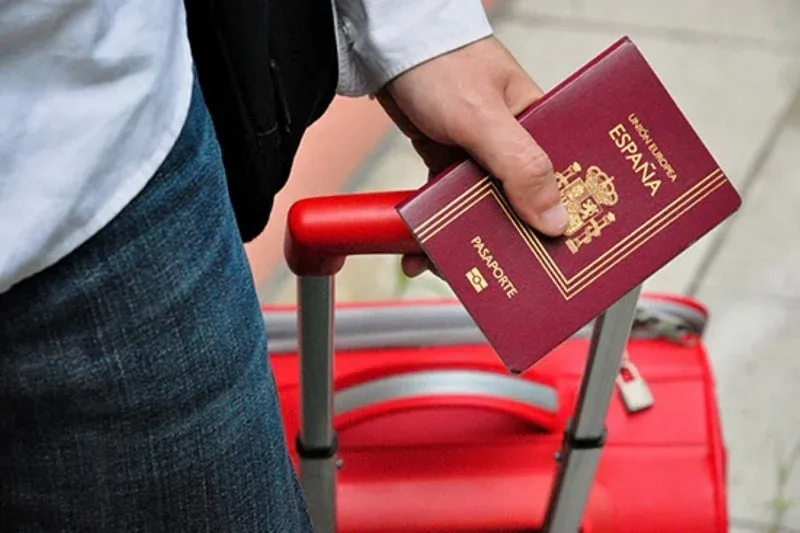

A recent vote in Spain's Congress of Deputies regarding a legislative proposal aimed at simplifying access to Spanish citizenship for specific Sahrawi individuals has reignited significant political and legal discussions concerning Spain's historical governance of the territory and its present-day connections with Morocco. The bill successfully advanced through a critical stage in Congress, garnering the support of 168 lawmakers, while 31 voted against and 147 opted to abstain. This initiative is rooted in Spain's historical ties to the region, proposing a pathway for eligible Sahrawis born during the period of Spanish administration to acquire Spanish citizenship under certain conditions, with provisions also extending to their descendants.
The implications of this vote have reignited debates surrounding the legal ramifications of Spain’s colonial past, raising crucial questions about how these historical ties should shape contemporary citizenship policies. Furthermore, it has unmasked the political rifts within Spain itself. The Socialist Party, despite its earlier opposition to the bill during the legislative discussions, ultimately shifted its stance to support it. Conversely, the conservative People's Party chose to abstain from the vote, while the far-right Vox party opposed it, highlighting the deep-seated divisions that exist within Spanish politics regarding the Moroccan Sahara and Spain's historical involvement in the region.
In the backdrop of this vote, Morocco's Foreign Ministry issued a statement that criticized certain views expressed by various Spanish political and media figures, while simultaneously reaffirming its commitment to maintaining amicable relations and a strategic partnership with Madrid. Over recent years, Morocco and Spain have bolstered their collaboration on multiple fronts, including trade, security, and migration. However, the introduction of this citizenship bill has sparked concerns regarding whether Spain's colonial history will predominantly be treated as a matter of individual rights and legal status or if it will escalate into a more pronounced issue in the domestic political arena.
Political Divisions in Spain
Al Arbi Nass, a Moroccan military expert and former member of the Polisario, remarked that the initiative had been under consideration for several years, initially linked to Podemos during the previous government and later championed by Sumar. He contended that the legislative journey of the bill has been largely influenced by the shifting dynamics of Spanish domestic politics, rather than recent developments concerning the Moroccan Sahara. Nass noted that the Socialist Party had initially weighed the potential repercussions for Morocco but later faced pressure from Sumar, whose backing was crucial for sustaining the governing majority. This interplay of political interests contributed to delays in the bill’s progress, further evidenced by the People’s Party's decision to abstain, a notable shift from their previous support for the initiative.
In addition to abstaining, the People’s Party attempted to introduce amendments during the Justice Committee's discussions, signifying the broader political contest surrounding the legislation. Although the Congress of Deputies has approved the bill at this pivotal stage, it is essential to note that additional legislative processes remain, with the Senate set to play a critical role in the bill's future.
Morocco's Response and Broader Implications
Regarding Morocco's reaction, Nass characterized it as a measured response, although he argued that Rabat's stance was somewhat delayed. He explained that Morocco’s Foreign Ministry had referenced Spanish legislative actions that could potentially impact bilateral relations, while also acknowledging that Morocco allows dual citizenship. Nass emphasized that seeking Spanish citizenship does not necessarily equate to endorsing specific political positions or separatist agendas. He argued that Sahrawis, similar to other Moroccan nationals, might pursue Spanish citizenship for practical reasons, such as enhancing their residency options or employment opportunities.
Additionally, he pointed out that Spain's citizenship legislation includes provisions that address historical ties involving individuals from former Spanish territories, suggesting that Sahrawis should not be automatically linked to separatism simply because they are potentially eligible for Spanish citizenship. Salek Rahal, spokesperson for the Sahrawis for Peace Movement, framed the initiative as part of Spain's broader efforts to address historical memory and citizenship rights for individuals connected to former Spanish territories. Rahal asserted that the legislation could offer eligible Sahrawis residing in the Tindouf camps in Algeria a new legal pathway to solidify their links with Spain and possibly leave the camps, which are reportedly heavily controlled by the Polisario Front, particularly in terms of documentation and travel arrangements for those wishing to travel to Spain.
He posited that access to Spanish citizenship could alter the existing dynamics within the camps and speculated that the measure could have significant implications for the Polisario Front by clarifying the backgrounds and origins of the camp's inhabitants. Thus, the bill's passage at this juncture not only extends the discourse surrounding citizenship rights but also delves deeper into Spain's colonial legacy, domestic political schisms, and the ongoing dispute over the Moroccan Sahara.
As reported by en.hespress.com.