
Since 1947, Spain has maintained control over the airspace of Western Sahara, a situation that persisted even after its withdrawal from the territory in 1976, which was initially viewed as a provisional solution. However, this control began to wane in 2022 when the Spanish government, led by Pedro Sánchez, publicly supported Morocco's autonomy plan for the region. This shift has allowed Rabat to quietly strengthen its air control, consolidating its occupation of the territory and jeopardizing the future of the Sahrawi people as well as the safety of air operations in the area.
Spain's Management of Airspace It Does Not Own
Spain became a member of the International Civil Aviation Organization (ICAO) in 1947, the United Nations agency responsible for overseeing global air traffic control. At that time, Western Sahara was part of what was known as Spanish West Africa, and its airspace was incorporated into the Flight Information Region (FIR) of the Canary Islands. This region is one of three managed by the Spanish state, alongside Madrid and Barcelona, through the public entity Enaire. Following Spain's exit from Western Sahara in 1976 via the Tripartite Agreement of Madrid, which transferred administrative control to Morocco and Mauritania, the United Nations did not recognize the treaty. The UN regards Western Sahara as a non-autonomous territory still pending decolonization, with Spain as the administering power. Consequently, the ICAO decided that Spain would continue to manage the airspace until the sovereignty issue was resolved. It is not uncommon for one state to manage part of another's airspace; for instance, agreements exist between the United States and Canada, as well as between Spain and Portugal, aimed at operational efficiency.In March 2022, Spanish Prime Minister Pedro Sánchez sent a letter to King Mohammed VI, announcing a historic shift in Spain's stance on Western Sahara by recognizing Morocco's autonomy plan as "the most serious, realistic, and credible basis" for resolving the conflict. Shortly thereafter, both governments formalized their new relationship framework with a joint declaration that reiterated this support and established a sixteen-point roadmap. Notably, the seventh point, which received little attention, indicated that Spain and Morocco would initiate "conversations regarding airspace management." However, the issue has escalated. In 2024, several parliamentary groups in the Senate inquired whether Spain planned to cede control of Western Sahara's airspace. The government referred back to the seventh point of the discussions, with Foreign Minister José Manuel Albares dismissing the concerns as "strange conspiracy theories." The situation intensified with leaks indicating that the Ministry of Transport was seeking to transfer the management of air navigation services in the Sahrawi airspace to Morocco. In response, the Congress of Deputies approved a non-binding proposal by the Popular Parliamentary Group to prevent any transfer of air control to Rabat. Although delegating operational management does not equate to relinquishing sovereignty, as the government argues, the case of Western Sahara is unique: Spain administers this airspace solely as a provisional measure amidst an ongoing decolonization process.
Morocco's Ground Advances
Despite the status quo, Morocco has made strides in asserting control over Western Sahara's airspace following Spain's shift in policy. Internal documentation from Aena, the public company responsible for managing airports and air navigation, revealed in 2024 that Morocco had established four "danger zones" within the Canary FIR. These areas are designated for activities, typically military, that pose risks to other aircraft, and Rabat unilaterally included them in its aeronautical manual. Consequently, Morocco was estimated to control between 15% and 20% of the Sahrawi airspace.This de facto control is supported by a technical vulnerability. There is no radar coverage over the Sahara and the ocean south of the Canary Islands, leaving only radio communication, a more limited system where pilots must report their positions verbally. In a 2025 interview, a Spanish air traffic controller in the Canary Islands explained that to contact the control towers of El Aaiún or Dajla—two major coastal cities in occupied Western Sahara—Spanish controllers must first reach out to the Moroccan control center in Agadir. This is no small area; it spans approximately two hundred nautical miles wide, extending to three hundred miles in some sections and four hundred miles from north to south, a region comparable to covering the Iberian Peninsula.
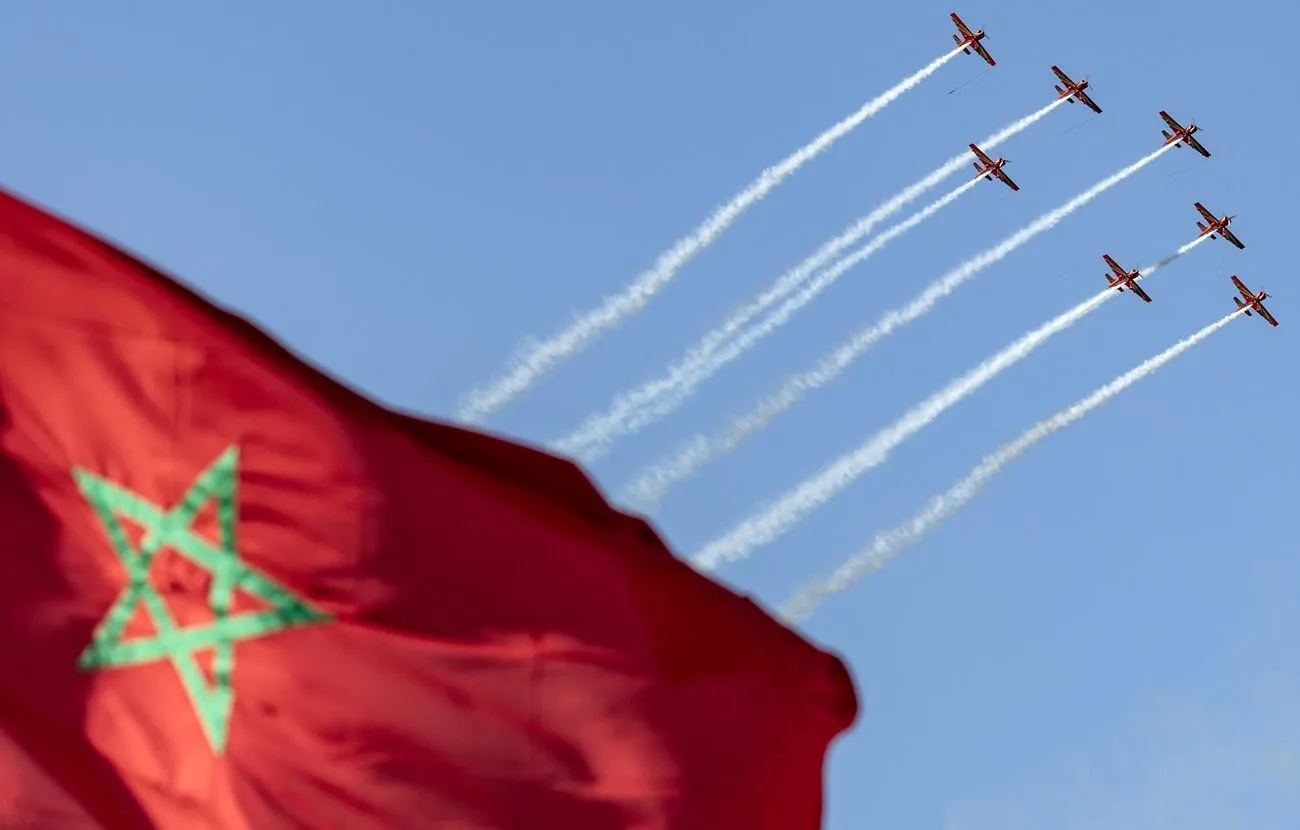
Morocco has capitalized on this gap to construct its own infrastructure. Both El Aaiún and Dajla now have operational control towers, with new construction underway in Smara. A more glaring example of this silent control is the use of military drones by Morocco, which have been employed in attacks against the Polisario Front and have also resulted in civilian casualties among the Sahrawi population. In 2023, Enaire acknowledged in response to a query that these unmanned flights, due to their low altitude, are managed by Moroccan towers without passing through the Canary control center, thus leaving this military usage beyond Spanish oversight.
Giving up control over Western Sahara's airspace would not merely be a technical procedure for Spain. It would disregard the will of the Polisario Front, recognized by the UN as the representative of the Sahrawi people, and would effectively acknowledge Moroccan sovereignty that international law does not support. Moreover, it would jeopardize navigation safety; a territory already devoid of radar and with gaps in air rescue capabilities would fall under the control of a state that also utilizes it for military purposes. Additionally, the airspace permits monitoring of maritime traffic and fishing activities in adjacent waters, meaning that losing this control would weaken Spain's position in the Canary Islands and along a route connecting Europe, Africa, and America.
Regardless of how diplomatic negotiations unfold, Morocco has already taken the initiative. Rabat has employed a similar strategy of fait accompli in fishing and agriculture agreements with the European Union, which were annulled by the EU Court of Justice in 2024 due to the lack of Sahrawi consent. A similar dynamic exists regarding migration: Spain finds itself in a compromised position, as pressing Morocco to adhere to international law risks retaliation in migration or information-sharing contexts. Furthermore, in the military sphere, Morocco has tightened its cooperation with the United States and Israel, both of whom recognize its sovereignty over Western Sahara. The airspace remains another crucial piece in this geopolitical puzzle, where the pattern of faits accomplis has been consolidating for years across land, sea, and air.
As reported by elordenmundial.com.