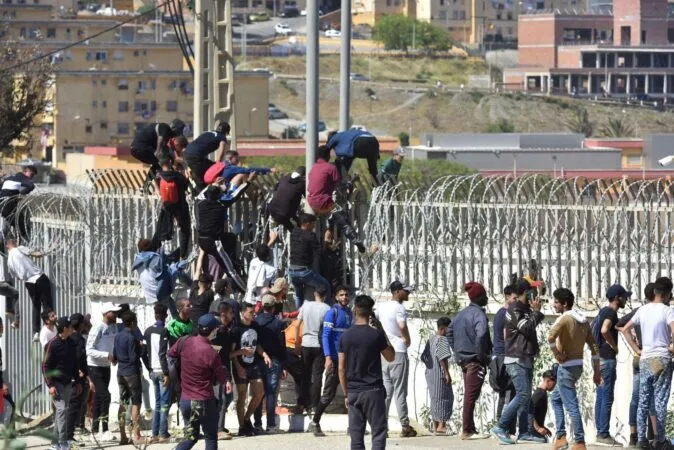

The Spanish authorities have recently undertaken the repatriation of several Sudanese migrants from the city of Ceuta back to Morocco via the Tarajal crossing. This operation involved migrants who had entered the city by swimming across the sea, as reported by the local newspaper, El Faro de Ceuta. Upon their arrival in Morocco, the migrants were required to sign declarations that included their identity details and an acknowledgment that they had crossed into Ceuta by sea prior to their repatriation by Spain.
According to the same source, these declarations included a commitment from the migrants not to attempt crossing again, along with an affirmation that they had not been subjected to mistreatment or acts of violence that would undermine their dignity. In recent weeks, numerous Sudanese migrants have faced repatriation after undergoing a screening process. Spanish authorities assert that those involved in these repatriation operations had not submitted requests for international protection.
The Spanish government maintains that these repatriation efforts are conducted in accordance with the legal procedures in place. However, the Spanish Interior Minister, Fernando Grande-Marlaska, has yet to provide a detailed official report regarding the various aspects of the operation involving groups of migrants who arrived in Ceuta via the Tarajal maritime barrier. Notably, these migrants are being returned to Morocco rather than their countries of origin, with official Spanish sources confirming that the repatriation processes do not include applicants for international protection.
In related developments, the Spanish government is working on an exceptional law decree aimed at expediting the repatriation of migrants currently in Ceuta back to Morocco, following a significant influx observed on July 30 and 31. According to published data, the government intends to present the text to the Cabinet, which includes amendments to asylum procedures with the goal of reducing the administrative and judicial timelines associated with these cases.
During a visit to Ceuta, Marlaska indicated that the government seeks to shorten the waiting periods that can currently extend up to 12 weeks. Several Spanish ministries are involved in preparing this project, with the Ministry of the Interior spearheading the initiative, aiming to navigate the legal complexities that hinder repatriation efforts, particularly when an application for international protection is under review or appeals are still pending.
As reported by alyaoum24.com.