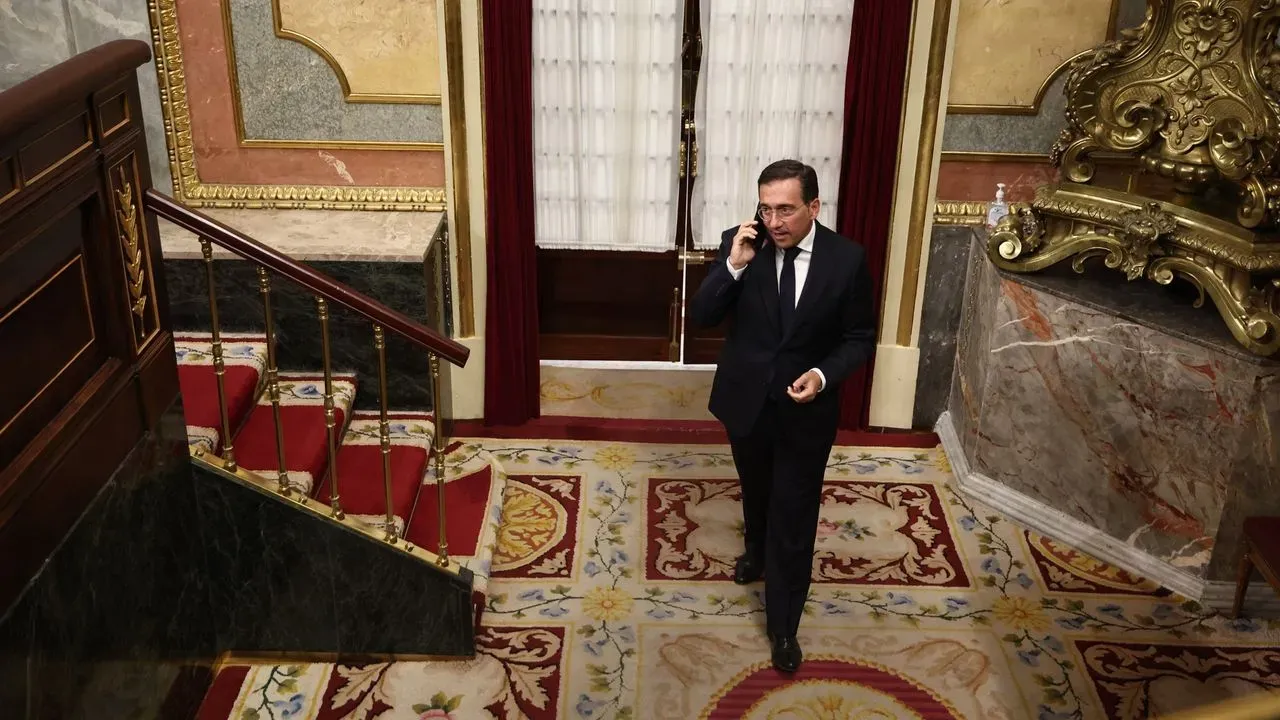

The Spanish Foreign Minister, José Manuel Albares, was engaged in a phone conversation during a session at the Congress of Deputies, as tensions between Spain and Morocco have escalated. The Moroccan government has made persistent claims over the autonomous cities of Ceuta and Melilla, particularly following the illegal entry of over 70,000 individuals from Moroccan territory into Ceuta within a month. This situation has compelled the administration of Prime Minister Pedro Sánchez to rethink its diplomatic approach towards Rabat, adopting a more assertive stance in its responses. The Spanish Foreign Ministry has indicated that recent statements from Moroccan officials, including those from Minister of Public Works and Water, Nizar Baraka, are detrimental to the bilateral relationship and have led to the formal summoning of the Moroccan ambassador to Spain on August 21.
According to officials, "There has never been, nor will there ever be, discussions regarding the territorial integrity of Spain with Morocco. Such declarations from Moroccan ministers undermine our bilateral relations," they asserted. This statement follows revelations made by Sánchez during a recent congressional appearance where he disclosed that the Moroccan ambassador had been called in, although the meeting was ultimately with the chargé d'affaires due to the absence of Ambassador Karima Benyaich. The Foreign Ministry firmly stated, "Ceuta and Melilla are Spain and will always remain so." This shift in tone marks a significant change in how Spain addresses Morocco, especially since the onset of the migration crisis on July 30 and 31, exacerbated by repeated Moroccan claims over the two cities.
In the wake of the crisis, Spanish Justice Minister Abdelatif Ouahbi boldly declared, "They are our lands," emphasizing that there are Moroccans residing in the autonomous cities and expressing Rabat's patience in dealing with the issue. Furthermore, Ahmed Toufiq, Morocco's Minister of Religious Affairs, reiterated sovereignty claims over Ceuta and Melilla during a religious event with King Mohammed VI, invoking a "sacred struggle to liberate the occupied cities." Following Sánchez's declaration that the integrity of Spain's territory is a non-negotiable red line, Baraka reaffirmed his country's position, asserting, "We state frankly: Spain is an essential partner for us, but we will not yield an inch of our national territory."
Sánchez's recent statements reflect a necessity to recalibrate Spain's posture towards Morocco, not only due to these persistent sovereignty claims but also in light of intelligence reports suggesting Moroccan involvement in the surge of illegal migration into Ceuta. During his address, Sánchez referenced the historical significance of the lions guarding the Congress entrance, cast from captured cannons during the War of Africa against the Moroccan sultanate. Although he distanced the Moroccan regime from the events in Ceuta, citing a lack of concrete evidence, he assured that if Moroccan responsibilities are confirmed, decisive action will be taken.
Moreover, Sánchez has shifted from emphasizing Morocco's cooperation in migrant repatriation efforts to recognizing the need for a review of shared coordination and alert mechanisms. He acknowledged the necessity of establishing additional guarantees to prevent a repeat of the incidents experienced in late July. "We want to maintain a good-neighbor relationship with Morocco, but it is evident that, after what occurred, such cooperation must change," Sánchez confessed before Congress, describing the events in Ceuta as a "hybrid attack." This evolving narrative underscores the complexities of Spain's diplomatic relations with Morocco, particularly concerning issues of migration and territorial integrity.
As reported by lavozdegalicia.es.