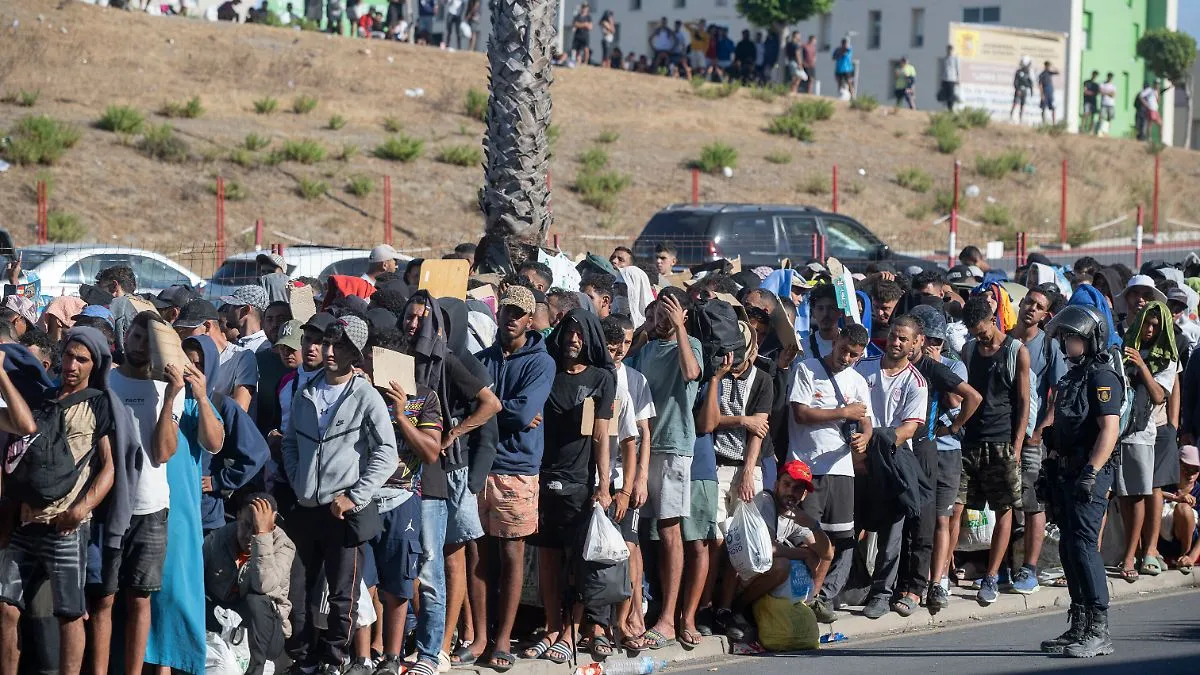

The situation in Ceuta is placing significant pressure on the Spanish government as thousands of migrants continue to remain in the Spanish exclave following their arrival from Morocco. In response, Madrid has announced plans to expedite the return of these migrants, while also seeking assistance from the European Union (EU).
The Spanish government is determined to accelerate the repatriation of thousands of migrants who have been in Ceuta since the massive influx from Morocco at the end of July. To facilitate this, the cabinet has established a central coordination office led by Territorial Minister Ángel Víctor Torres, as stated by government spokesperson and Migration Minister Elma Saiz.
This new office aims to ensure that state authorities and the administration in Ceuta work more closely together to manage the crisis effectively. The remaining migrants will first need to be identified, after which their eligibility for asylum or other forms of international protection will be assessed. Should they not qualify, repatriation procedures can then be initiated.
Minister Torres emphasized that the priority is to ensure the "return and repatriation of the maximum number of individuals, both adults and minors." However, it is crucial that this process adheres to legal frameworks and human rights standards, particularly regarding unaccompanied minors, who are subject to specific protective regulations.
In parallel, Spain has requested emergency funds from the EU Commission. A spokesperson for the Commission confirmed that the formal request was received the day before and will be prioritized for a swift decision. Madrid is specifically seeking support for enhanced border security and infrastructure, as well as additional accommodation capacity, including for unaccompanied minors.
The EU Commission welcomed the enhanced coordination among Spanish authorities, asserting that the rapid return of all individuals illegally residing in Ceuta is a priority. Brussels is also prepared to offer further assistance to Spain through EU agencies.
On July 30 and 31, more than 70,000 migrants arrived from Morocco in Ceuta, with most returning afterward. However, the Spanish government estimates that between five to ten percent of them, approximately 3,500 to 7,000 individuals, still remain in the exclave.
Last week, the government announced the establishment of reception centers with a total of 1,800 places, with plans to create additional facilities. Ceuta and Melilla are the only areas of EU territory that share a land border with Africa. Right-wing and far-right opposition parties in Spain are demanding the repatriation of all individuals who entered the country, including minors.
As reported by n-tv.de.