
Spain's Unprecedented Inquiry into Defense Preparedness
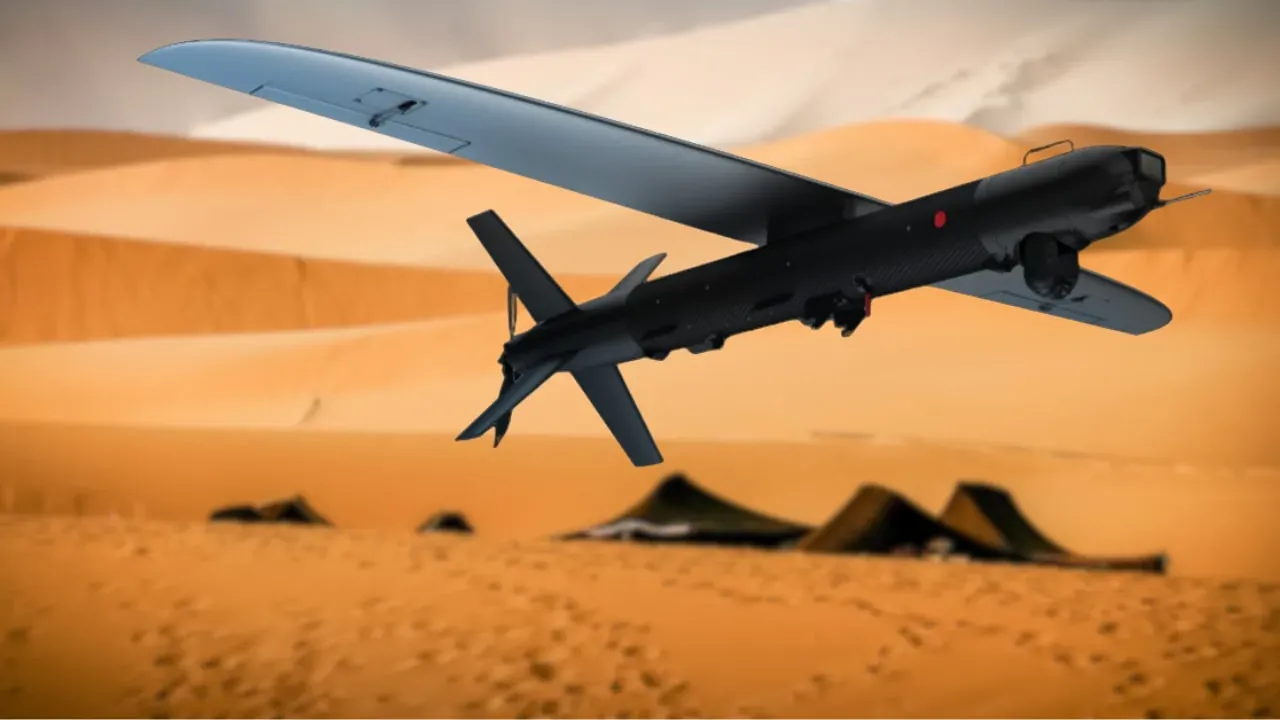
In late May 2026, the Spanish parliament was presented with an unusual inquiry from the far-right Vox party, raising a significant question regarding Spain's readiness to counter a potential Moroccan attack employing Israeli-designed SpyX suicide drones. These drones are currently being manufactured domestically through a collaboration between Morocco's Royal Armed Forces and the Israeli firm, BlueBird Aero Systems. This inquiry, framed as a matter of national security, serves as an indicator of the changing defense landscape in the region. When a member of NATO's legislature must consider its capacity to defend against advanced weaponry produced by an ally across the Strait of Gibraltar, it signifies that the defense technology transfer initiated by the Abraham Accords has evolved from mere diplomatic discussions to a critical factor in regional power dynamics.
Diverging Defense Strategies: Morocco vs. Algeria
The fiscal year of 2026 has starkly highlighted the contrasting defense philosophies of Morocco and Algeria. Morocco has adopted a qualitative modernization strategy, allocating an impressive $17.1 billion toward advanced military technologies and the establishment of a domestic defense industry through partnerships with Israeli companies, including BlueBird Aero Systems. In contrast, Algeria has committed a staggering $25 billion to its military budget, which represents a significant 20.6% of its national budget and nearly 9% of its GDP. This military spending overshadows Algeria's combined education and health budgets and is being funded through a central government deficit that exceeds 10% of its GDP. Algeria now holds the second-highest defense spending ratio in the world, surpassed only by Ukraine, despite not currently being engaged in active conflict. The military buildup in Algeria is a direct response to the capabilities being developed by Morocco, which are heavily influenced by Israeli technology.
On the outskirts of Casablanca, Israel Aerospace Industries' subsidiary, BlueBird Aero Systems, has established a dedicated facility for the production of SpyX loitering munitions, marking the first such factory in North Africa and the Middle East outside of Israel. The SpyX systems are designed for portability, boasting an operational range of 50 kilometers, a loitering time of up to 120 minutes, and terminal speeds exceeding 250 kilometers per hour, equipped with a 2.5-kilogram warhead optimized for precision strikes against key military targets. This advancement is part of a broader multi-layered air defense strategy that integrates various systems, including Israel's Barak MX, China's FD-2000B, and Morocco's recent acquisitions of French Harpoon Block II missiles and American military platforms, such as F-16 fighter jets and AH-64 Apache helicopters.
While Algeria remains reliant on outdated Cold War-era Russian military equipment, Morocco is reaping the benefits of its strategic shift towards modernization and collaboration with Israeli technology. This shift is further complicated by the situation in Syria, where an Algerian brigadier general and approximately 500 soldiers were captured while fighting for pro-Iranian forces, allegedly receiving training from Iran’s Revolutionary Guard Corps and Hezbollah. Such developments provide Morocco with what it perceives as undeniable evidence of a threatening axis involving Iran, Hezbollah, and the Polisario Front, further justifying its decision to sever ties with Tehran in 2018.
The Algerian military establishment's decision to allocate a quarter of its national budget to defense, while simultaneously incurring a deficit that threatens to deplete foreign currency reserves in the coming few years, is indicative of a short-term political strategy aimed at demonstrating military strength in response to Morocco's Israeli-supported modernization. Algeria's procurement strategy is explicitly focused on countering Morocco's advanced capabilities, investing heavily in multi-layered air defenses, electronic warfare, long-range precision munitions, and anti-drone systems. In essence, Algeria is utilizing its significant military budget to develop countermeasures against systems that Morocco has only recently acquired, highlighting a rapid escalation in military capabilities fueled by the strategic shift initiated by the Abraham Accords.
The inquiry posed in the Spanish parliament, alongside Algeria's unprecedented defense budget, underscores a shared reality viewed from different perspectives. The defense technology transfer facilitated by the Abraham Accords has led to a transformative shift in military dynamics across the Maghreb region, prompting varied responses from regional powers. As this situation unfolds, Washington must recognize it not merely as a potential instability risk, but as a strategic success that requires further investment and engagement. The joint military work plan established between Morocco and Israel for 2026 exemplifies a commitment to sustained military dialogue, collaborative industrial projects, and strategic alignment against emerging threats. Morocco is increasingly being recognized as a crucial security partner for Israel on the African continent, warranting the formation of a formal trilateral security framework involving the United States.
Washington should commence discussions regarding Morocco’s access to advanced American military systems in line with its demonstrated reliability as a partner, while clearly articulating its stance in this evolving contest of military capabilities. As Algeria navigates a fiscal crisis driven by its defense spending aimed at countering Israeli weaponry, it is imperative for the U.S. to clarify its strategic alliances and support for partners aligned with its interests in the region.
As reported by jpost.com.