
Accusations of Disinformation Amid Migration Crisis in Ceuta
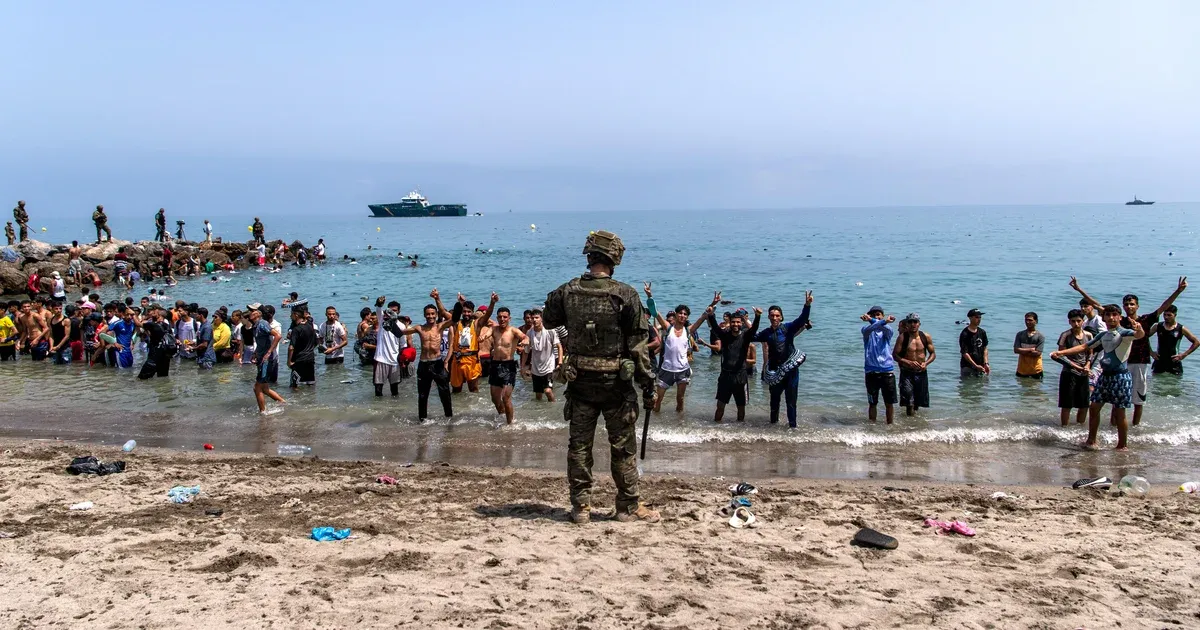
In a statement that has drawn significant international attention, Spanish Prime Minister Pedro Sánchez has accused networks connected to Russia and Israel of disseminating disinformation regarding the migration crisis in Ceuta, an autonomous Spanish territory located on the North African coast. Sánchez claims that these countries are leveraging the migration issue to retaliate against Spain's stance on the ongoing war in Ukraine and Israel's actions in the Palestinian Territories. The migration situation escalated dramatically on July 30 and 31, when over 72,000 migrants attempted to cross the border from Morocco into Ceuta, resulting in at least 70 fatalities during these perilous crossings. While the majority of these individuals were returned to Morocco, approximately 5,000 migrants remained in Ceuta at the end of August, including 1,200 minors, highlighting the urgent humanitarian implications of this crisis.
During an interview with Spanish radio network Cadena SER, Sánchez elaborated on the allegations of disinformation, stating that research conducted by the European External Action Service (EEAS) suggested connections between the social media networks spreading these false narratives and both Israeli and Russian operatives. He emphasized that the involvement of these nations in the disinformation campaign is not motivated by a genuine concern for migration in Spain or Europe, but rather as a reaction to Spain’s courageous political positions regarding the humanitarian crisis in Gaza and its firm opposition to the Russian invasion of Ukraine. Sánchez’s remarks come at a time when Spain has been a vocal supporter of Ukraine amidst the ongoing conflict, and he has also been critical of Israel's military actions in Gaza and the occupied West Bank.
International Reactions and the Broader Migration Debate
The response to Sánchez's comments was swift, with Israeli Foreign Minister Gideon Saar dismissing the allegations as “brazen lies” and accusing Sánchez of attempting to divert attention from his government’s handling of domestic issues. Saar's comments reflect a growing tension between Spain and Israel, particularly as senior Israeli officials have publicly criticized Spain’s response to the migration crisis. Furthermore, the Russian government has also rejected Sánchez's claims, asserting that there is no evidence to support the allegations. This exchange of accusations underscores the complex interplay of international relations and domestic policy, particularly as Spain navigates its immigration strategy amidst significant pressure from both within and outside the European Union.
The migration crisis has galvanized attention across Europe, prompting leaders from 22 of the EU's 27 member states to sign a joint letter emphasizing the need for effective deterrence against illegal migration. This letter specifically highlights concerns over the potential pull factors that might encourage further migration, including Spain's recent large-scale regularization program for undocumented migrants, which has seen over 1.1 million applications submitted. Sánchez has defended this approach, arguing that regularization allows undocumented migrants to contribute to the Spanish economy and facilitates their integration into society. The ongoing crisis, combined with the international accusations of disinformation, illustrates the multifaceted challenges facing Spain and Europe as they grapple with migration policy and geopolitical tensions.
As reported by cbsnews.com.