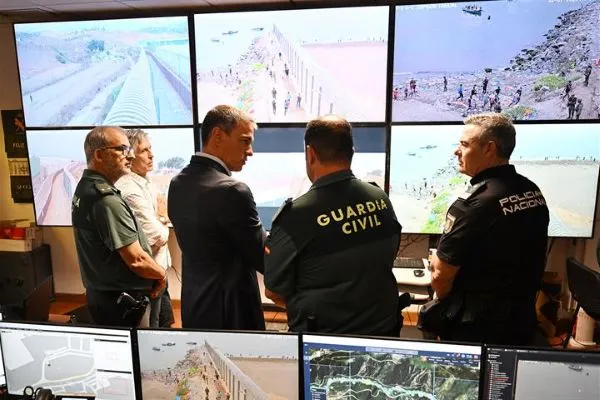
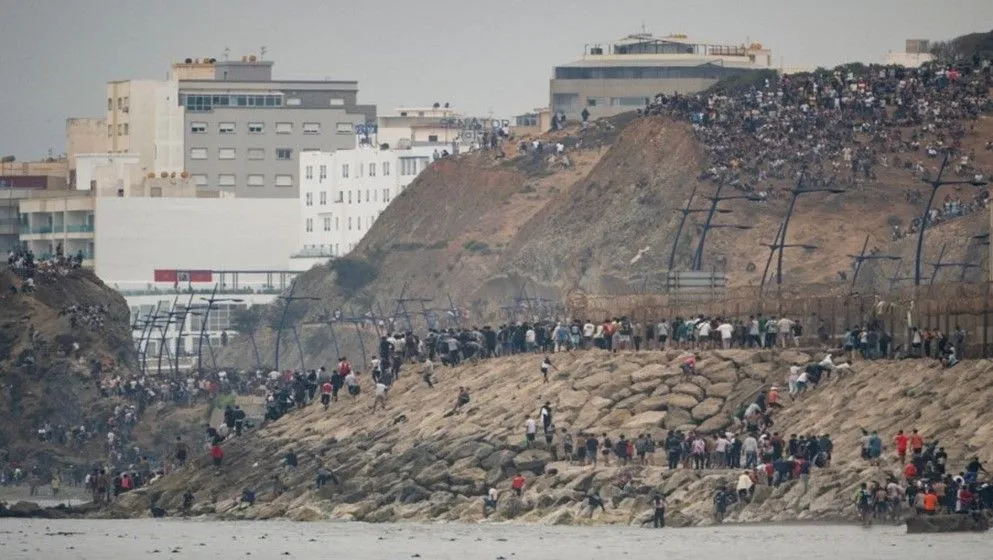
In a significant statement made on September 3, 2023, Spanish Prime Minister Pedro Sanchez addressed concerns surrounding the recent surge of migrants from Morocco into Ceuta, asserting that there is no credible evidence to support allegations that Moroccan authorities orchestrated the events of July. This declaration comes in response to a Spanish police report that suggested the influx of over 70,000 individuals was a calculated effort to overwhelm Spain's border controls rather than a spontaneous migration.
During a parliamentary session, Sanchez emphasized, "I can assure you that no institution – not the diplomatic service, nor the European Commission, nor any international body – has provided the Spanish government with any solid evidence that Morocco planned or carried out the incident. None whatsoever." Despite this assertion, he acknowledged that Moroccan police allowed crossings to take place during a critical 10-hour window on July 30, when the number of arrivals peaked. Sanchez noted that Spanish authorities are still evaluating whether the Moroccan police's actions were due to an inability to manage the situation or a lack of response.
Throughout the crisis, Sanchez has consistently defended Morocco's role, commending Rabat for its cooperation in the subsequent return of the majority of migrants. However, he did indicate that Spain had summoned Morocco's ambassador on August 21 due to “unacceptable statements” made by two Moroccan ministers regarding Ceuta and Melilla, Spain’s other North African enclave. This tension was further exacerbated when Morocco's Justice Minister, Abdellatif Ouahbi, reiterated claims of sovereignty over these cities.
Concerns Over Moroccan Police Response
A police report initiated by a High Court judge and reviewed by Reuters disclosed that Moroccan security forces were initially deployed in smaller numbers than usual near the border breakwater and did not make a concerted effort to disperse the crowds. The report noted instances where uniformed Moroccan officers appeared to direct people towards the crossing point, while other unidentified individuals seemed to guide or monitor the flow of migrants. Although the report cited interviews with some migrants who claimed to have received guidance from Moroccan security forces, it did not provide specific names of officers or any independently verified evidence of directives from Moroccan authorities.
The report characterized the Moroccan police's response as one of “total permissiveness,” indicating a lack of serious attempts to control the influx of migrants into Ceuta. Moroccan authorities have previously denied any allegations of permissiveness, attributing the crossings to traffickers and a misinterpretation of a Spanish court ruling that supposedly created a legal loophole for sea arrivals. Justice Minister Ouahbi further explained in an interview with Al Arabiya TV that Moroccan authorities chose not to intervene to prevent a potential bloodshed, instead managing the crisis with prudence and calmness.
Moreover, the police report conveyed that trafficking groups in Morocco could only mobilize approximately 300 migrants per day, suggesting that they lacked the capacity to orchestrate an event on the scale witnessed during the border surge.
As reported by kfgo.com.