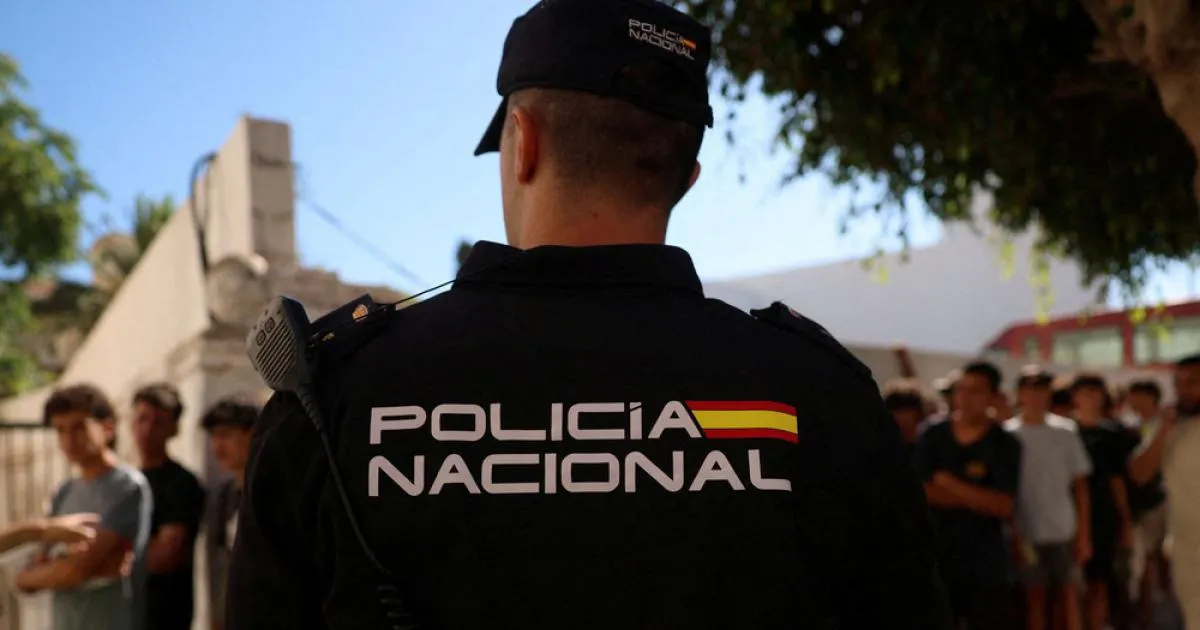

Spain Faces Pressing Questions on Information Security
Spain is currently grappling with urgent and sensitive inquiries regarding the safeguarding of information within its institutions, following the emergence of a document nearly 500 pages long that contains personal and sensitive data of members of the Civil Guard, National Police, and Armed Forces. The sheer volume and nature of the data have compelled the Civil Guard Justice Association to turn to the National Court, demanding an investigation to ascertain the source of this data, the methods of its collection, and the identity of those behind its dissemination. This issue transcends a mere electronic leak, touching upon the capability of the involved institutions to protect information that is expected to be under the highest security measures.
While the incident may initially appear as another cybersecurity breach, it gains broader significance when placed alongside a series of hacks and leaks that have recently affected institutions at the core of Spain's protective framework. This raises a more profound question than merely identifying who leaked the file or hacked into a database: Is Madrid facing isolated incidents, or does the recurrence of such breaches necessitate a deeper review of information protection mechanisms and coordination among state institutions?
The Complex Relationship Between Spain and Morocco
This inquiry takes on additional dimensions when viewed in the context of Spain's relationship with its southern neighbor, Morocco. In recent years, Morocco has frequently emerged in Spanish political and media discussions whenever a security or intelligence crisis with external ramifications occurs, even when the judicial evidence fails to substantiate the circulating hypotheses. The 'Pegasus' case underscores the sensitivity of this issue, as investigations have documented the targeting of politicians, activists, lawyers, and figures associated with the independence movement in Catalonia using spyware. Spanish state agencies acknowledged monitoring several individuals within this sphere.
The situation intensified when it was revealed that the phones of Prime Minister Pedro Sánchez and several of his ministers had also been compromised using the same software. Morocco quickly entered the political and media discourse amidst the existing tensions between Rabat and Madrid, yet the Spanish judicial process has not established Morocco's responsibility, nor has it managed to identify the party that hacked into the phones of senior Spanish officials.
This highlights a crucial distinction that must not be lost amid the political noise: the gap between suspicion and evidence, and between media leaks and judicial truth. In relations between two states with intersecting security, economic, and geopolitical interests of this magnitude, maintaining this distance is as much a political necessity as it is a legal principle. The problem may be closer than it appears. 'Pegasus' is not the only case that necessitates introspection; Spain has also witnessed 'Operation Catalonia' and the suspicions it raised about the use of security structures to gather information on pro-independence political leaders, along with 'Operation Kitchen,' which relates to accusations of using state resources to monitor Luis Barcenas, the former treasurer of the People's Party, and his family.
The name of former National Police Commissioner José Manuel Villarejo has become synonymous with a series of cases involving clandestine recordings and the access to information used in political, commercial, and personal disputes. These incidents do not render Spain an exception; democratic countries also face internal disruptions within their institutions, and they possess the judiciary, parliament, and oversight tools to hold them accountable. However, this raises a legitimate question: when breaches, leaks, and cases of information misuse recur, isn't it more pressing to examine the structure of the security system itself rather than jumping directly to the hypothesis of external interference?
The clarity of the situation becomes even more pronounced in the context of the incidents in Ceuta and Melilla, where the issue transcends espionage to encompass the institutions' ability to exchange information and convert early warning signals into decisive action. After the events in Ceuta at the end of July, various narratives emerged regarding the information that was available prior to the crisis. Defense Minister Margarita Robles defended the performance of the National Intelligence Center, asserting that there had been prior warnings concerning calls for swimming across the border. In contrast, the Interior Ministry and the government delegation in Ceuta presented a differing view regarding the nature of the information and its capability to foresee the scale of the events that transpired.
This discrepancy merits further examination rather than a hasty search for an external culprit. If state institutions themselves differ on what they knew and when they knew it, it is reasonable to approach leaks attributed to "security sources" with caution, especially when contrasting narratives are promoted as being highly certain regarding Rabat's intentions or plans.
Ultimately, the paradox lies not in accusing Spain of incapacity but in the arrangement of questions. Before attempting to decipher what is occurring within the institutions of a neighboring state, there is a more pressing necessity to acquire a clear understanding of what transpires within national institutions themselves. Geographic proximity and intertwined interests necessitate a higher level of cooperation between Rabat and Madrid, evolving their relationship beyond traditional neighborhood dynamics to a partnership encompassing multiple security, economic, and strategic files. Morocco plays a crucial role in the security framework of the Western Mediterranean, whether combating terrorism, organized crime, or managing challenges related to irregular migration and maritime security. The experience has shown that coordination in these areas serves the mutual interests of both countries and the broader Mediterranean European space.
Analyzing security developments on both sides of the strait becomes more balanced when grounded in the extent of existing interests and the mechanisms of cooperation that both countries have accumulated over time, rather than converting every incident or unverified leak into political conclusions that precede investigative outcomes. The Moroccan-Spanish relationship has become too intricate to be reduced to transitory security circumstances, especially given the significance that cooperation between Rabat and Madrid has shown in addressing issues that inherently transcend the confines of the two states.
Furthermore, Morocco's geopolitical position is no longer confined to its relationship with Spain; Rabat has expanded its African presence, deepened its European and Atlantic partnerships, and solidified its security role in the Western Mediterranean and the Sahel. From this perspective, the hypothesis that Morocco needs to fabricate a crisis with an important European neighbor is less coherent with the network of interests and partnerships it has built over the past years. Therefore, perhaps the most useful question for Madrid today is not what Morocco is doing, but rather what the repeated breaches and leaks reveal about vulnerabilities within the Spanish system itself. Secure borders begin with cohesive institutions, and effective security arises from a state’s capacity to protect its information and ensure coordination among its agencies. The interests between Rabat and Madrid are too substantial to be left to an anonymous leak or an accusation that has not found its way to substantiation.
In conclusion, the strength of nations is not solely measured by their ability to monitor what occurs beyond their borders, but also by their capacity to identify and address their internal vulnerabilities. When institutions are more coordinated and capable of safeguarding their secrets, Morocco becomes a partner for Spain in managing the challenges of both shores, rather than a convenient explanation for crises whose roots may be found closer to home.
As reported by middle-east-online.com.