
Diplomatic Engagement with Morocco After Ceuta's Mass Influx
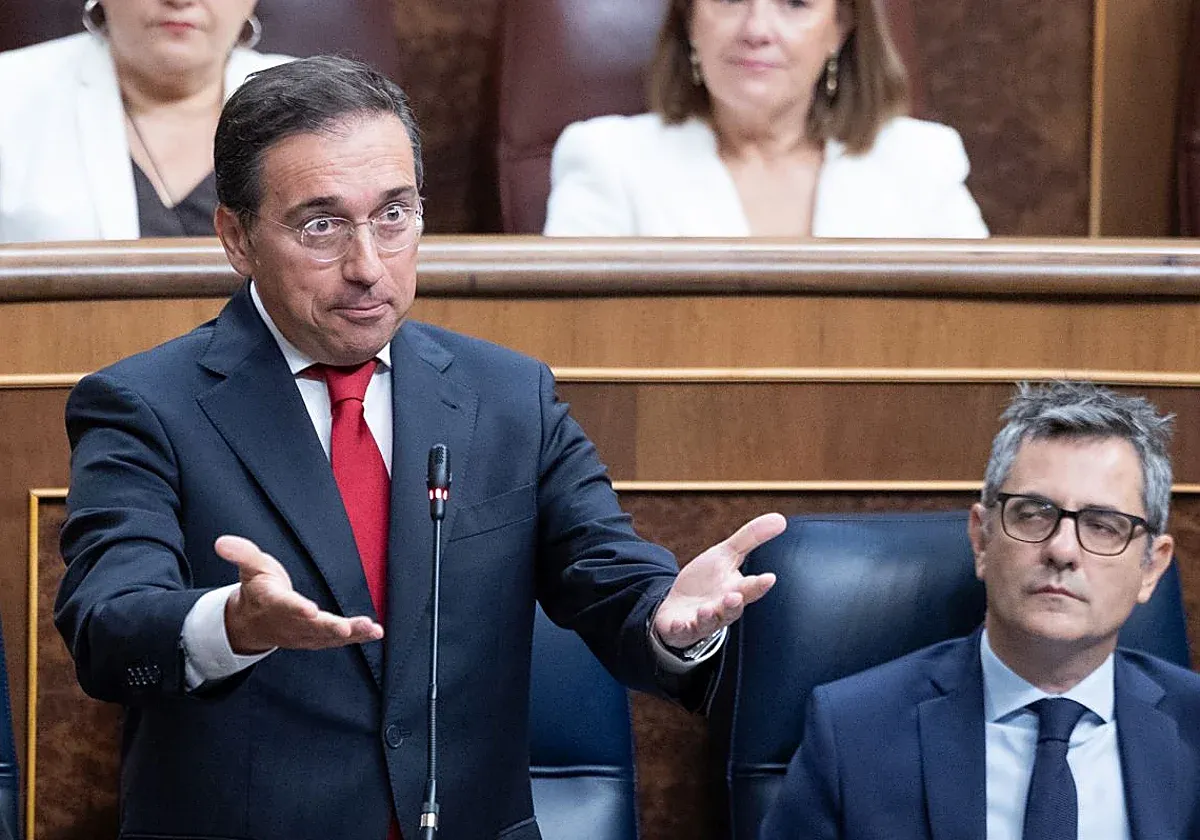
Nearly two months after the significant incident of mass migration at the Ceuta border, the Spanish government is shedding light on the high-level discussions that took place with Morocco. José Manuel Albares, the Minister of Foreign Affairs, European Union, and Cooperation, elaborated on Wednesday that his communication with his Moroccan counterpart was "practically permanent" both during the dramatic events of July 30 and in the days following. He emphasized that he made three critical requests to his Moroccan counterpart, Nasser Bourita. Albares noted, "His response was immediate, and I contacted him to stress the need to mobilize all necessary resources to halt the influx and reverse it; to ensure that those who entered would return; and to convey that such an occurrence should never happen again." This direct line of coordination was instrumental in managing the initial pressure and facilitating the return of the vast majority of individuals who had entered irregularly.
Moreover, Albares highlighted Morocco's cooperation in facilitating the return of those who do not qualify for international protection, including cases involving minors, which depend on family reunification processes. During an interview with Cadena Ser, he attempted to ease tensions following statements made earlier by the Spanish Prime Minister, Pedro Sánchez, on CNN, where he openly criticized Morocco's border control, stating that it had "failed" and confirmed he had sought "explanations" from the neighboring country. Albares firmly denied that the government had escalated its tone with Rabat, despite Sánchez's remarks reflecting a subtle shift in the previously cautious approach maintained by the Spanish government. While Albares sought to downplay the significance of the language used, the reality remains that the government had carefully avoided employing such a tone towards Morocco until now. Notably, the only minister from the Cabinet who had adopted a stronger stance towards Rabat was Defense Minister Margarita Robles.
Strategic Pragmatism and Future Commitments
In response to criticisms regarding Moroccan forces' actions, Albares justified the government's stance based on a strict principle of bilateral pragmatism, stating, "With Morocco, we do not seek to be tough or soft. We aim to be effective for Spain's interests." Although he acknowledged the ongoing detection of sub-Saharan migrant movements in northern Morocco, he framed these flows within the context of what he described as "the most unequal border on the planet." Beyond migration issues, Albares also outlined key commitments aimed at strengthening the institutional integration of Ceuta and Melilla within Europe. The government is working to ensure that both autonomous cities secure permanent representation in the European Committee of the Regions by the year's end. Additionally, progress is being made toward their inclusion in the European Customs Union, a process that the minister estimated could be formally completed within a timeframe of twelve to eighteen months.
Albares also mentioned the anticipated visit of King Felipe VI and Queen Letizia to Ceuta and Melilla, assuring that the monarchs would travel "soon" and categorically rejecting any diplomatic servitude concerning this matter with the neighboring country. He stated emphatically, "The kings of Spain do not need to seek authorization from anyone or ask for permission to visit any Spanish city." While he predicted that the royal visit would occur before the end of the year, he refrained from providing any specific dates. On a geopolitical note, the minister avoided commenting on the growing closeness between Morocco and Israel, dismissing any indications that the Israeli government might be trying to interfere in the bilateral agenda between Madrid and Rabat. He also downplayed the political significance of the recent meeting at the UN between Prime Minister Pedro Sánchez and Venezuelan Vice President Delcy Rodríguez, characterizing it merely as a protocol greeting in the UN hallways.
Finally, Albares strongly advocated for a diplomatic push to achieve official status for Catalan, Basque, and Galician languages within the European Union. He directly accused the European People's Party of obstructing this initiative for purely partisan interests, although he remained confident that the measure would ultimately succeed. "All they will achieve is to delay it a bit, but they will not prevent it," he concluded.
As reported by elcorreo.com.