
Reassessing Spain-Morocco Relations Amid Migrant Pressures
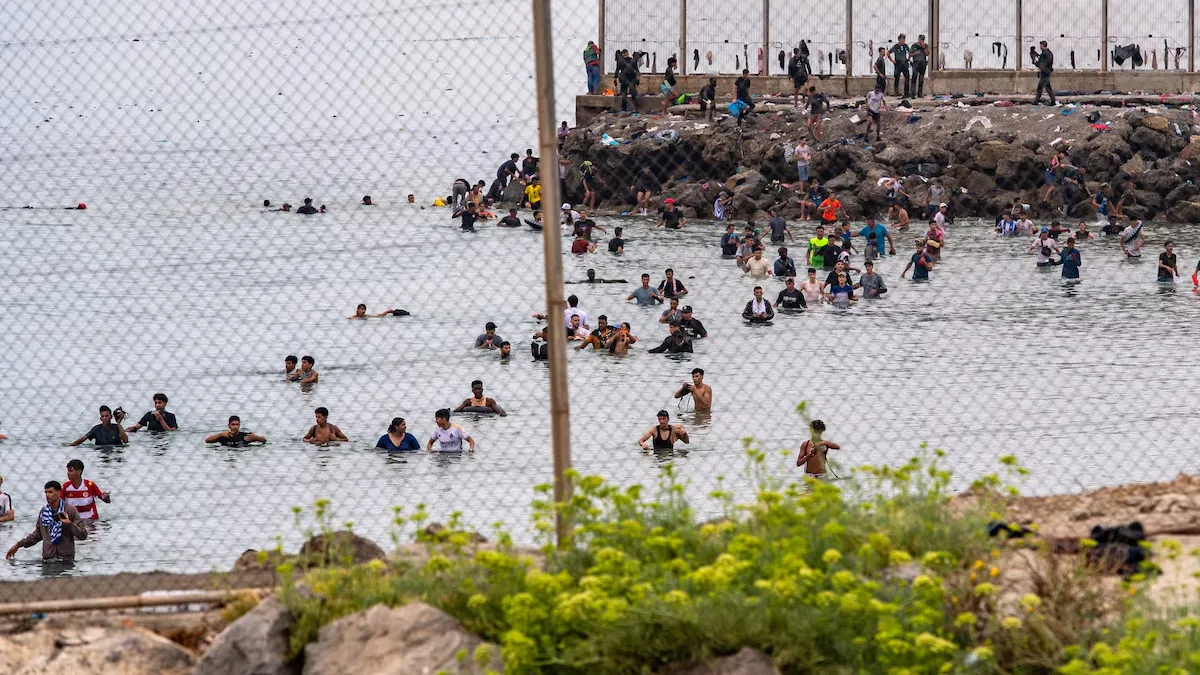
In a recent appearance on Algeria International's program 'Point of Pivot,' Spanish parliament member Taslem Sidi provided a critical analysis of the recent events in Ceuta and how Morocco has utilized migration as a pressure tactic against Madrid, particularly during times of rapprochement with Algeria. She emphasized the urgent need for Spain to reevaluate its relationship with Morocco, arguing that the humanitarian crisis in Ceuta cannot be fully understood without acknowledging Morocco's role as the instigator. Sidi contended that Morocco, backed by allies such as the United States and Israel, aimed to simplify the situation to gauge Spain's response.
Sidi pointed out that immigration has become a divisive and polarizing issue within Spanish society. However, she noted that Morocco's strategy has backfired, leading the entire Spanish public to view the situation as a geopolitical pressure tactic. Historically, Morocco has exploited migration as a means of coercion, and the straits have become a focal point of contention. According to Sidi, the Strait of Gibraltar is critical as the U.S. demands secure passage for arms and goods to Israel, thereby necessitating a strong Morocco as a subordinate ally.
Concerns Over Algeria-Spain Relations
Highlighting the impact of the improving relations between Spain and Algeria, Sidi remarked that enhanced ties with Algeria have only increased Morocco's anger and that of the United States due to their historical alignment. She classified Spain's concession on the Western Sahara issue in 2021 as a significant misstep and criticized the previous Spanish government's weakening of relations with Algeria, especially given the context of Russia's gas supply disruptions. Sidi emphasized Algeria's position as one of Africa's largest and strongest economies, noting its crucial partnership with Spain not only in energy but also in various sectors such as education, tourism, and development. She insisted that Spain, given its strategic geographical location in Europe, must prioritize its national sovereignty and foster robust ties with Algeria while diversifying its relationships across North Africa.
Moreover, Sidi revealed that the Spanish Parliament's Justice Committee had recently approved a law she spearheaded, aimed at restoring Spanish citizenship to Sahrawi individuals born during Spain’s colonial period in Western Sahara. This law, she noted, has sparked discontent in Morocco as it formally recognizes the Sahrawi people as distinct and independent from Morocco, countering previous governmental narratives.
Critically, Sidi described the Moroccan monarchy as the lesser evil for the European Union in managing borders and migration flows, questioning when the Moroccan people might rise against inequality and a monarchy that retains a significant portion of the national GDP. She lamented the absence of a strong popular uprising capable of challenging the monarchy.
Addressing the Western Sahara issue, she reiterated the necessity for Spain to shift its approach with Morocco away from complacency and negligence in order to resolve the conflict with more firmness and determination. Sidi stated that the crisis in Ceuta serves as a collective moment of reflection, indicating that Spain's concession on Western Sahara in 2021 was insufficient and urging a deeper consideration of the implications of this crisis. She insisted on the need to summon the Moroccan ambassador for consultations, establishing a clear red line to convey that perceived weakness could invite further challenges.
On the Palestinian issue, Sidi expressed profound disappointment at the international community's failure to support the Palestinian cause, highlighting the normalization of conditions that strip Palestinians of their legitimate right to resist under international law. She warned that credibility in international law is eroding globally, which serves as a wake-up call for all. Nevertheless, she acknowledged that southern nations like Algeria, South Africa, and Colombia continue to advocate robustly for international law. Conclusively, she reiterated that resistance remains the last option.
As reported by al24news.dz.