
Spanish Police Refutes Claims Against Moroccan Security Forces
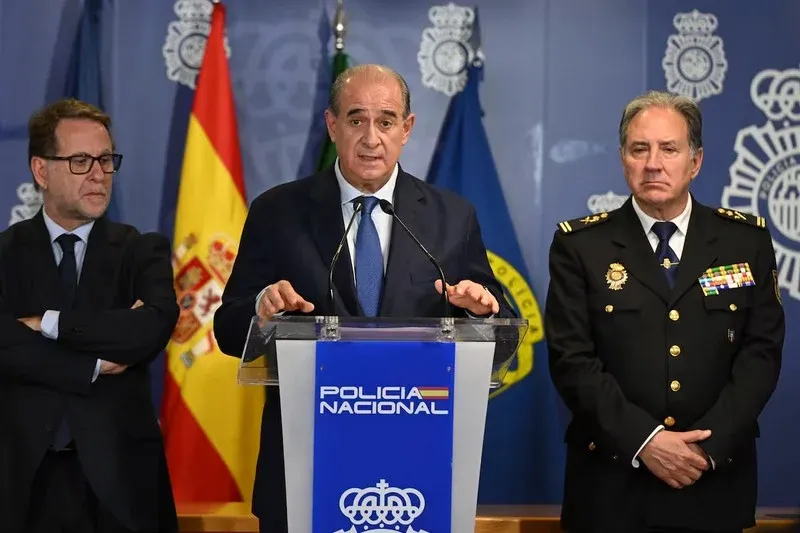
On Wednesday, the Spanish National Police officially denied any allegations that Moroccan security forces were responsible for planning or executing the events that occurred in the occupied enclave of Ceuta on July 30 and 31. This statement comes after significant political and media controversy in Madrid surrounding leaks regarding a document submitted to the judiciary as part of an investigation into the mass influx of migrants. Francisco Pardo, the director-general of the Spanish police, made this announcement following an urgent meeting with Interior Minister Fernando Grande-Marlaska, clarifying that there was no police report attributing the planning or execution of these events to the Moroccan security forces, as stated by the Spanish Ministry of the Interior.
The urgent meeting was necessitated by requests from Minister Marlaska for clarifications regarding information published by Spanish media about a report prepared by police investigators during the judicial inquiry, which suggested the presence of members of the Moroccan Royal Gendarmerie and civilians in the vicinity of migrant groups approaching the border. The initial leaks created an impression that a police document contradicted the Spanish government's stance since the onset of the crisis. However, police leadership later confirmed that, upon reviewing the information submitted to the judiciary, the report did not attribute any responsibility to Moroccan security forces.
Official Denial and Political Reactions
This denial aligns with earlier statements from Prime Minister Pedro Sánchez, who emphasized that intelligence agencies collaborating with the Spanish government had not provided data to prove Moroccan authorities' involvement in the events that transpired at the end of July. Pardo's position gained particular importance as it highlighted that the issue was not merely the absence of police documents but rather the actual content of those documents. The Ministry of the Interior confirmed that while investigators had submitted information to the judge overseeing the case, they denied any conclusions that would imply institutional responsibility on the part of Moroccan security forces.
In a further clarification, Pardo addressed a warning issued by the National Migration and Borders Center (CENIF) on July 29, one day prior to the events, linking it to the media's speculations that security agencies may have had prior knowledge of the impending mass influx. Pardo stated that the warning was part of regular security alerts regarding border risks and did not indicate any prediction of a large-scale entry the following day. This clarification refuted claims that the police had received specific warnings about the scale of movement that occurred during the incidents.
The case has taken on institutional significance, especially after it became clear that neither the Minister of the Interior nor the police director were initially aware of the contents of the information submitted by investigators to Judge María Tardón, who is responsible for the inquiry into the events. The Interior Ministry explained that the police officers who prepared the documents were acting in a judicial capacity under the supervision of the judge, who had instructed them to maintain confidentiality and not to inform their administrative superiors about the contents presented to the court.
Ultimately, the political debate intensified, with opposition leader Alberto Núñez Feijóo of the Popular Party calling for the government to summon the Moroccan ambassador in Madrid for clarification if the media reports were verified. Meanwhile, members within the coalition government, including the partner group 'Sumar', demanded disclosure of the documents and an explanation as to why the information did not reach the Interior Ministry. In contrast, Justice Minister Félix Bolaños urged caution and a thorough examination of the report and its associated information, asserting that the government seeks to understand what transpired on July 30 and 31 before drawing any political or diplomatic conclusions.
The ongoing discussions come as Prime Minister Sánchez prepares to address Parliament regarding the developments of the Ceuta crisis, having maintained that the information available to the government and its cooperating intelligence agencies does not implicate Moroccan authorities in the events.
As reported by hespress.com.