
Pedro Sánchez Addresses Ceuta's Migrant Situation
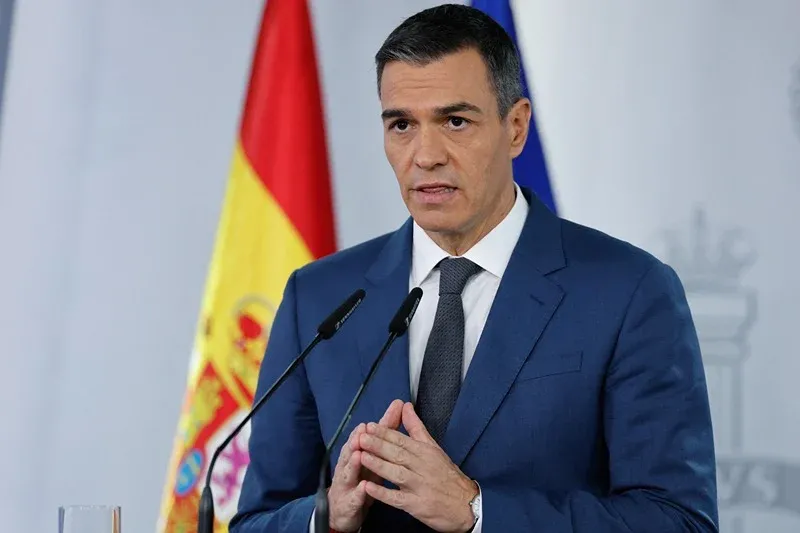
Spanish Prime Minister Pedro Sánchez has firmly rejected any allegations implicating Morocco in the recent migration crisis at Ceuta, which unfolded at the end of July. He asserted that there is no concrete evidence linking Rabat to the surge in migrant movements. In a televised interview, Sánchez praised the Moroccan authorities for their proactive management of the influx of migrants, highlighting that their efforts have been instrumental in minimizing risks for those involved. He remarked on Morocco's increased activity and mobilization in handling the situation effectively.
Rejecting claims of passivity, Sánchez emphasized the intelligent management required to address such a significant influx of individuals, stating that neither Morocco nor Spain could have adequately handled the circumstances as they arose. The process necessitated the gathering and accounting of migrants, followed by their expulsion. Notably, he pointed out that around 200 Moroccans return home daily voluntarily due to a lack of opportunities. Furthermore, Sánchez indicated that by the end of the year, the Spanish government anticipates that all undocumented immigrants slated for expulsion will be processed, leaving only those eligible for asylum.
Strengthening Cooperation with Morocco
The Prime Minister also advocated for increasing the reception capacity in the occupied city of Ceuta and emphasized the need to enhance cooperation with Morocco from both European and Spanish perspectives. In response to claims of blackmail from certain sectors of the Spanish political landscape, notably from the Popular Party (PP), the far-right Vox party, and PNV president Aitor Estéban, Sánchez firmly stated that he is "absolutely not" a victim of Moroccan blackmail.
He remarked, "The rumors regarding the use of phone calls for a Netflix series are indeed intriguing, but the reality is based on facts. As President, I have always demonstrated independence and a commitment to the public interest. We have never stated that we would not respond firmly if evidence surfaced linking Morocco to these events; however, to date, no concrete information suggests their involvement." Additionally, regarding recently declassified Spanish intelligence documents, the Prime Minister addressed the alleged WhatsApp "warnings," clarifying that while movements were detected, they were not at the reported scale. He asserted, "WhatsApp messages do not prove that an alert was issued; on the contrary, I am convinced of that. When risks arise, intelligence reports are drafted, not just via WhatsApp, and these are subsequently relayed through the proper channels, leading to increased monitoring and vigilance." Ultimately, Sánchez expressed regret over the cooperation previously demonstrated by the president of the occupied city in 2021, highlighting that Vivas acts under the orders of Alberto Núñez Feijóo, the PP president, who is eyeing the upcoming elections and seeks to leverage the Ceuta crisis to destabilize the government.
As reported by fr.hespress.com.