
Outcomes of the Extraordinary African Union Summit on Conflict Prevention
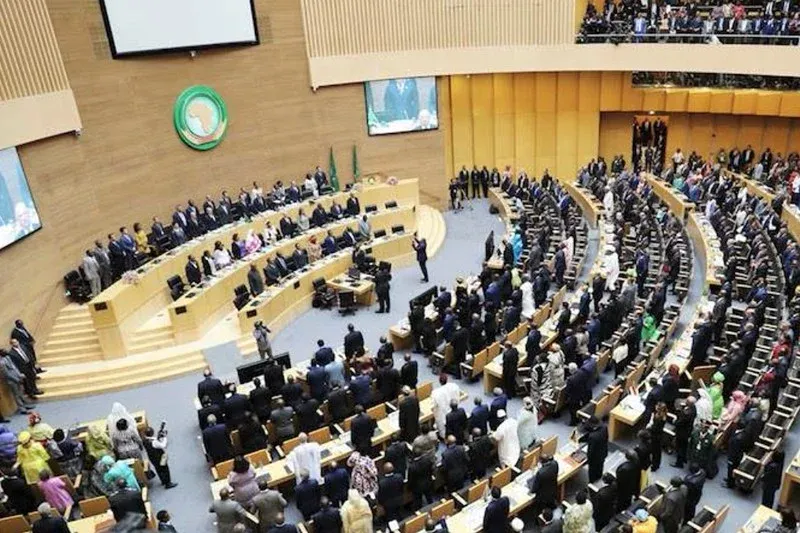
The Extraordinary Summit of the African Union (AU), held on August 29 and 30 in Luanda, concluded with the adoption of documents that solidify an African-centered approach to conflict prevention. This approach emphasizes the enhancement and effectiveness of existing mechanisms, integrating a multidimensional vision that encompasses peace, security, and development while respecting the primacy of the United Nations Security Council (UNSC) in matters of international peace and security.
The conclusions drawn from the Summit highlight several orientations that align with the consistent positions advocated by the Kingdom of Morocco. These include prioritizing preventive measures, strengthening current mechanisms instead of creating new structures, addressing the root causes of conflicts through the peace-security-development nexus, and maintaining a coherent institutional architecture in Africa, guided by the principle of the UNSC's primacy. The Luanda Summit particularly emphasized the importance of bolstering existing African mechanisms for prevention, mediation, management, and resolution of conflicts. The objective is not to establish new systems but to enhance the efficacy, responsiveness, and coordination of the instruments already available on the continent.
This strategic direction responds to an imperative for institutional effectiveness. In the face of increasing and complex crises, the critical challenge lies in the ability to anticipate tensions, improve early warning systems, strengthen mediation efforts, and intervene proactively to prevent fragile situations from escalating into open conflict. Consequently, conflict prevention emerges as a strategic investment that is less costly, both humanly and financially, than managing already established crises.
Addressing the Peace-Security-Development Nexus
Regarding the peace-security-development nexus as a major focus in prevention, the Summit acknowledged the multidimensional nature of conflict prevention. This understanding directly aligns with Morocco's approach, particularly through the Tangier Process. During the Summit, Morocco stressed that conflict prevention cannot be solely security or institutionally focused; it must also address the underlying causes, whether economic, social, institutional, climatic, or human. In this context, the Kingdom highlighted the necessity to invest more in sustainable peace factors, such as human development, job creation, opportunities for youth, food and water security, infrastructure, connectivity, and community resilience.
This approach signifies a shift from treating these policies merely as development tools to recognizing them as genuine levers for prevention, stability, and peacebuilding. It reflects a gradual transition from a logic of managing conflicts after they occur to a proactive strategy aimed at establishing conditions for peace and preventing crises from arising. This African ambition is simultaneously situated within a clearly defined international architecture. In this regard, the recognition of the UNSC's primary responsibility for maintaining international peace and security is a crucial element of the Summit's conclusions.
Morocco's position during the Luanda Summit emphasized the need for coherence between the African Union and the United Nations to guide the implementation of African mechanisms for conflict prevention and resolution. For the Kingdom, respecting the UNSC's primary responsibility ensures institutional coherence, which helps avoid overlapping mandates, the proliferation of parallel processes, and initiatives that may complicate dispute resolution efforts. Therefore, the objective is not to oppose African action to international efforts but to organize their complementarity while respecting established mandates and competencies. This approach allows for the strengthening of the African peace and security architecture without altering institutional balances or creating new competencies through extensive interpretation.
During the Summit, Morocco particularly emphasized the need for a realistic and financially sustainable implementation of the Luanda Action Plan and its framework. In this regard, the Kingdom advocated for a clear prioritization of objectives, the avoidance of institutional duplications, and a precise assessment of the financial implications of new activities. However, funding should not be solely directed towards peace operations or crisis management. A genuine prevention policy requires investment in mediation, early warning systems, preventive diplomacy, and post-conflict reconstruction, as well as, in line with the nexus approach, investing in economic, social, and human factors that can sustainably reduce conflict risks.
One of the main challenges following Luanda lies in transitioning from a crisis funding culture to a genuine culture of prevention funding. Morocco also stressed the necessity for Africa to gradually enhance its capacity to finance its own priorities in peace, security, and development while continuing to rely on strong, predictable, and balanced international partnerships. For Morocco, the results of the Summit reinforce several essential principles: prioritizing prevention, consolidating existing mechanisms, adopting a multidimensional approach to conflict causes, integrating peace, security, and development, and respecting the international architecture based on the primacy of the UNSC.
This vision aligns with the African approach promoted by King Mohammed VI, which places human development, South-South cooperation, solidarity, and shared prosperity at the heart of Morocco's contribution to the continent's stability. Ultimately, the key takeaway from Luanda can be summarized in one equation: more effective prevention mechanisms, reinforced by the peace-security-development nexus, guided by the UNSC's primacy, and supported by sustainable funding.
As reported by fr.hespress.com.