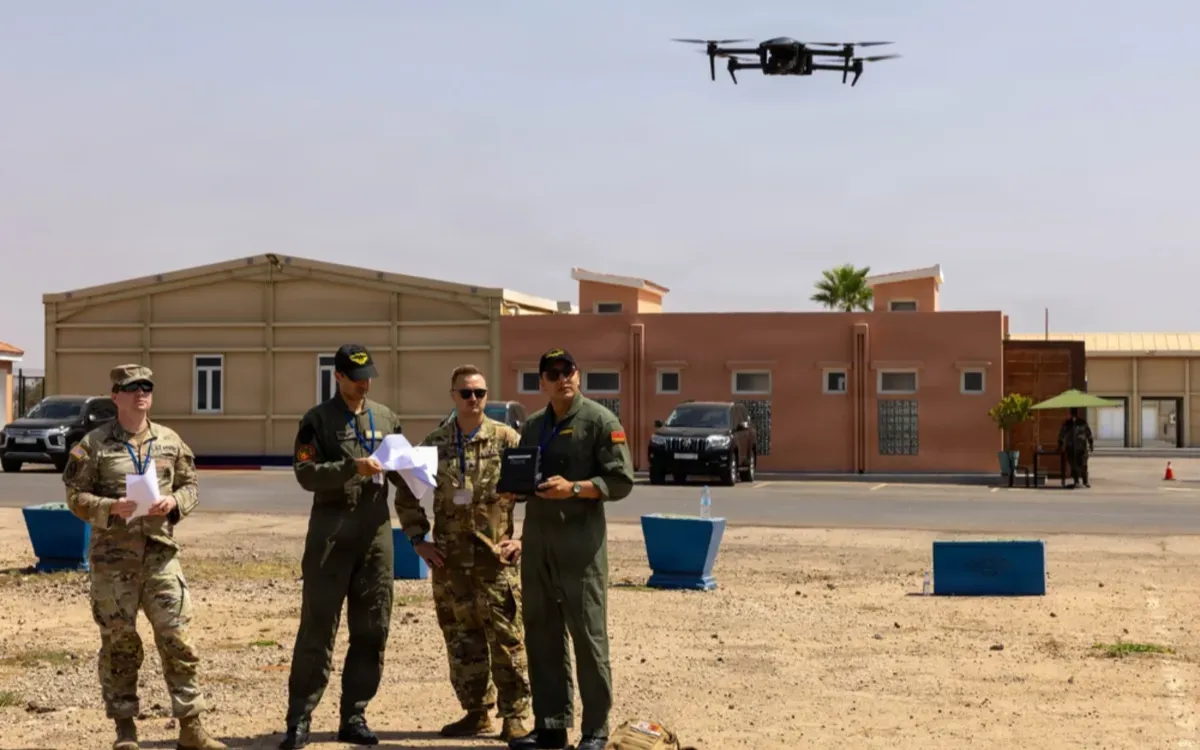

In a significant move towards enhancing military cooperation, Moroccan and American military personnel recently concluded a specialized training program focused on small unmanned aerial systems in Agadir. This initiative, orchestrated by the US Africa Command, the Royal Moroccan Armed Forces (FAR), and the Utah National Guard, aimed not only to impart American operational methodologies but also to absorb the unique experiences and strategies that the Moroccan forces have developed over time.
The training sessions, which took place in September at Agadir, included the participation of instructors from the Combined Arms Training Center and the 7th Army Training Command. As detailed by the U.S. Department of Defense, the curriculum was comprehensive, encompassing mission preparation, meteorology, safety protocols, various flight modes, and the integration of drones within military operations. Participants were also trained to relay these critical skills to fellow soldiers, ensuring a broader dissemination of knowledge.
The primary goal of this training initiative was to cultivate operators who could eventually evolve into instructors, thereby establishing a shared doctrine within their respective units. This strategic alignment is vital for both Moroccan and American forces, allowing them to employ similar planning methodologies during joint exercises.
Mutual Learning and Development
Interestingly, the knowledge exchange was reciprocal. The Utah National Guard is in the early stages of developing its own comprehensive drone program. During their time in Agadir, officials from the Guard took the opportunity to observe how the FAR conduct their training and integrate drones into their operational frameworks. Kenton Hemsley, a drone specialist from Camp Williams and a member of the 65th American Artillery Brigade, noted that American military personnel gleaned significant insights from their Moroccan counterparts, particularly regarding the effective blending of civilian drone expertise with military applications.
This training is expected to empower the FAR with personnel proficient not only in drone operation but also in tactical planning and the training of additional operators. Sergeant Major Mohammed Idamr highlighted that participants gained valuable competencies in piloting, mission preparation, meteorology, safety, and instructional techniques.
On the American side, the developing program aims to encompass the entire spectrum of drone operations: from operator training and maintenance to programming and specialized functions, ultimately preparing master instructors. The U.S. military also seeks to broaden the use of drones beyond specialized units, enabling various military occupations to incorporate these advanced technologies into their respective missions.
Looking Ahead: Integration into Larger Exercises
The next phase of this collaborative effort will involve introducing operators and their drones into larger-scale maneuvers. American officials are keen to test the real-world integration of these systems during joint exercises, ensuring that drones can effectively operate in conjunction with ground units, command resources, and other deployed capabilities. This forward-thinking approach not only strengthens the operational capabilities of both nations but also solidifies their partnership in addressing contemporary security challenges.
As reported by bladi.net.