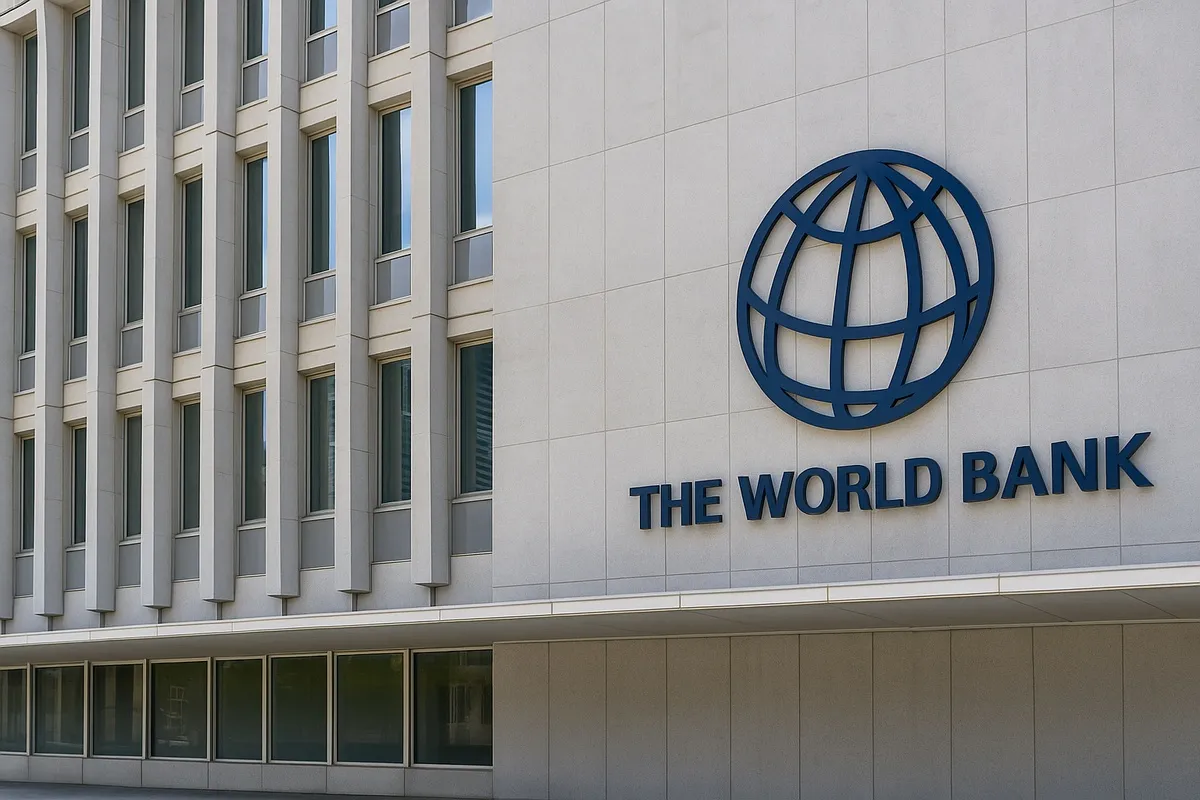

The recent unveiling of the new Collaboration Framework between the World Bank and Morocco marks a significant new phase in the longstanding partnership that this international institution has maintained with the Moroccan economy for over 65 years. According to the World Bank's official announcement, this close collaboration, developed over six decades, has played a crucial role in shaping institutions, enhancing capacities, and assisting Morocco in navigating some of the most critical stages of its development.
Public-Private Financing
One of the fundamental aspects embedded in this new Collaboration Framework with Morocco is the imperative to merge public and private financing to invigorate the Moroccan economy and enhance its resilience. In this context, Morocco’s Minister of Economy and Finance, Nadia Fettah, emphasized that this new framework represents a pivotal milestone for the country. She stated, "What distinguishes it is its structural character: it aligns public and private financing, knowledge, and reforms around a common vision for the future of the Kingdom. Job creation—for our youth, for our women, in our cities and rural areas—occupies a central place in this shared ambition. With a partner that helps us lay the foundations for tomorrow, Morocco continues to advance." The new Collaboration Framework aligns with Morocco's New Development Model, which serves as the roadmap adopted by the country to build a more dynamic, equitable, and resilient economy. The goal, according to the World Bank, is to assist Morocco in transitioning from a growth model driven by public investment to a more robust economy propelled by the private sector, which generates higher quality jobs, particularly for youth and women.
Creating Quality Employment
The central and cross-cutting objective of the new Collaboration Framework between the World Bank and Morocco is to create quality employment, especially among the most vulnerable groups such as youth and women. To achieve this, the agreement revolves around three main pillars: enhancing the competitiveness of businesses by reducing regulatory barriers, strengthening market competition, and expanding access to financing for small and medium-sized enterprises (SMEs); developing better-connected and more inclusive cities and territories by reducing geographical disparities and improving access to markets and services in both urban and rural areas; and strengthening human capital through support for educational reforms, universal healthcare coverage, and the expansion of the social protection system. Progress in implementing these policies will be monitored through concrete indicators: the number of jobs created, the mobilization of private investments, improved access to healthcare and quality education, and enhanced protection for vulnerable communities against climate crises. To support this strategy, the World Bank will employ its main intervention tools: loans, technical expertise, and the mobilization of private capital.
Sustainable Structural Transformation
According to Ousmane Dione, Vice President of the World Bank for the Middle East, North Africa, Afghanistan, and Pakistan, "Morocco has made remarkable advances, and the ambition of its New Development Model is inspiring. By extending our collaboration over a ten-year horizon, we are making a deliberate decision to go beyond project cycles to invest in sustainable structural transformation. This new framework reflects our unwavering commitment to Morocco at a time when the country is charting its next trajectory for progress." The report issued by the World Bank on the Moroccan economy reveals that the country is at a decisive moment and possesses solid foundations: a long-term vision articulated in the New Development Model, an ambitious reform program, sound macroeconomic fundamentals, ongoing structural reforms, and a favorable geostrategic position. Collaboration with Morocco over the next decade will focus on accelerating the country’s transition towards a more productive, inclusive, resilient economy driven by the private sector.
As reported by atalayar.com.