
Revitalizing the National Maritime Fleet
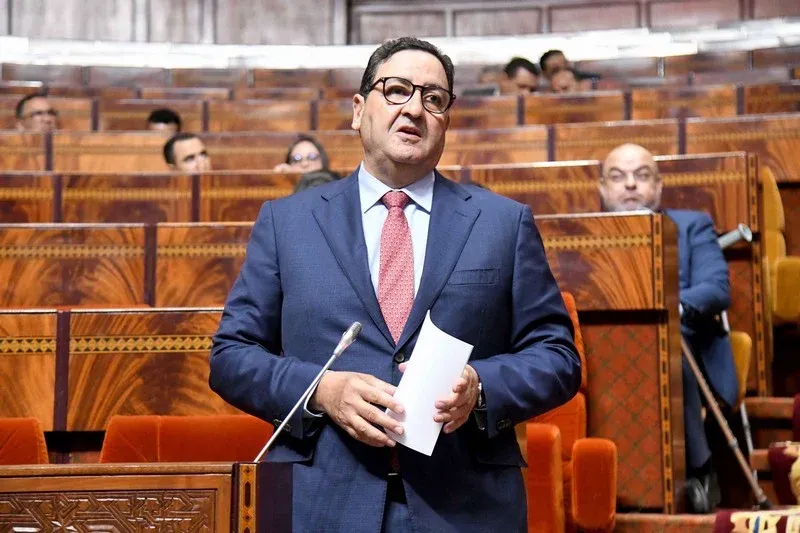
Abdel-Samad Qiyouh, the Minister of Transport and Logistics, addressed a question in the House of Representatives concerning the enhancement of the national maritime fleet. He emphasized that the royal speech delivered on the occasion of the 2023 Green March urged serious contemplation towards establishing a strong and competitive maritime fleet that aligns with the Atlantic Royal Initiative and meets the demands of international trade. Notably, 95% of trade within Morocco relies on maritime transport, underscoring the importance of this sector.
In his statements, Qiyouh pointed out a significant decline in the number of shipping companies in Morocco, which had approximately 80 vessels in the 1970s, dwindling to just 12 companies by 2024. To address this issue, the first academic days were organized in Tangier last May under the patronage of His Majesty the King, with the attendance of the Secretary-General of the International Maritime Organization and various stakeholders in the sector. This gathering aimed to discuss and exchange ideas on revitalizing the fleet, securing financial support, and exploring potential government subsidies and other proposals.
Regulating Electric Scooters and Expanding Transportation Infrastructure
Responding to inquiries about the regulation of electric scooters, commonly known as 'trottinettes', in urban areas, Qiyouh acknowledged that like many countries worldwide, Morocco has witnessed the emergence of new social phenomena, such as delivery services that have become prevalent within the last 15 years. The same trend applies to electric scooters, which are now significantly present in the country. Taking responsibility for this emerging mode of transport, the Ministry of Transport and Logistics proposed a draft decree in June 2025 to regulate this field. Last week, the government council approved a second decree outlining penalties and conditions for users, mandating helmet use, adherence to a speed limit of 25 kilometers per hour, compliance with designated paths, and prohibiting the use of headphones to ensure awareness of surrounding vehicles.
Regarding the railway, air, and road transport sectors, the minister elaborated on the ongoing transformative initiatives under the leadership of King Mohammed VI. In the railway sector, the high-speed train project connecting Rabat and Marrakech has been launched, with feasibility studies completed for linking Marrakech to Agadir and connecting Tetouan to Tangier. In the aviation sector, Royal Air Maroc aims to increase its fleet from 60 aircraft to 200 by 2034, especially as Moroccan airports served 40 million passengers this year, with plans to expand Mohammed V Airport to accommodate 80 million passengers in collaboration with various partners.
On the subject of the transit operation for Moroccans living abroad, Qiyouh highlighted that this operation receives special royal attention, with nearly 3 million Moroccan citizens and 700,000 vehicles crossing last year, marking a 7% increase compared to 2024. He noted that preparations for this year are proceeding meticulously and in direct coordination with the Mohammed V Foundation for Solidarity, with expectations for an increase in transit rates ranging from 7% to 10%.
To facilitate this process, the ministry has mobilized over 27 vessels from seven different companies to secure 12 maritime routes connecting Moroccan ports with counterparts in Spain, France, and Italy. The air transport sector has also been activated by licensing 58 new airlines to ensure 2,403 regular weekly flights connecting Morocco to 160 international airports across 61 countries, while monitoring ticket prices subjected to international liberalization to mitigate the impact of rising oil prices and protect citizens from illegal increases.
Concerning rural transport, Qiyouh noted that the ministry is closely working with local authorities and regional committees to study dual transport requests to ensure their integration with other transport modes, such as taxis and buses, without overlap. He highlighted that the ministry has successfully overcome previous challenges, with requests now processed via email in less than a week, and approximately 1,400 licenses settled recently. However, recognizing that this transport does not fully meet the growing demand, the ministry has initiated a comprehensive field study expected to conclude in the coming weeks to identify mobility pools, which will precisely outline the actual numbers and needs of each region, thus creating a sustainable and ready-to-work foundation for the future.
As reported by hespress.com.