
Enhancing Military Assets and Strategic Alliances
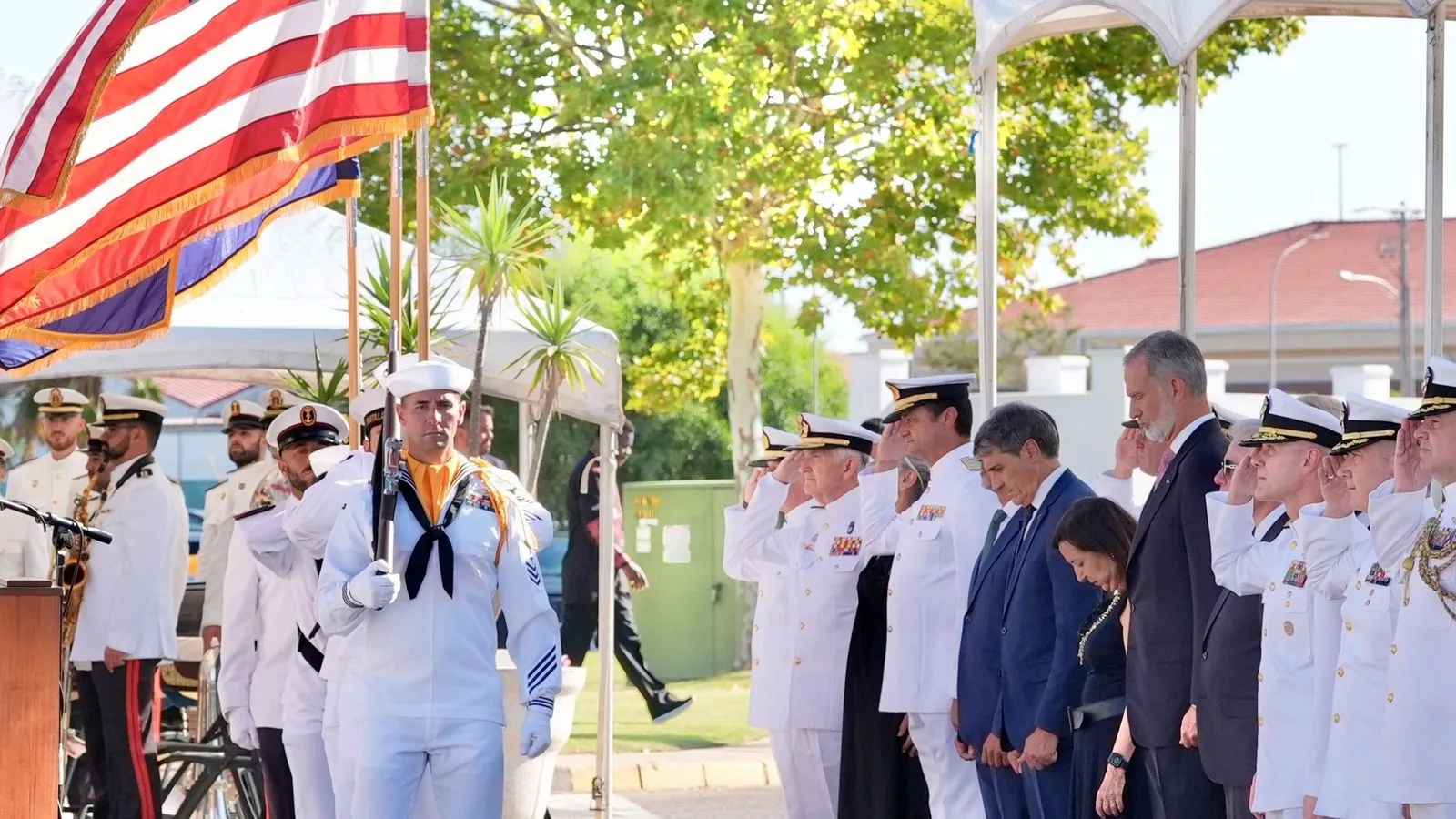
A recent report from the prestigious Elcano Institute advocates for the fortification of Spain's military assets in Rota and Morón, as well as the dual membership in the EU and NATO, to serve as balancing elements in light of Morocco's strategic rise. This week's notable actions by King Felipe VI were not coincidental; they included a meeting with military leaders and Defense Minister Margarita Robles to assess the security situation in Ceuta. The image presented by the King, who serves as the supreme commander of the Spanish Armed Forces, was not only an internal signal but also a message that was aptly received in Morocco. On Friday, the King visited the Rota base to express solidarity with the United States on the 25th anniversary of the September 11 attacks. Together, the United States, Morocco, and Spain form a strategic triangle, with Ceuta at its center, reminiscent of the past when it was the Western Sahara.
Former Prime Minister Rodríguez Zapatero distanced Spain from American allies, while current Prime Minister Pedro Sánchez has made inconsistent moves, endorsing Morocco's plans for the Sahara—executed by the United States—while simultaneously positioning himself as a rival to Donald Trump. Felipe VI and Margarita Robles, although not strictly aligned within the government, demonstrated their respect for the American flag during their recent visit to the Cádiz base. These gestures underscore the need for Spain to reconcile with its old allies.
Morocco's Diplomatic Ascendancy
The Elcano Institute report, authored by Charles Powell and lead researcher Carlota García Encina, emphasizes that rather than criticizing Morocco for recent events in Ceuta, Spain should reinforce its own strategic assets before Washington. These assets include the two Andalusian bases, the strategic position of the Strait of Gibraltar, and membership in both the EU and NATO. The authors argue that Spain's response should not merely react to every Moroccan diplomatic advance but instead focus on enhancing its status as an indispensable partner for the United States. They point to Spain's geographical location, its ability to engage with the Maghreb and Sahel regions, and its role as a bridge between the Mediterranean and the Atlantic as key leverage points.
The diplomatic progress made by Morocco is unmistakable. King Mohammed VI's speech during the Throne Day celebration coincided with a massive incursion into Ceuta, emphasizing Morocco's emergence as a respected and influential actor in the international arena. Historically, Morocco and Washington have maintained a strong alliance, which has evolved into a strategic partnership. Morocco now serves as an essential interlocutor for the United States in Africa, the Sahel, and the Middle East.
The roots of this relationship trace back to American independence, through Henry Kissinger's support for the Green March to prevent the Western Sahara from falling under Soviet influence via Algeria, culminating in a peak during Donald Trump's first term in 2020. Trump acknowledged Morocco’s claim to the Sahara while Morocco simultaneously signed the Abraham Accords to recognize Israel. Washington and Tel Aviv are now major players in Morocco's international rise, with Israel providing arms and defense technology, participating in military exercises such as African Lion, and finding in Rabat a Muslim ally critical of Iran. The Elcano report notes that Morocco's influential Jewish population has served as a bridge not only to Israel but also to the United States, highlighting that a senior official from the Moroccan embassy in Washington confessed that the effectiveness of Moroccan diplomacy stemmed from privileged access to the U.S. administration through Moroccan Jews.
The United States perceives Morocco not only as a counter-terrorism ally but also as a platform to penetrate a continent where China has established a significant lead. This context underpins the support for integrating the Sahara into Morocco, positioning Rabat as a key interlocutor with Africa, particularly the Sahel, to which it is offering maritime trade routes along the coasts of the former Spanish province. The current administrations in the United States and Israel are not particularly friendly toward Pedro Sánchez; on the contrary, the recent incursion into Ceuta has been interpreted as an opportunity to undermine the Spanish Prime Minister. Had Sánchez been prepared, the impact would have been far more damaging. Spain denied the United States access to the Rota and Morón bases for logistical support in attacks against Iran in late February, a stance that was echoed by other European countries. Sánchez’s stance against U.S. operations mirrors his previous opposition to Israeli bombings in Gaza, highlighting a complex geopolitical landscape.
As reported by diariodecadiz.es.