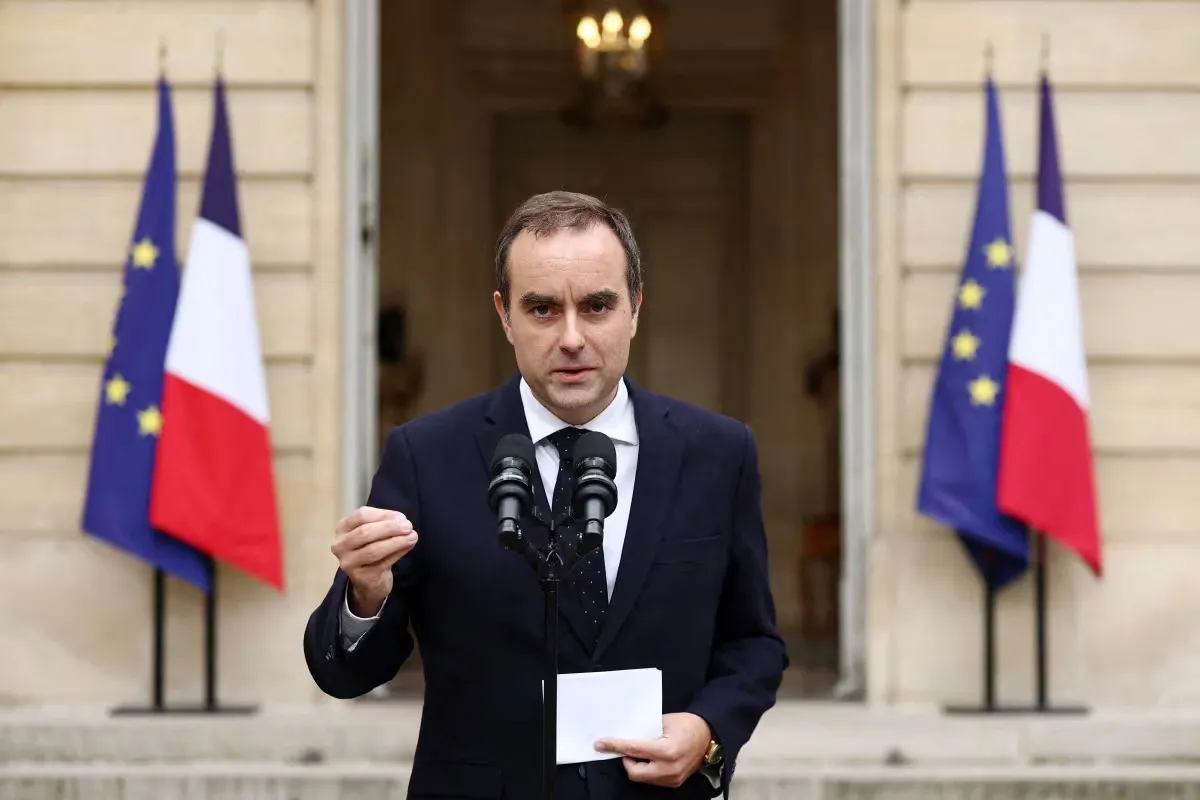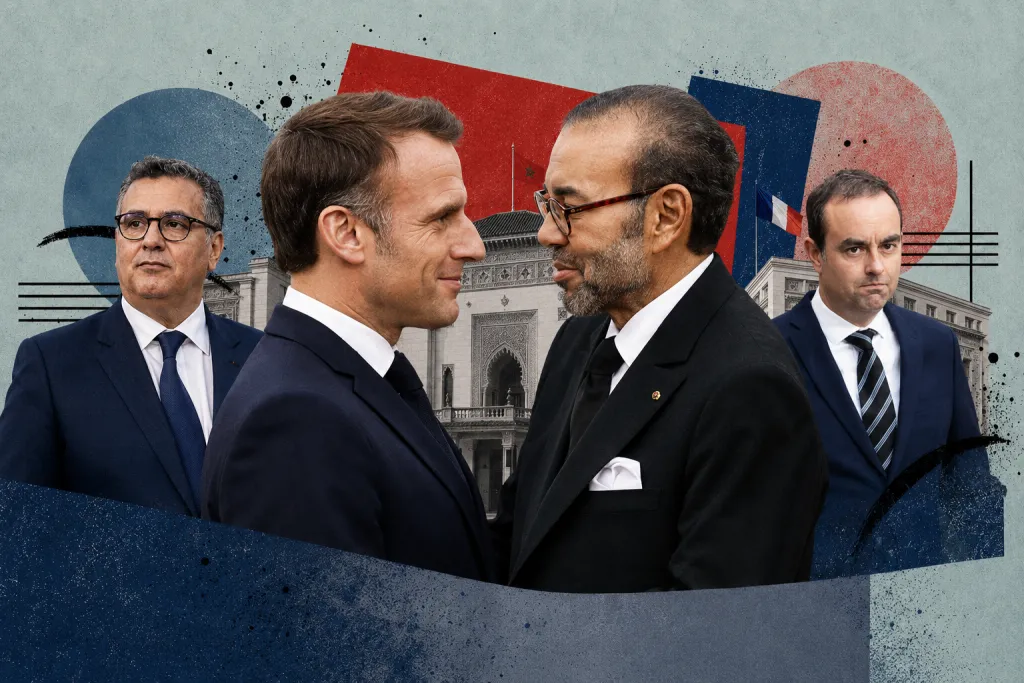
The recent visit of Sébastien Lecornu to Rabat is not merely a catalyst for revitalizing Franco-Moroccan cooperation; rather, it seeks to establish a sustainable framework for the Rabat-Paris axis, which is poised to influence the delicate balances across the Maghreb, the Sahel, the Atlantic, and Europe. This partnership, characterized by collaboration in energy, defense, intelligence, civil nuclear technology, African influence, and a friendship treaty, aims to transcend short-term crises and embed itself at the core of their strategic choices for the coming decade.
In a world fraught with challenges, both Rabat and Paris recognize that their fundamental and vital rapprochement will significantly sway power dynamics in the Maghreb, ensure Sahelian security, secure Atlantic routes, and bolster European energy independence in the years ahead. On July 16, the two capitals are set to usher in a new phase of their relationship during a government meeting intended to lay the groundwork for a friendship treaty and potentially facilitate a visit from King Mohammed VI to France in the autumn, as outlined by the French specialized publication _Africa Intelligence_.
During this high-level gathering, Aziz Akhannouch, the Moroccan Prime Minister, and his French counterpart, Sébastien Lecornu, will preside over the first meeting between the two governments since 2019, coinciding with the arrival of a French delegation of about a dozen ministers. Key figures such as Jean-Noël Barrot for foreign affairs, Laurent Nuñez for the interior, Catherine Vautrin for defense, Roland Lescure for the economy, Catherine Pégard for culture, and Nicolas Forissier for foreign trade will partake in discussions, sign agreements, and make joint announcements. The scale of this diplomatic engagement is intended to transform the political reconciliation achieved in 2024 into actionable sectoral decisions and set a framework designed to endure beyond political shifts.
The stakes extend beyond merely restoring bilateral relations after three years of tensions. For Morocco, France remains a premier industrial, financial, military, academic, and cultural partner; however, the kingdom now possesses a broader array of options among European, American, Chinese, Israeli, South Korean, and Gulf partners. For France, Morocco offers a rare institutional stability in the region, with access to Atlantic and Mediterranean routes, economic networks in West and Central Africa, proven security cooperation, and the ability to engage with powers that Paris can no longer approach with the same ease as before.
Emmanuel Macron's decision to support Morocco has provided the political foundation for this reconstruction. In the summer of 2024, the French president asserted that the present and future of the Saharan territories fall under Moroccan sovereignty and that the autonomy plan proposed by Rabat serves as the basis for a political resolution. This shift responded to a longstanding demand from Moroccan diplomacy, with the state visit in October 2024 effectively closing the chapter on visa crises, espionage suspicions, and the deterioration of political exchanges, while also breaking with France's previous policy of maintaining a delicate balance between Rabat and Algiers, whose relations with Paris remain fragile.
The meeting on July 16 is now tasked with translating this geopolitical shift into a lasting framework. Akhannouch and Lecornu are expected to establish the initial elements of a friendship treaty that could be signed during King Mohammed VI's upcoming visit to Paris in the autumn, albeit with some uncertainties. This prospect places the timeline under a specific political constraint: Emmanuel Macron is set to leave the Elysée in May 2027, and both capitals aim to insulate their new partnership from the duration of a presidential mandate, shifting parliamentary majorities, or emerging crises.
One of the key highlights of this meeting, according to _Africa Intelligence_, will be the underwater electrical interconnection between Morocco and France. Leïla Benali and Roland Lescure are anticipated to announce a call for expressions of interest for a connection between Nador and Marseille, intended to transport renewable electricity generated in Morocco to France. Australian mining company Fortescue and Elemental Power, the French subsidiary of British firm Xlinks, are preparing to submit their candidacy. This initiative would directly link Morocco's solar and wind resources to the European market, although its realization will necessitate agreements concerning financing, cable ownership, network access, electricity pricing, and the allocation reserved for Morocco's industrial needs.
The civil nuclear sector presents a more complex and sensitive undertaking. Rabat and Paris are exploring the establishment of a nuclear supply chain centered around small modular reactors (SMRs), nearly twenty years after the abandonment of a previously announced partnership under Nicolas Sarkozy. In mid-March, Aziz Akhannouch signed a declaration in Paris regarding the financing of nuclear energy, endorsed by twenty-seven countries, and Mostafa Terrab, CEO of the OCP Group, is involved in discussions surrounding the future treaty. For Morocco, a stable nuclear production could decrease dependence on imported fuels and bolster industry; however, challenges related to costs, safety, engineer training, waste management, and regulatory authority demand significant decisions that the July meeting cannot fully resolve.
Defense forms the third material pillar of this partnership. Catherine Vautrin is expected to meet Abdellatif Loudiyi, the Minister Delegate for National Defense Administration, following their discussions in June in Paris alongside the Eurosatory exhibition. A preliminary Franco-Moroccan defense committee convened in January brought together officials from the General Directorate for Armaments (DGA) and the Royal Armed Forces (FAR). Paris seeks to support the development of a defense industrial and technological base in Morocco, yet faces competition from Israeli, American, and South Korean offers. Rabat now demands technology transfers, local production, maintenance capabilities, and greater autonomy over acquired systems.
Internal security provides this partnership with immediate relevance. The French General Directorate for Internal Security (DGSI) and the Moroccan General Directorate for Territorial Surveillance (DGST) have resumed close dialogue under the leadership of Céline Berthon and Abdellatif Hammouchi. Both agencies share concerns related to terrorism, criminal networks, irregular migration, the return of individuals from conflict zones, and the protection of large gatherings. The upcoming 2030 FIFA World Cup will offer a substantial application of this cooperation: France can share its insights gained from the Paris 2024 Olympic Games, while Morocco can leverage its familiarity with Sahelian and West African networks.
However, this industrial and security cooperation unfolds within a more balanced relationship than in the past. Morocco is no longer reliant on a unique French offering and is now comparing prices, timelines, technology transfers, funding, and the share of domestic production. Consequently, France can no longer invoke historical proximity to secure contracts; instead, it must propose partnerships that create value in Morocco and genuinely integrate local businesses. This increased competition enhances Rabat's negotiating leverage and compels Paris to treat the kingdom as a regional decision-making center rather than a captive market.
The friendship treaty and the projected royal visit aim to establish a shared doctrine from the Maghreb to the Atlantic beyond 2027. The committee of sages tasked with preparing the future bilateral framework embodies this quest for permanence. Florence Parly oversees the military aspect, Hubert Védrine supervises the French side, Mostafa Terrab offers industrial and energy insights, while Leïla Slimani, Rachid Benzine, and Christian Masset address cultural, intellectual, and educational dimensions. The treaty will only take on real political significance if it establishes regular meetings, arbitration mechanisms, execution timelines, and clear responsibilities, rather than merely juxtaposing general intentions subject to the next diplomatic chill.
According to Hasni Abidi, director of the Center for Studies and Research on the Arab and Mediterranean World (Cermam), the nature of the relationship has already transformed, noting that relations are now _"excellent"_ and that both governments are eager to _"reap the fruits"_. France has prioritized Morocco within the Maghreb and is no longer attempting to maintain equidistance with Algeria at all costs. This strategic choice affords Rabat increased political access to Paris, positioning the kingdom at the heart of French strategy in a region where traditional channels have narrowed.
This centrality extends south of the Sahara, as historian Pierre Vermeren attributes to Rabat a _"mediating role"_ that could help Paris _"reconnect"_ with several African nations. Moroccan banks, telecommunications operators, insurance groups, construction companies, and religious networks have established sustainable presences in West and Central Africa. The Moroccan initiative to provide Sahelian states with access to the Atlantic adds a geoeconomic dimension to this presence. Paris can find in Rabat local knowledge and connections that its political retreat in the Sahel has weakened, but this cooperation can only function if it respects Morocco's own African priorities.
Culture and education represent another profound avenue of cooperation. Anticipated announcements will focus on Francophonie, cinema, video games, university collaboration, and French education in Morocco, which has faced challenges due to rising tuition fees. French remains a significant language in Morocco’s economy, administration, sciences, and higher education, coexisting alongside Arabic, Amazigh, and the rapid rise of English. Therefore, Paris must link Francophonie to social access, research, digital professions, creativity, and academic exchanges, rather than presenting it as an intangible heritage.
In the lead-up to the meeting, administrations from both countries continue their negotiations to reserve the most significant announcements for a potential royal visit in the autumn. King Mohammed VI is unlikely to meet with Sébastien Lecornu, as the monarch is scheduled to head north before the Throne Day celebrations on July 30; however, a luncheon will be offered in his name. The July 16 meeting must distinguish between projects that are already mature and those still subject to financial, technical, or political choices, while determining the substance that Rabat and Paris intend to embed in a partnership characterized as _"exceptional"_ before the conclusion of Emmanuel Macron's term.
As reported by barlamane.com.