
Enhancing the Impact of Human Rights Mechanisms
On September 24, 2026, a significant meeting took place in Geneva, organized by the Interministerial Delegation for Human Rights in collaboration with the United Nations High Commissioner for Human Rights and UPR Info. This event focused on the conclusions drawn from the Rabat Retreat and explored ways to amplify the effectiveness of the Universal Periodic Review (UPR) mechanism, a critical component of the international human rights protection system. Under the theme "From Rabat to Geneva: Strengthening the Universal Periodic Review Process for Transformative Impact in Human Rights," the gathering brought together representatives from permanent missions to the United Nations, UN organizations, international experts, and civil society actors. Notable attendees included the President of the Human Rights Council, various diplomatic representatives, and officials from the High Commissioner for Human Rights and UPR Info.
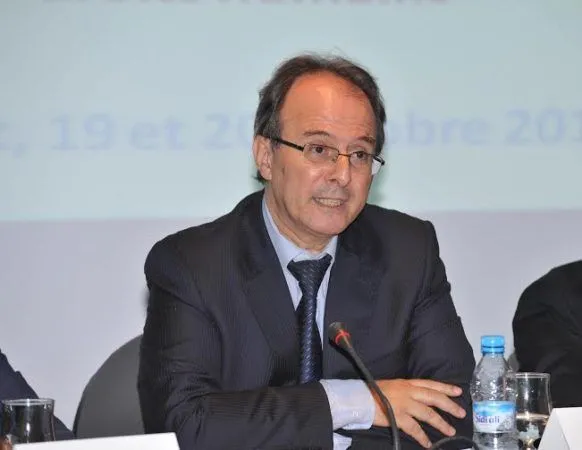
During the address delivered by Yassmine Boutayeb on behalf of Habib Belkouche, the Interministerial Delegate for Human Rights, the commitment of Morocco to the UPR mechanism and the associated dialogue was reaffirmed. She highlighted that the Rabat Retreat, held on June 5 and 6, 2026, in conjunction with the High Commissioner and UPR Info, had convened the President of the Human Rights Council, representatives from 26 states, UN institutions, national human rights institutions, civil society representatives, academics, and independent experts. "Twenty years after the establishment of the Universal Periodic Review, we find ourselves at a particularly pivotal moment in its history. The fourth cycle is nearing its conclusion while preparations for the fifth cycle are underway," Belkouche emphasized.
Key Insights and Future Directions for the UPR
One of the central conclusions emerging from the Rabat discussions was that the UPR mechanism does not require a fundamental overhaul, but rather a strengthening of its effectiveness on the ground. Belkouche noted, "The UPR does not need to be reinvented; it must be reinforced where its impact is most anticipated." This evolution necessitates better alignment between the recommendations generated during the review process and their actual implementation. He underscored that the credibility of the fifth cycle would increasingly depend on the mechanism's ability to bridge the gap between recommendations and their effective execution.
The first focus identified pertains to the role of implementation in the upcoming cycle, which according to the Interministerial Delegate, requires planning, coordination, clearly defined responsibilities, resources, monitoring tools, and continuity of action between cycles. The quality of recommendations also emerged as a crucial challenge. The discussions highlighted the need for recommendations to be "more precise, targeted, measurable where possible, and better tailored to national contexts." Organizing these recommendations by thematic areas and utilizing indicators to assess progress over time were also among the ideas presented.
Another key direction involves broadening national ownership of the UPR mechanism. Belkouche asserted that the ownership of the UPR should not rest solely with the executive branch; rather, it should be envisaged as a process that mobilizes all stakeholders involved in the implementation of human rights. Within this framework, National Mechanisms for Implementation, Reporting, and Follow-up (NMIRFs) play a vital role. Their function should extend beyond merely preparing reports for international mechanisms; their value lies in their coordination capabilities.
These mechanisms must ensure continuity between reporting, review, implementation, and follow-up, a necessity given the cross-cutting nature of many UPR recommendations, which may impact multiple ministries, institutions, or governance levels. Belkouche remarked, "An NMIRF with a clear mandate, sufficient capacities, and appropriate institutional anchoring can help transform recommendations into implementation frameworks, national priorities, identified responsibilities, and actions followed over time." This approach is particularly significant for Morocco, which aims to foster a conception of monitoring international commitments that transcends mere reporting exercises.
Belkouche concluded by emphasizing that Morocco is committed to enhancing cooperation among NMIRFs, particularly through the International Network of NMIRFs. The sharing of experiences, peer exchanges, and South-South and triangular cooperation are essential for states to strengthen their institutional responses. The reflection on the fifth cycle also encompasses operational modalities of the UPR, with several avenues discussed in Rabat, including improving the preparation of reviews, the potential for written transmission of recommendations, adjusting the cycle's duration, and enhancing mid-term follow-up.
Any procedural evolution should preserve the fundamental characteristics of the mechanism, including inter-state dialogue, the public and interactive nature of the review, universality, equality of treatment among states, and the participation of various stakeholders. New technologies also represent a potential leverage point for enhancing the functioning of the mechanism, facilitating the management and consolidation of recommendations, tracking their implementation, and ensuring the flow of information. However, their utilization requires better integration of existing tools with national systems and other international human rights mechanisms.
Finally, cooperation, technical assistance, and resources remain other focal points for consideration, aiming to better connect UPR recommendations with public policies, national development strategies, sustainable development goals, and cooperation frameworks. Belkouche asserted that one of the key lessons from the Rabat Retreat is that the UPR should be viewed as a continuous process rather than a one-time dialogue event held in Geneva. "The true challenge of the fifth cycle will be to better connect the various stages: preparation, review, adoption, implementation, follow-up, and preparation for the next cycle," he stated.
The Rabat Retreat did not result in a singular reform of the mechanism; instead, it provided orientations to inform international discussions about its future. "The goal was not to derive a singular reform or uniform solution but to identify a direction forward," summarized the Interministerial Delegate. Morocco now seeks to continue this reflection with states, the High Commissioner for Human Rights, national institutions, civil society, the academic community, and other stakeholders. A new retreat focusing on other international human rights mechanisms is also being considered to extend the dialogue initiated in Rabat.
Ultimately, Habib Belkouche believes that the strength of the upcoming cycle will also be measured by the capacity of institutions and actors to effectuate the recommendations. "The robustness of the fifth cycle will not be gauged solely by the quantity or quality of recommendations produced. It will also depend on the strength of the systems, institutions, actors, and cooperations that will enable their implementation," he concluded.
As reported by maroc-hebdo.com.