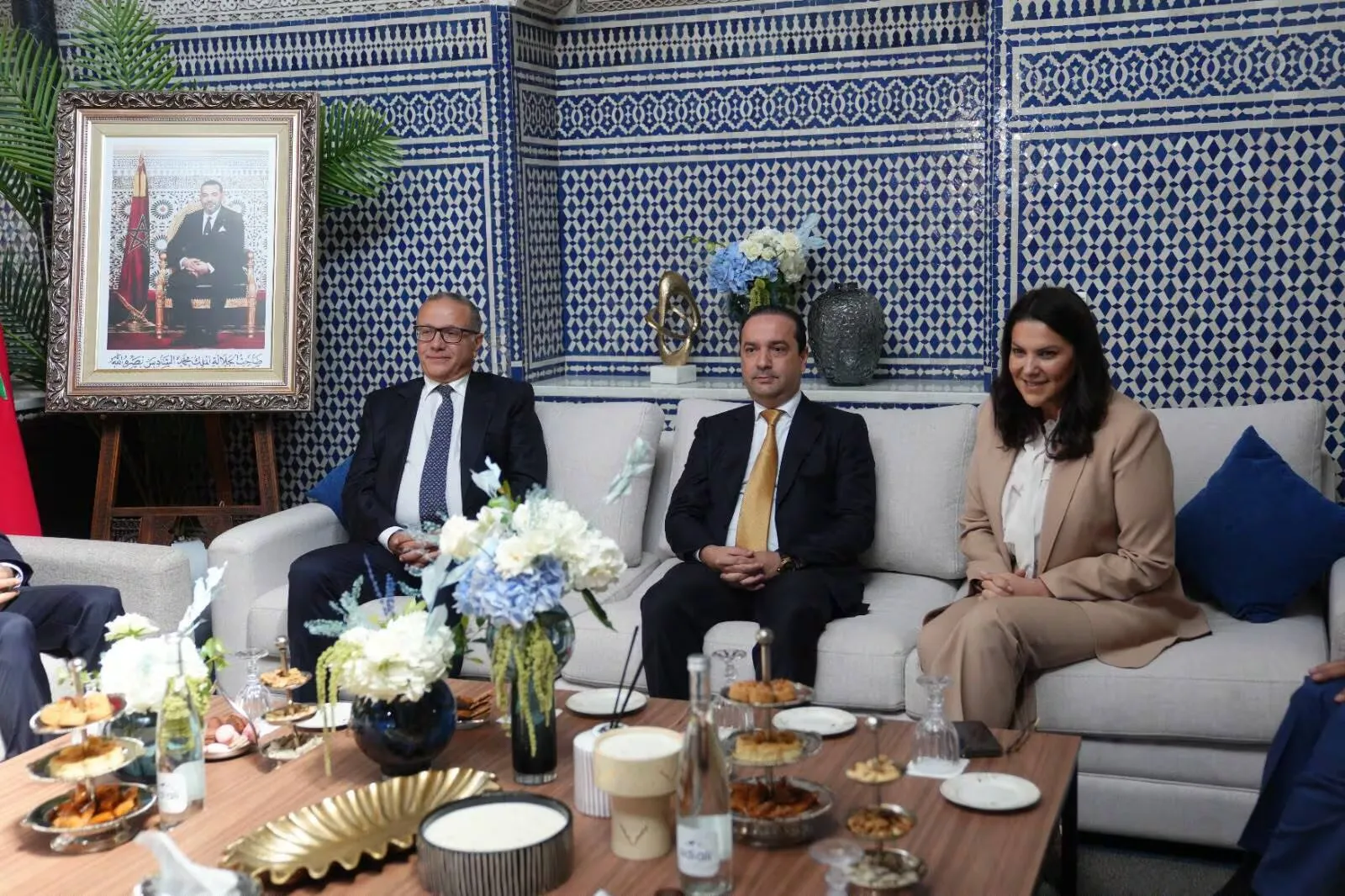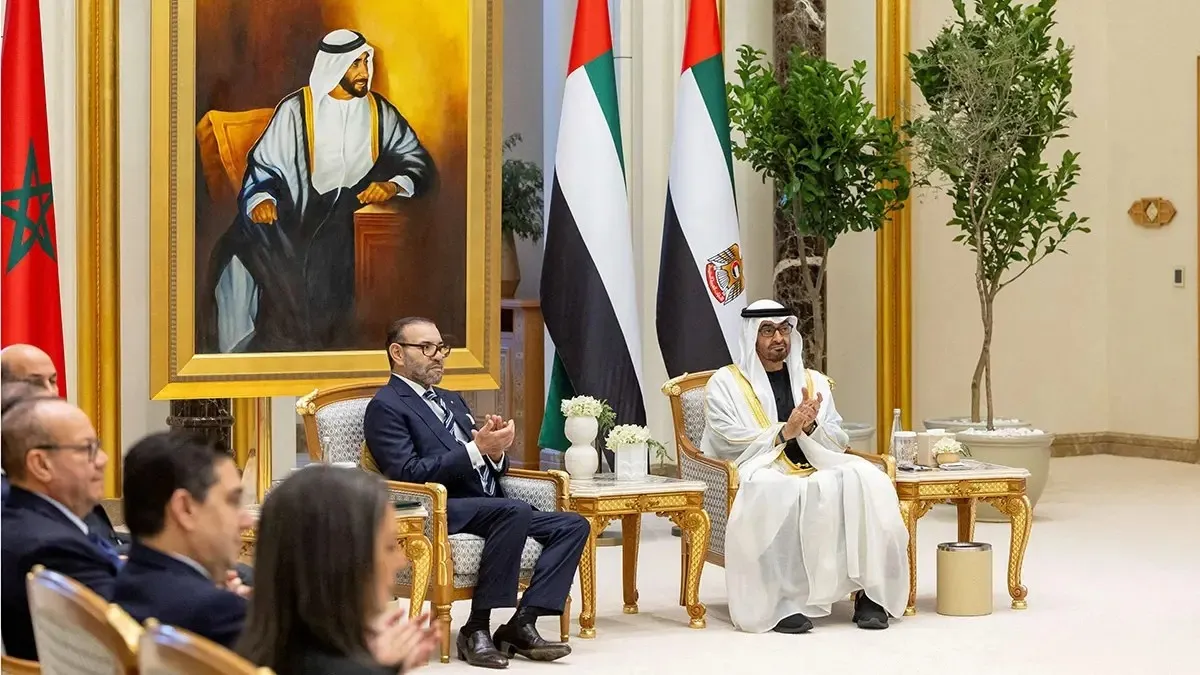

Over the years, Morocco and Abu Dhabi have gradually evolved their bilateral relationship into a robust geoeconomic alliance with regional ambitions. This partnership represents a confluence of capital investment, large-scale projects, and strategic alignments that now serve as diplomatic levers for both nations. The announcement in May 2025 of a joint investment of $14 billion marked the largest ever recorded in Morocco, while a comprehensive economic partnership agreement was signed in July 2024. Additionally, Morocco's accession in January of the same year to an Emirati industrial partnership, backed by a $10 billion fund, underscores the deepening ties between the two regions. Following the joint declaration signed in Abu Dhabi on December 4, 2023, by His Majesty King Mohammed VI and Sheikh Mohamed bin Zayed Al Nahyan, the nature of the partnership has significantly transformed. What began as a longstanding bilateral relationship has now been characterized as a 'trans-Arab geoeconomic partnership' in a report by the Observer Research Foundation (ORF), authored by researcher Akram Zaoui. This alliance now harnesses public enterprises, sovereign funds, and major private groups to exert influence over the economy, security, and regional diplomacy.
A Fifty-Year Relationship Gaining Momentum
The diplomatic relations between the two kingdoms are deeply rooted, dating back to the establishment of the UAE's embassy in Rabat in 1972, just a year following their independence. Sheikh Zayed bin Sultan Al Nahyan, the founding president of the UAE, made his first visit to Morocco in 1974. The Abu Dhabi Fund for Development (ADFD) has been active in Morocco since the mid-1970s, and a free trade agreement has linked the two nations since 2001. However, it is the personal relationship established in 1975 between His Majesty King Mohammed VI and Sheikh Mohamed bin Zayed during their time as classmates at the Royal College in Rabat that has significantly shaped their partnership. This personal connection facilitated regular visits and documented private meetings in 2020, 2022, 2024, 2025, and again in early June 2026 in Rabat.
From an economic standpoint, the disparity between the two countries is notable. Morocco, classified as a lower-middle-income country, recorded a Gross Domestic Product (GDP) of $146.1 billion for its 38 million inhabitants in 2023, compared to the UAE's $522.7 billion GDP for 11 million inhabitants, classified as a high-income nation. The GDP per capita is thus $3,945 in Morocco versus $48,941 in the UAE. This difference in scale partially explains the rationale behind the partnership: Morocco benefits from financial investment and industrial opportunities, while the UAE secures a strategic foothold on the African Atlantic coast.
Major Contracts Materializing the Relationship
The December 2023 declaration led to the signing of twelve memoranda of understanding, encompassing diverse sectors such as high-speed rail, water, energy, ports, airports, agriculture, finance, and data centers. The implementation of these agreements accelerated in 2025. In March, Morocco Telecom and its competitor Inwi announced a strategic alliance focused on fiber optics and 5G, with a joint investment of $460 million over three years. This agreement resolved a commercial dispute that had existed between the two operators since January 2024, with compensation owed by Morocco Telecom to Inwi being reduced to approximately $470 million. Two months later, TAQA Morocco, a subsidiary of the Emirati group TAQA, along with Nareva Holding, the Mohammed VI Fund for Investment, and the National Office for Electricity and Drinking Water, announced a joint investment of nearly $14 billion aimed at constructing desalination plants, two high-voltage direct current lines of 1,500 megawatts, and an additional 1,200 megawatts of wind capacity. According to the report, the UAE became the largest foreign investor in Morocco in 2024.
Other significant projects identified as priorities in the 2023 declaration include the Kenitra-Marrakech high-speed rail line, scheduled to open in 2029, the Nador West Med and Dakhla Atlantic ports, as well as the Nigeria-Morocco gas pipeline, an infrastructure project valued at $25 billion designed to connect Nigeria, Morocco, and eleven other West African countries, for which Abu Dhabi confirmed financial support in May 2025. The Moroccan group OCP, a global leader in phosphate fertilizers, is explicitly mentioned as a potential partner for the Emirati ADNOC in the area of food security.
The report emphasizes a less visible but equally important factor: the strategic proximity between the two monarchies, further strengthened by the successive crises that have plagued the region since the Arab Spring. Both nations are considered among the most steadfast signatories of the Abraham Accords, maintaining their commitment even after the attacks on October 7, 2023, and the subsequent war in Gaza. This continuity was exemplified in July 2024, with the signing of the comprehensive economic partnership between Rabat and Abu Dhabi, followed by Morocco's accession in January of the same year to the Integrated Industrial Partnership for Sustainable Economic Development, which is backed by a $10 billion fund managed by the Emirati sovereign fund ADQ.
The crisis triggered in February 2026 by the Israeli-American strike against Iran did not alter this trajectory. The report notes that His Majesty the King called the leaders of Bahrain, Qatar, Saudi Arabia, and the UAE to assert that the security of the Gulf and that of Morocco were one and the same. A month later, the eighth Gulf-Morocco ministerial meeting took place via videoconference, resulting in the announcement of a ninth edition to be hosted in the Kingdom. According to the report’s author, this resilience is rooted in the geoeconomic nature of the partnership: by aligning public enterprises, sovereign funds, and private interests with a shared political vision, Rabat and Abu Dhabi have constructed a relationship designed to withstand the diplomatic upheavals of the region rather than relying on them.
As reported by lopinion.ma.