
Explosive Growth in German Investments
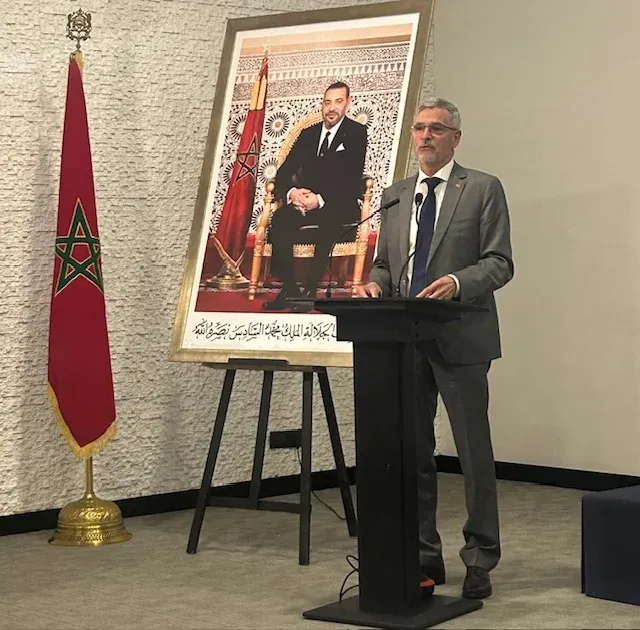
German investments in Morocco are witnessing an impressive surge, with foreign direct investment (FDI) flows projected to hit €2.1 billion in 2024. This financial influx is propelled by nearly 300 German companies operating within the Kingdom, contributing significantly to the local economy by creating around 35,000 skilled jobs. The automotive sector stands out as a key player in this upward trend, exemplified by the ambitious initiatives of the Leoni Group. Alongside various logistics projects, these developments are fortifying the economic partnership between Germany and Morocco, as highlighted by Robert Dölker, the German ambassador to Rabat, during a recent conference in Casablanca.
In terms of trade, the bilateral exchange of goods between Morocco and Germany reached an impressive €7.4 billion in 2025. This figure includes Moroccan exports valued at €3.5 billion and imports amounting to €3.9 billion, positioning Germany as Morocco's fifth-largest trading partner and sixth-largest supplier. Such statistics underscore the robust economic ties that have been established between the two nations, further enhancing their collaborative efforts in various sectors.
Key Developments in the Automotive and Logistics Sectors
The automotive sector plays a pivotal role in the growth of German investments in Morocco. The Leoni Group, in particular, is accelerating its expansion through multiple strategic projects. In Agadir, the company is set to invest €230 million in an industrial site that is expected to generate 3,000 direct jobs by 2027, marking a significant milestone as the first major automotive investment in southern Morocco. Leoni’s strategy also includes attracting international suppliers to the region, particularly in the heavy-duty industry, thereby strengthening the local economy further.
In addition to its southern ventures, Leoni is also enhancing its footprint in central Morocco. The company is establishing a new site in Bouskoura, which includes a research and development center, and is expanding its industrial hub in Berrechid with plans to employ up to 10,000 people by the end of 2026. Moreover, a new wiring plant is under construction in Kenitra, located within the Atlantic Free Zone. Overall, Leoni aims to boost its total workforce across Morocco to 23,000 by 2027 through six significant projects, with additional operations in Aïn Sebaâ and Bouznika.
However, while this positive momentum is evident, the German ambassador noted that the interest of other German manufacturers is still somewhat cautious due to the prevailing political and geopolitical uncertainties. He emphasized that Morocco's stability and its advantageous location for nearshoring are significant factors that could influence future investment decisions.
In the logistics sector, the Dachser group is planning an ambitious site in Tanger Automotive City, covering an area of 75,000 m², which includes a warehouse of 20,000 m², slated for completion by the end of 2027. Additionally, the company is exploring investment opportunities in the southern provinces, with plans to closely monitor the construction of the port of Dakhla, which is expected to open new trade avenues with West African countries.
Furthermore, the development of Moroccan port infrastructures is seen as a strategic advantage for German firms like Leoni, which views the future port of Nador as a viable alternative to Tanger Med during adverse weather conditions in the Strait of Gibraltar. Such developments are anticipated to lead to significant investment announcements in the coming months.
While the chemical and agrochemical sectors present potential opportunities for German investors, challenges remain. The German ambassador acknowledged that while the chemical industry continues to draw interest from various German companies, high operational costs and an unpredictable international landscape have led to a slower investment pace. The Bayer group, for instance, has successfully established itself in the agrochemical market through partnerships with local entities and has recently invested 200 million dirhams to launch three new production lines at its Nouaceur facility, aimed at exporting to 45 countries across the EMEA region.
Beyond industrial investments, German firms are increasingly focusing on high value-added services. For example, Informatique Energie Noire, specializing in software and ERP solutions, currently employs around fifty individuals between Casablanca and Khouribga and is aiming to increase its workforce to 300-400 employees within the next two to three years. To support this growth, an IT training academy is set to launch in Fez to cultivate a local talent pool.
In summary, the ongoing growth of German investments in Morocco is a testament to the strengthening economic relationship between the two nations. As underscored by both Ambassador Dölker and Katharina Felgenhauer, general manager of the German Chamber of Commerce and Industry in Morocco, these investments reflect the diverse sectors contributing to Morocco’s rising attractiveness as an investment destination and highlight the essential role of the private sector in fostering a sustainable partnership that benefits both countries.
As reported by en.yabiladi.com.