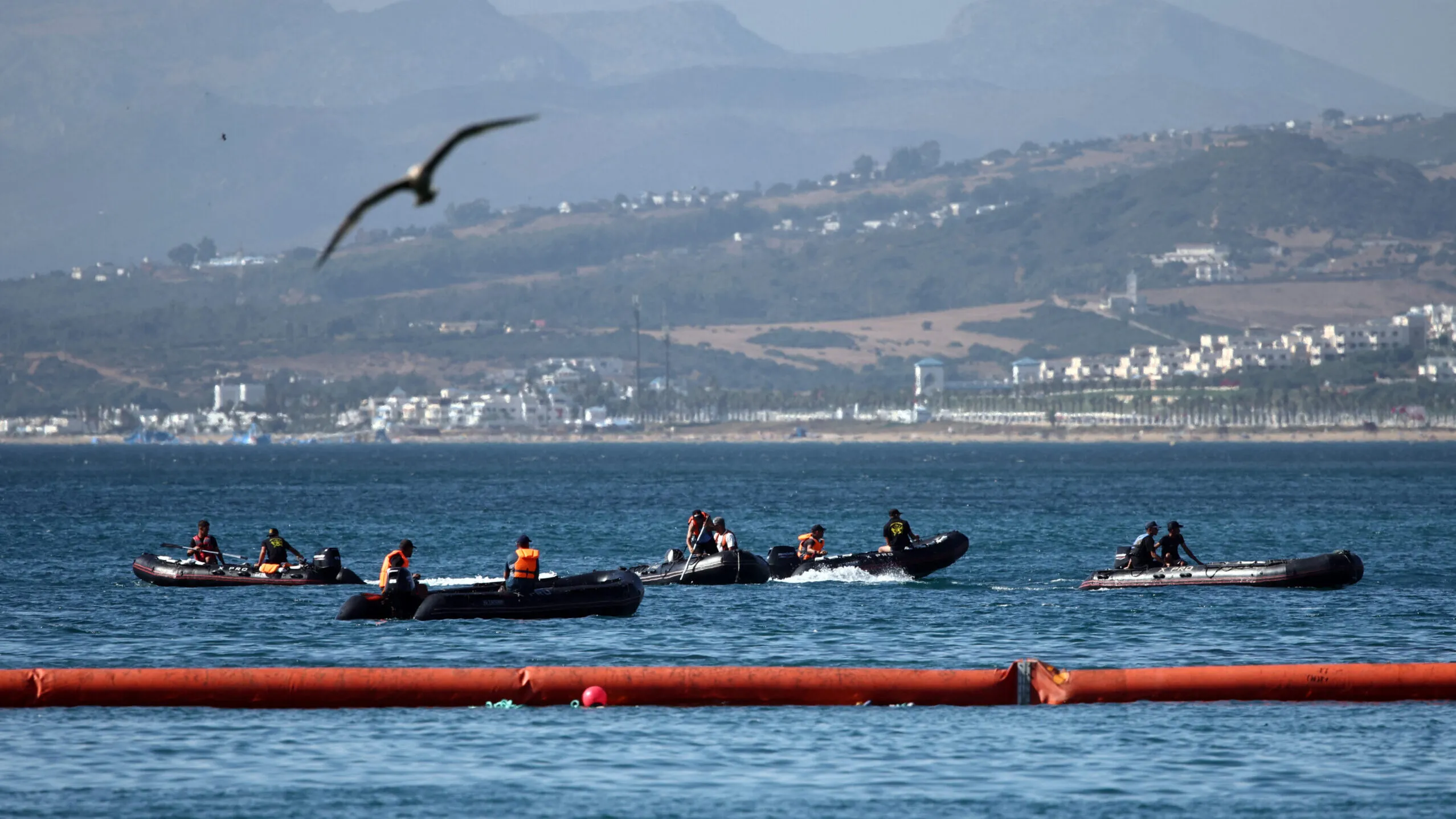

Increasing Incidents of Migrant Landings in Spain
Recent reports indicate a troubling trend as at least three boats carrying illegal migrants successfully reached Algeciras, Spain, on Saturday, marking a third consecutive day of such landings originating from Ceuta. The surge in arrivals is attributed to human trafficking networks capitalizing on dense fog conditions in the Strait of Gibraltar, which provide cover for their illicit operations. Authorities have confirmed that by August 19, a total of 148 migrants had arrived on the mainland aboard 29 boats, raising significant concerns regarding the security of the Schengen Area.
According to sources from the police, the latest landings included one vessel that reached Punta Carnero and two others that arrived at Cala Arenas. This prompted a swift security response in the area, particularly around the lighthouse and adjacent roadways. These recent incidents followed the arrival of nine migrants at Punta Carnero on Thursday, with another six arriving on Friday, three of whom were detained while the others managed to escape. The current weather conditions, characterized by near-zero visibility, are reportedly being exploited by trafficking networks, enabling them to transport illegal migrants from Ceuta using fast boats.
Government Response and Challenges
A report from the National Police’s National Centre for Immigration and Borders (CENIF) submitted to Spain’s Audiencia Nacional highlighted that the 148 migrants who entered Ceuta during the mass influx at the end of July have since made their way to Cádiz and Málaga. The report described the smuggling operations as a direct consequence of this mass invasion, with criminal organizations in Ceuta actively taking advantage of the situation. On August 21, authorities dismantled two such trafficking organizations, arresting five individuals in Ceuta and La Línea de la Concepción. These networks reportedly concealed migrants in various locations before clandestinely transporting them to departure points, charging fees that ranged from €4,000 to €10,000 per person.
The ongoing crisis has prompted the Spanish government, led by Prime Minister Pedro Sánchez, to intensify its confrontational stance regarding Ceuta, particularly concerning the accommodation of thousands of migrants still present in the city. The Transport Minister, Óscar Puente, invoked Article 73.3 of Spain’s Ports Law to authorize the temporary occupation of 16,000 square meters in the Port of Ceuta to establish facilities capable of housing over 1,000 migrants. This decision came after a local proposal for such a facility was voted down by the Ceuta Port Authority. Despite the local authority's concerns regarding the potential risks to critical infrastructure and port operations, the central government justified its actions on the grounds of general interest.
As reported by hungarianconservative.com.