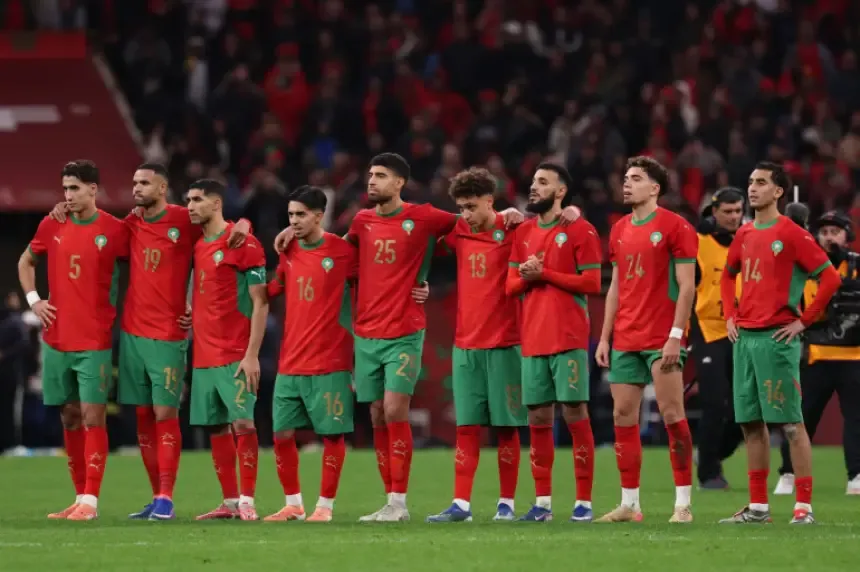

The excitement surrounding the upcoming 2026 FIFA World Cup is already palpable, particularly in the realm of global betting markets. Recent estimates indicate that approximately 2% of gamblers around the world have placed their bets on the Moroccan national team to clinch the prestigious title. This statistic underscores the symbolic presence of the Atlas Lions in discussions that are not only charged with enthusiasm but also grounded in statistical analysis and probability assessments.
This intriguing analysis comes from a comprehensive evaluation of the chances of teams qualifying for the 2026 World Cup, conducted by Taiwanese football expert Ho Jeh Chang Fa, who has been meticulously observing betting trends and analyzing odds for decades. The methodology involves converting betting odds into theoretical percentages based on a simple formula, providing a snapshot of the power dynamics among the contenders before the competition kicks off.
According to these calculations, Spain emerges as the frontrunner with an impressive 18.18% likelihood of winning, followed closely by England at 15.38%, and France at 14.29%. The South American giants, Brazil and Argentina, both share a solid 11.11% probability, reflecting their traditional stronghold in the quest for the trophy.
Behind the leaders, Portugal and Germany are each pegged at 7.69%, with the Netherlands at 4.76%, Norway at 3.85%, and Belgium at 2.94%. Meanwhile, the United States and Switzerland share a modest 2.44%, indicating a relatively competitive secondary tier of candidates. Morocco, alongside Colombia, finds itself at the tail end of this list with a 1.96% chance, only slightly ahead of Japan at 1.49% and the trio of Mexico, Uruguay, and Canada, each at 1.23%. Ecuador rounds out the rankings with a mere 0.99% chance.
This analysis inevitably brings to mind the events of the 2022 Qatar World Cup, where initial predictions confidently favored certain teams, only for the actual outcomes to diverge dramatically on the field. Morocco, in particular, delivered one of the tournament's most shocking surprises by reaching the semifinals, alongside Croatia's noteworthy performance, reinforcing the notion that football is not solely governed by statistics.
Ultimately, while betting markets provide a mathematical perspective on potential outcomes, they remain speculative and not definitive truths. The nuances of matches, tactical shifts, and even moments of chance can completely alter the landscape of the tournament, highlighting the World Cup as a unique event where numbers and surprises intersect, without any guarantee of predetermined results.
As reported by akhbarona.com.