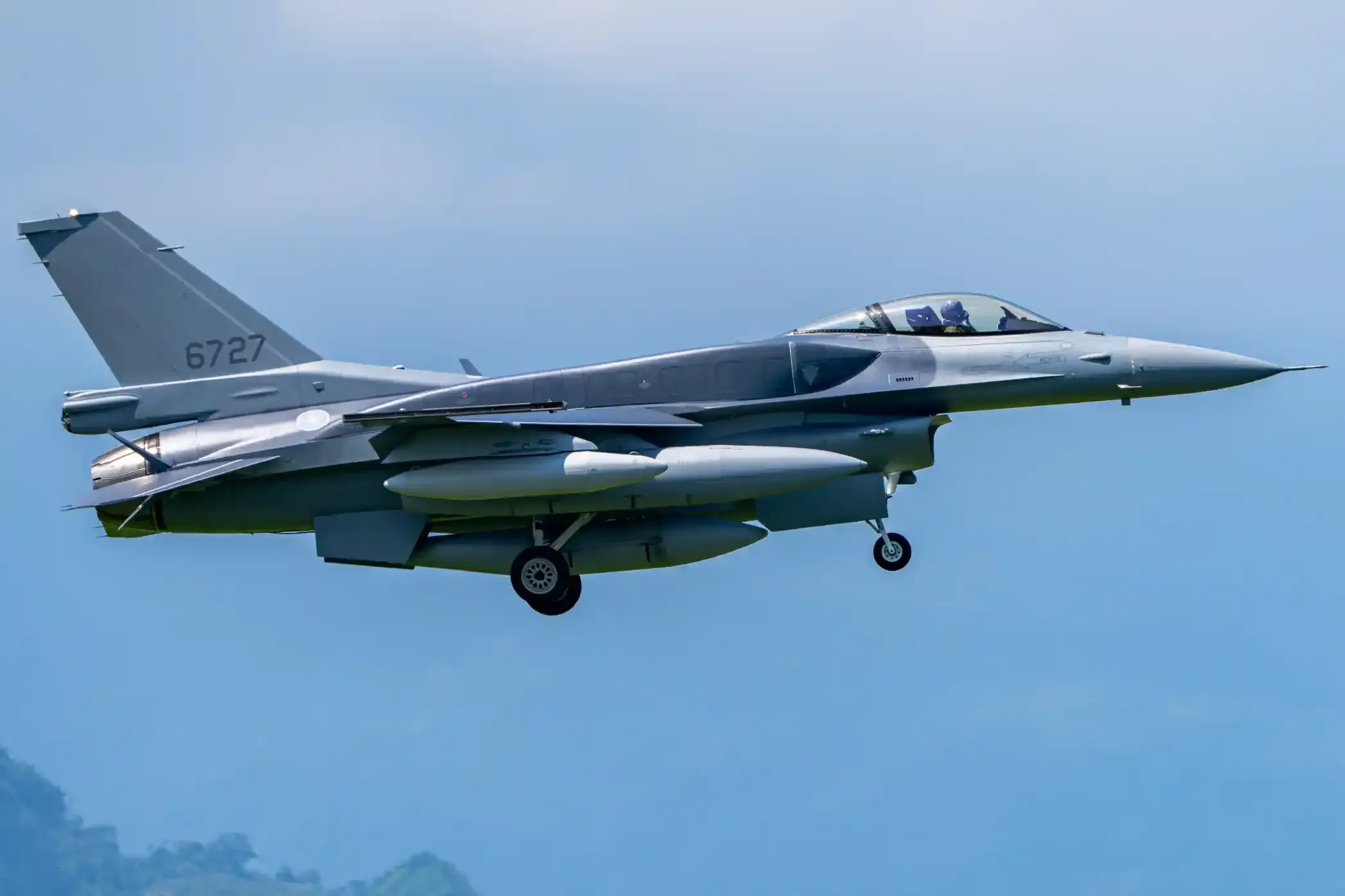

Taiwan Welcomes New F-16V Block 70 Fighters
On October 2, 2026, Taiwan marked a significant milestone in its military modernization efforts with the arrival of its first two F-16V Block 70 fighter jets. These aircraft are part of a larger deal with the United States, which includes a total of 66 state-of-the-art F-16s that were approved in 2019 at an estimated value of around $8 billion. The jets, designated with tail numbers 6727 and 6728, landed at Chihhang Air Base in Taitung County around noon local time after a journey from the United States that included stops in Hawaii and Guam. This delivery signifies the introduction of new aircraft into the Taiwanese Air Force, which are expected to enhance its aerial combat capabilities.
The procurement initiative, known as the "Fengxiang Project," encompasses not only the delivery of 66 F-16C/D Block 70 fighters but also includes an ongoing production line in the U.S. for an additional 63 aircraft, some of which are already in the delivery phase. The U.S. government had consented to the deal in August 2019, which includes not just the jets but also 75 F110 engines (including nine spare units), 75 APG-83 AESA radars, 75 Link 16 systems, 75 Modular Mission Computers 7000AH, and advanced GPS/INS navigation systems, along with essential electronic warfare and communication systems.
The F-16V Block 70 features an AN/APG-83 AESA radar that affords advanced target detection and tracking capabilities, significantly improving battlefield awareness compared to older radar systems. Additionally, the aircraft is equipped with a digital cockpit and a high-resolution central display, along with an Auto GCAS system designed to prevent ground collisions. The aircraft boasts a structural lifespan of up to 12,000 flight hours, according to the manufacturer’s specifications.
With the completion of this deal, Taiwan's Air Force is expected to have more than 200 F-16s in its fleet, significantly bolstering its aerial defense capabilities, as reported by Reuters. The original delivery schedule aimed to commence in 2023 and conclude by 2026; however, delays occurred due to technical issues and the integration and testing of new systems. Taiwan's Ministry of National Defense stated in March 2026 that these jets represent a new variant specifically tailored for Taiwan, requiring ongoing flight tests to implement necessary modifications and enhancements before their final delivery.
In March, it was announced that the first aircraft had successfully completed acceptance testing at Lockheed Martin's production facility in South Carolina, where production and testing for the remaining jets continue. Lockheed Martin has been operating the F-16 production line in Greenville, South Carolina, since the manufacturing was transferred from Fort Worth.
The Taiwanese parliament has allocated approximately NT$247.2 billion (around USD 7.8 billion) for this program, while the initial notification to Congress regarding the deal was about $8 billion. With the arrival of the first two jets, the Taiwanese Air Force is set to initiate the acceptance, training, and transition process to the new aircraft, and the Air Force leadership has confirmed that the jets will be integrated into service gradually, continuing to receive additional aircraft from the U.S. production line.
Morocco Awaits Delivery of F-16 Block 70/72 Fighters
Meanwhile, Morocco has been awaiting the delivery of 25 new F-16 Block 70/72 fighters, part of an American deal that also includes upgrading 23 existing F-16s to the F-16V standard. This acquisition is part of a broader strategy to enhance the capabilities of the Royal Moroccan Air Force in terms of surveillance, aerial combat, and network connectivity.
The new Moroccan fighters share several key technologies with the F-16V Block 70 jets that Taiwan has begun receiving, including the AN/APG-83 AESA radar, modern avionics systems, advanced mission computers, and improved structural integrity and battle management capabilities.
Morocco opted for the F-16 Block 70/72 under a deal approved by the U.S. in 2019, valued at approximately $3.787 billion, which includes not only the aircraft but also engines, support equipment, armaments, training, and logistical services. This deal represents a qualitative enhancement to Morocco's fleet, especially with the modernization of the 23 existing F-16s to the F-16V standard.
The arrival of the first F-16V jets in Taiwan highlights Morocco’s program, which is also poised for the transition of its new fighters from production and testing in the U.S. to operational delivery in the kingdom. According to ongoing discussions regarding the Moroccan program, the delivery of the new jets is anticipated to commence in 2027.
Upon completion of the program, the Royal Moroccan Air Force will operate 25 new F-16 Block 70/72 fighters alongside 23 upgraded F-16Vs, significantly enhancing the presence of the latest F-16 variants within the Moroccan fleet, moving away from reliance solely on older aircraft.
The Moroccan F-16 Block 70/72 will be equipped with the APG-83 AESA radar, capable of providing enhanced target detection and tracking capabilities, in addition to advanced electronic warfare systems and communication networks. This makes the Moroccan program distinct, as it combines the introduction of new aircraft while simultaneously upgrading the existing fleet.
In summary, the arrival of the first F-16V jets in Taiwan is a crucial indicator for Morocco as it signifies the ongoing production and delivery of the next generation fighter jets, with the Royal Moroccan Air Force eagerly awaiting the arrival of its new aircraft after a prolonged period of anticipation.
As reported by defense-arabic.com.