
Strained Relations Persist Despite Optimistic Government Narrative
The official discourse from the Spanish government promotes a narrative of a "historic" and "unprecedented" phase in relations with Morocco. According to the administration, the ties with Rabat have never been more prosperous, fluid, and beneficial for national interests. However, a detailed analysis reveals that the newly established roadmaps agreed upon with Morocco over the past four years—following Spain's deviation from its long-standing neutrality in the Sahara conflict—indicates a looming increase in tension and uncertainty for Spain on its southern flank.
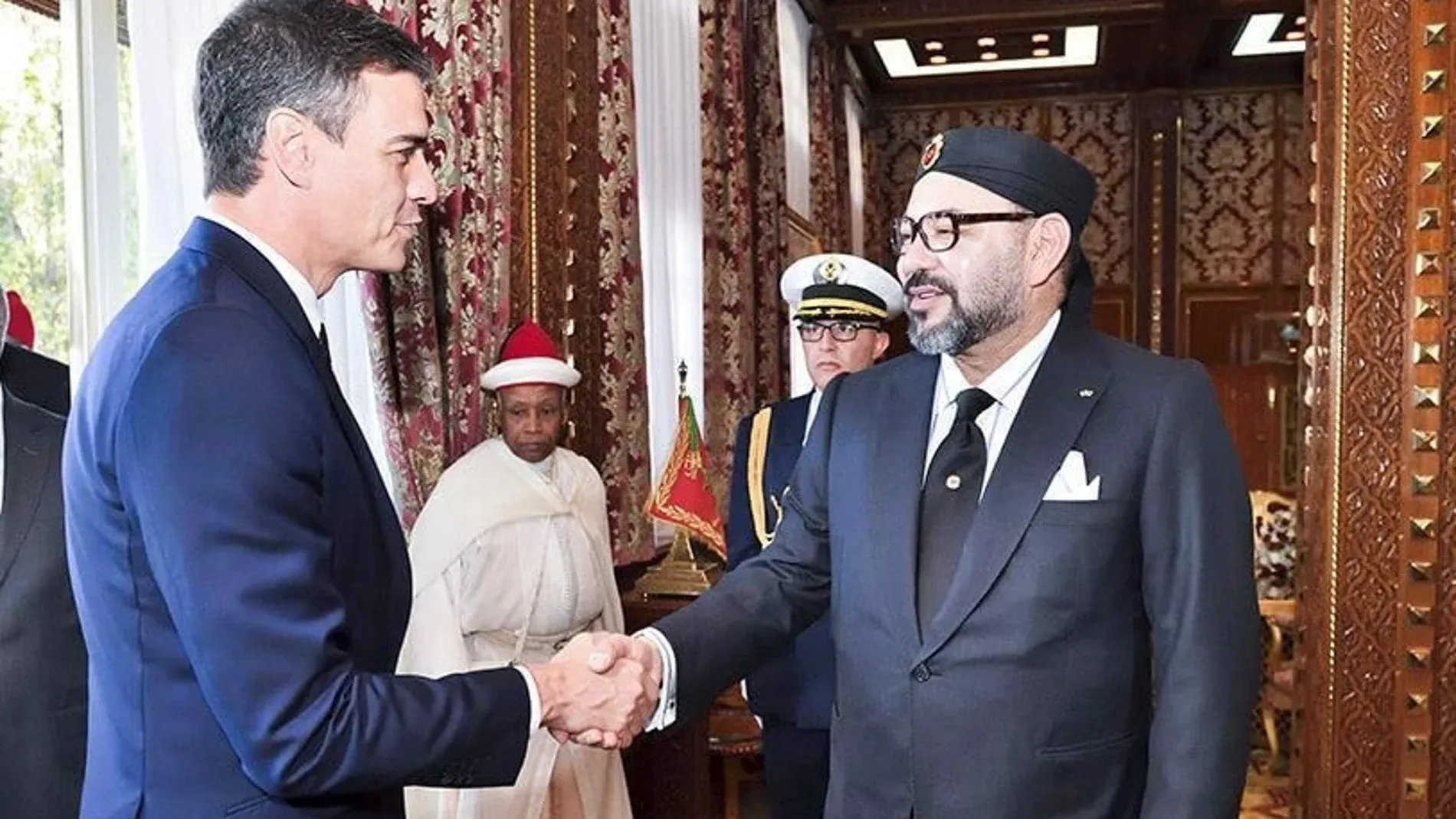
Notably, the absence of public friction with Morocco has been the most positive development for the various coalition governments led by Pedro Sánchez since he expressed support for Morocco's autonomy proposal for the former Spanish Sahara in a still-mysterious letter to King Mohammed VI. The situation has been a cause for celebration, particularly when compared to the events at the Ceuta border in May 2021, when the Moroccan border security forces' inaction—prompted by anger over the secret hospitalization of Polisario leader Brahim Ghali in Logroño—allowed between 8,000 and 10,000 young people to enter Spanish territory irregularly within two days.
Despite the seemingly good institutional relationship between the two nations, the Spanish government has little to boast about regarding tangible accomplishments in its dealings with Morocco in recent years. The commercial customs operations in Ceuta and Melilla, touted as a significant promise in the roadmap following normalization, remain non-functional. Although they have never progressed beyond mere pretenses, this summer's Operation Paso del Estrecho has provided Morocco with an excuse for yet another official closure. The lack of interest from Moroccan authorities has stalled negotiations regarding the delineation of maritime spaces along the Atlantic front. The border areas of Ceuta and Melilla are once again experiencing an uptick in migration. Furthermore, the crisis with Algeria has cost Spain over €3.2 billion in lost exports due to the military regime's blockade against Spanish companies.
In its efforts to avoid publicly or privately disturbing Morocco, Spain has failed to establish, let alone articulate, a solid, coherent, and well-reasoned position regarding its relations with Morocco and other Maghreb neighbors. Time and again, despite pressure from parliamentary partners and opposition, Prime Minister Pedro Sánchez has evaded providing the public with an explanation of the strategic reasons behind his support for Morocco on a crucial issue like the Sahara. This decision, which was not discussed beyond Moncloa and Rabat, resulted in over three years of diplomatic crisis with Algeria, only recently resolved. Since then, there has been a prevailing sense that Spain is perpetually reacting to the whims of Moroccan authorities.
“The normality is superficial. Morocco continues its pressure tactics, employing various tools such as irregular migration pressure. Morocco always leads, and Spain has merely been reactive,” asserts Carlos Echeverría, president of the Ceuta and Melilla Observatory. “Relations are not good at all, contrary to what the government wants us to believe. Many may convince themselves that the absence of major outbursts indicates stability. However, Morocco's territorial claims persist, and the use of hybrid tools continues. The migration pressure in Ceuta is particularly concerning,” concludes the International Relations professor at UNED.
Failures in Ceuta and Melilla Customs Operations
The most significant failure, not only due to the economic implications for the two autonomous cities but also as a testament to the Spanish government's impotence, lies in the ongoing blockade of the commercial customs operations in Ceuta and Melilla. Announced during the bilateral summit in Rabat on April 9, 2022, these operations were intended to stimulate the battered economies of the cities following years of border closures due to health reasons. However, local administrations and business associations have found themselves powerless. In Ceuta, the plan was to create a new customs operation, while in Melilla, it was about reinstating a facility that had been operational since the reign of Queen Isabella II until its unilateral closure by Morocco nearly eight years ago.
“Nothing surprises us anymore,” admits Enrique Alcoba, president of the Confederation of Entrepreneurs of Melilla (CEME). “The commercial customs have been closed since August 2018. What was opened in January 2025 was a makeshift solution, accommodating what Morocco wants and what Spain permits, which fails to defend the interests of Ceuta and Melilla.” “We all know the situation the government is in, and frankly, from CEME, we do not expect much because it has proven to be utterly ineffective in recent years regarding the customs issue, transport, traveler regimes, Social Security bonuses, or the transport of goods,” acknowledges the Melilla entrepreneur.
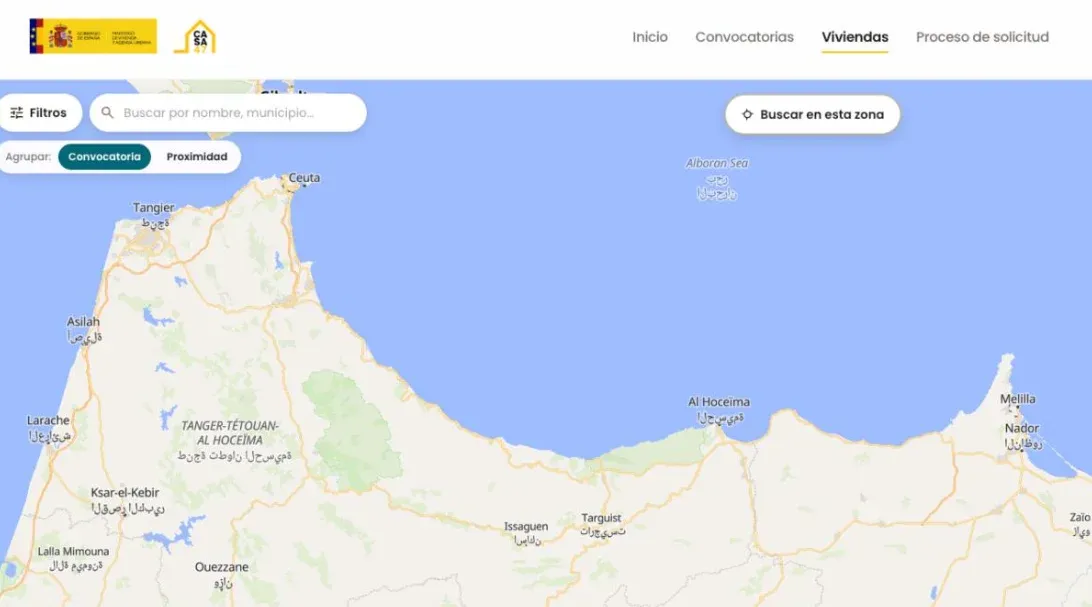
Furthermore, there has been little to no progress regarding the delineation of maritime spaces along the Atlantic front since the roadmap was signed in 2022, and the situation remains explosive. Morocco unilaterally approved two laws in 2019 delineating its maritime borders, claiming waters off Western Sahara, which threaten to overlap with those of the Canary Islands. Rabat claims waters surrounding Lanzarote, Fuerteventura, and parts of Gran Canaria, precisely where the Tropic Mountain—a rich source of tellurium and cobalt, strategic minerals—is located. The negotiation concerns the criteria for distribution: Spain advocates for a median line/equidistance, while Morocco invokes the principle of equity.
“The reality is that there have been no recent movements on this matter, and the roadmap from the last High-Level Spanish-Moroccan Meeting remains unfulfilled due to a lack of initiative from Morocco and a certain disinterest from the government, which has more pressing issues,” recalls Ángel Llorente, international consultant and judge. “My proposal is to negotiate an agreement that formally establishes the median line as a provisional boundary in the Atlantic front, as is currently practiced and supported by international law, until a final agreement is reached, in exchange for accepting joint control over the airspace of Western Sahara, despite the challenges since Morocco is not the administering power of the SO under international law and air traffic is regulated by the United Nations,” advocates Llorente, who served as the liaison judge with Morocco from January 2005 to October 2010.
While irregular arrivals in Spain have generally declined, Ceuta is experiencing the opposite trend. Between January 1 and July 15 of this year, Spain received 14,479 irregular migrants, which is a 24.7% decrease compared to 2025. However, land entries to Ceuta surged by 149%. In total, Ceuta and Melilla saw 2,991 people enter by land. This increase has not only persisted but has accelerated with the warmer weather: from July 1 to July 15, 244 individuals entered irregularly, surpassing the biweekly average of 215 recorded throughout the first half of the year, and significantly higher than the 155 from the same period in July 2025.
Additionally, Portugal and Morocco are revitalizing a project for a direct electrical interconnection, potentially through an underwater cable, and are seeking financial backing from the EU. There is also a project for a submarine cable between France and Morocco that would connect northern Morocco directly to the French coast, bypassing the Spanish network to reduce dependency on Spain as a conduit for African electricity to Europe.
Despite the celebratory atmosphere surrounding the upcoming 2030 World Cup, which will involve Spain, Morocco, and Portugal and is expected to act as a buffer against potential diplomatic crises, both sides of the Strait are acutely aware that hosting the final—Rabat aims to do so at the new Hassan II stadium—will test the influence of both countries within FIFA. All of this will coincide with a new legislative term that may lead to a change in government at La Moncloa. The potential departure of Sánchez and the formation of a possible government with the PP and Vox raises concerns in Rabat, which will continue to assert its territorial claims. “In light of the possibility of a shift in direction, Morocco is already setting the stage for the next administration to understand the rules of the game,” warns Carlos Echeverría. “Spain must have a clear idea of defending its interests and convey a message of rigorous demands: neighborly relations must be mutually respectful,” concludes the president of the Ceuta and Melilla Observatory.
As reported by larazon.es.