
Ceuta Crisis Escalates as Morocco Issues Trade Warnings
The ongoing crisis surrounding the Spanish exclave of Ceuta shows no signs of resolution, with Morocco recently threatening to suspend trade agreements with its Iberian neighbor. This alarming development was reported on Thursday by the Spanish newspaper El Español, which cited sources from the Moroccan royal cabinet. The potential fallout could affect hundreds of companies and jeopardize billions in contracts. The tensions stem from demands made by Spain's leftist coalition, Sumar, as well as the far-right Vox party, which is pushing to exclude Morocco from hosting the men's FIFA World Cup in 2030—a tournament it is set to co-host alongside Spain and Portugal. However, it is likely that these political maneuvers are not the sole reason for the warnings, particularly given that many contracts related to World Cup infrastructure would be rendered void in such a scenario. Recent discussions in Spanish media have suggested that Morocco's dependence on gas and oil supplies from Spain could be leveraged as leverage to compel Rabat to reconsider its stance on the North African exclaves. Justice Minister Abdellatif Ouahbi has reiterated Morocco's claim that Ceuta and Melilla rightfully belong to the kingdom.
Escalating Tensions and Humanitarian Concerns
Morocco's responsibility for the recent events in Ceuta seems increasingly clear, especially following reports from Spanish journalist Ignacio Cembrero on the platform X, regarding the re-emergence of the anonymous hacker known as "Jabaroot"—a name that translates to "power" or "tyranny." This hacker had previously made headlines for revealing sensitive information, including the salaries of Moroccan officials, which sparked social protests among Morocco's youth. Just before disappearing from the internet, Jabaroot expressed discontent over the migration crisis in Ceuta, accusing advisors to King Mohammed VI of orchestrating the situation and threatening to disclose details about Moroccan intelligence agents.
Another contentious issue between Rabat and Madrid concerns the fate of unaccompanied minors who reached the exclave in July. Reports indicate that around 500 girls are to be transferred to the mainland rather than returned to Morocco, igniting fierce debates in the North African kingdom, where these youths are perceived to be morally endangered in what is seen as hostile territory. The situation escalated further with the revelation that among the Moroccan refugees in Ceuta is a 28-year-old influencer named Wafa Atid. She has shared harrowing accounts with media outlets like El País and the agency Reuters regarding the plight of women in Morocco.
Atid, who appears to be largely unknown to Spanish media representatives, stated that women in Morocco are legally disadvantaged compared to men. However, she also claimed that her family pressures her to wear a hijab and restricts her ability to study or travel. In reality, Atid has been living in the United Arab Emirates and her online presence portrays her as a young woman "doing what she wants," as one commentator noted on X. It seems she has seized the opportunity presented by the mass border crossings to attempt to enter the EU through Ceuta, just like many others.
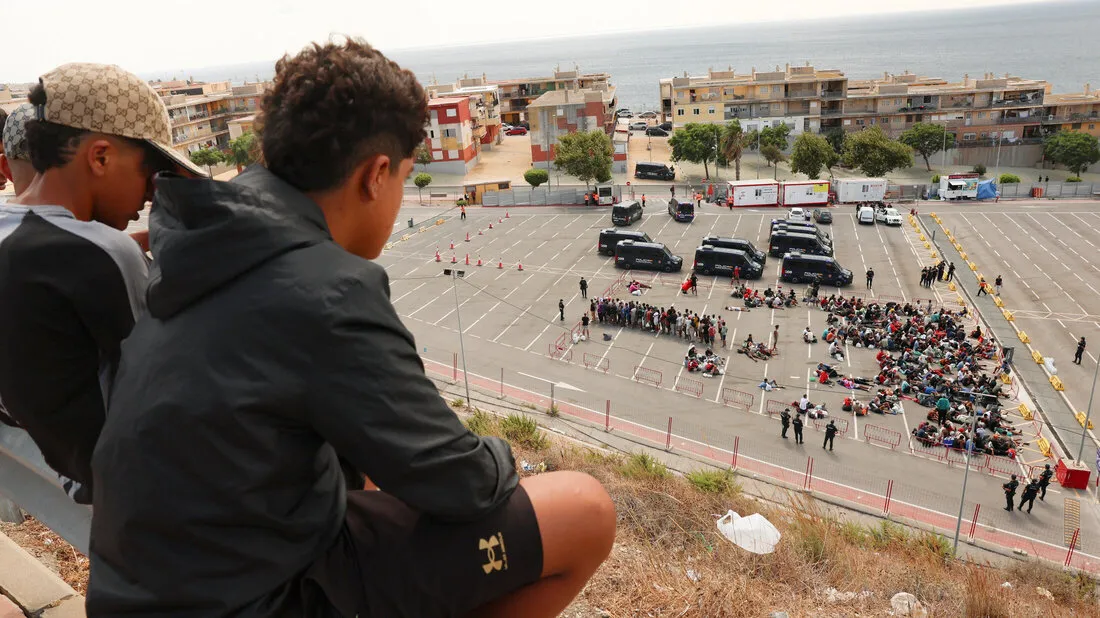
In Europe, Brussels is adopting a conciliatory approach towards Morocco, choosing to transfer an additional €114 million to the kingdom rather than questioning the effectiveness of previous aid aimed at improving living conditions to address the root causes of migration. Juan Vivas, the president of the autonomous city of Ceuta, continues to deem the situation in his city intolerable. Although the beach was cleared on Thursday after weeks of occupation by Moroccan migrants, who were subsequently housed in newly prepared facilities, Vivas stated during a city council meeting that merely relocating migrants does not resolve the underlying issues. He advocates for a decisive repatriation of Moroccan citizens, expressing feelings of abandonment by Madrid.
As reported by jungewelt.de.