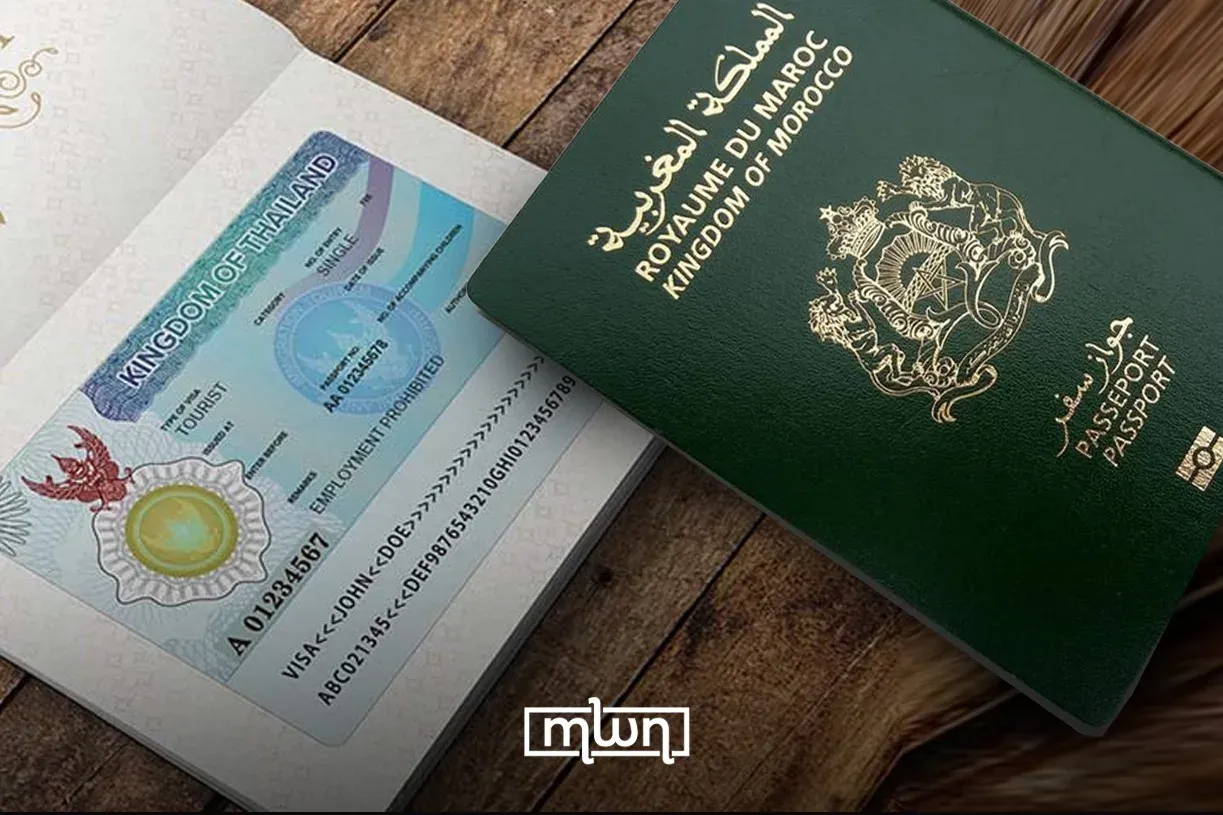

Thailand Ends 60-Day Visa-Free Entry for Moroccans
In a significant policy change, Thailand has officially revoked its 60-day visa-free entry program that has been in place for Moroccan travelers since June 2024. This decision, approved by the Thai Cabinet on May 19, 2026, will result in Moroccan nationals no longer enjoying the privilege of entering Thailand without a visa. The new regulations will come into force 15 days following their publication in the Royal Gazette, the country's official legal journal.
Initially, Morocco was added to the visa-free entry list in mid-2024 as part of Thailand's efforts to rejuvenate its tourism sector, which had been heavily impacted by the pandemic. At that time, Thailand expanded its visa-free entry program from 57 to 93 countries, allowing Moroccan passport holders to stay for up to 60 days without a visa. However, this opportunity is set to close as the Thai government restructures its entry policies.
New Entry Categories and Stricter Regulations
With the new framework, Thailand will categorize countries based on specific entry rules. Of the 93 countries, 54 will now be eligible for 30-day visa-free access, three will have 15-day exemptions, and only four countries will qualify for visas on arrival. Unfortunately, Morocco does not fall into any of these categories, meaning that Moroccan nationals will soon have to obtain a visa prior to traveling to Thailand.
Despite these changes, Thailand will continue to honor bilateral visa exemption agreements with certain countries, allowing nationals from China, Hong Kong, Macao, Kazakhstan, Laos, Mongolia, Russia, Timor-Leste, and Vietnam to benefit from 30-day visa-free access. Other nations, such as Argentina, Brazil, Chile, Peru, and South Korea, will maintain 90-day exemptions, while Cambodia and Myanmar will offer 14-day access for arrivals through international airports.
In light of the new regulations, the Moroccan Embassy in Bangkok, led by Ambassador Abderrahim Rahhaly, issued a notice on May 20, advising Moroccan travelers to be prepared for stricter financial scrutiny at Thai border checkpoints. The embassy highlighted that immigration officers might request proof of sufficient funds to cover their stay in Thailand and failure to provide this could lead to denied entry. This stipulation is not new but is being enforced more rigorously at various border posts. Hence, travelers are encouraged to have their travel documents, return tickets, accommodation proof, and evidence of financial capability ready before arriving in Thailand.
Thai Prime Minister Anutin Charnvirakul expressed that the revision of the visa policy was necessary to adapt to the current economic and national security landscape. Tourism Minister Surasak Phancharoenworakul reinforced that the decision was driven by both security concerns and economic considerations, especially in light of increasing issues related to illegal activities by foreign nationals taking advantage of visa-free entry.
The tightening of entry regulations comes amid a backdrop of heightened vigilance by Thai authorities, who have recently made several high-profile arrests related to drug trafficking and human trafficking. In a notable incident, police raided an unlicensed international school in Bangkok, leading to the arrest of ten foreigners working without the necessary permits.
In 2025, Thailand welcomed nearly 33 million international visitors, a figure that still lags behind the pre-pandemic peak of nearly 40 million in 2019. The first few months of 2026 alone saw nearly 12 million visitors, indicating a robust recovery trend in tourism. Under the new immigration framework, visitors arriving under any visa-free category should be ready to present a valid passport, return or onward travel details, accommodation information, and proof of sufficient funds upon entry.
For those currently holding visa-free status, they will be allowed to remain in Thailand until their permitted duration expires. However, travelers planning future trips are highly advised to verify the latest entry requirements specific to their nationality before making any travel arrangements.
As reported by moroccoworldnews.com.