
Morocco's Historic Bid for the 2030 World Cup
The upcoming FIFA World Cup set to take place in the summer of 2030 will be a historic event as it will be co-hosted by Spain, Portugal, and Morocco. This groundbreaking decision was announced by FIFA President Gianni Infantino during an extraordinary congress held on December 11, 2024, in Bangkok, Thailand. While this announcement marked a significant milestone in international football, it also raised questions about Morocco’s inclusion in what initially started as an Iberian bid between Spain and Portugal.
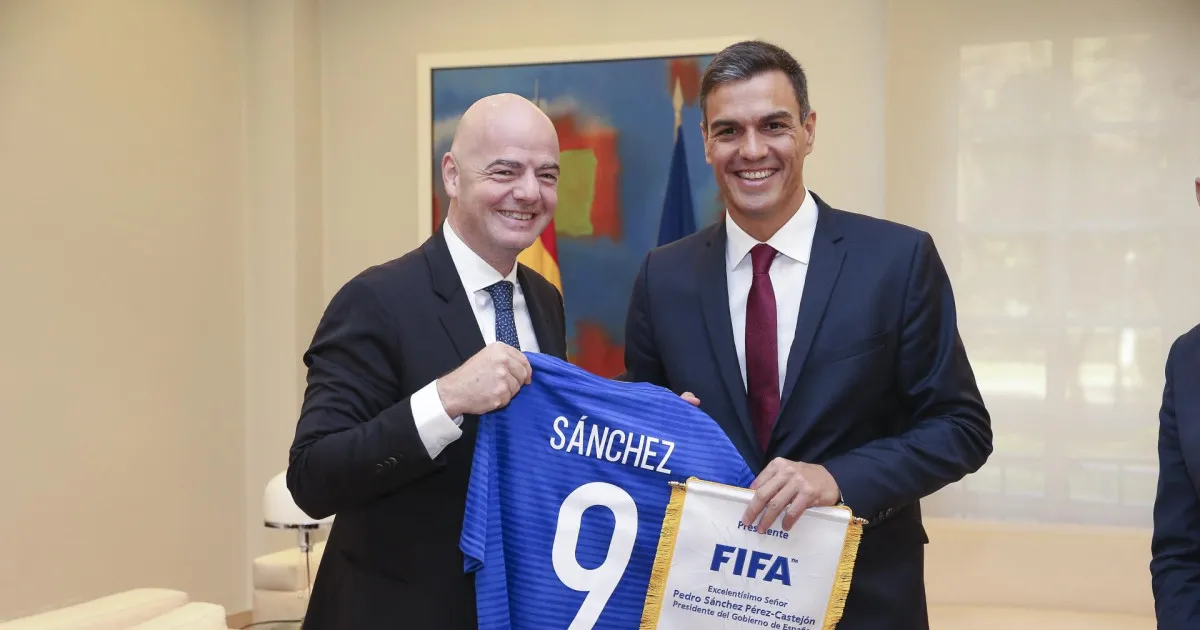
To understand how Morocco became part of this tri-nation endeavor, we must rewind to late 2018. At that time, Spanish Prime Minister Pedro Sánchez met with Gianni Infantino and Luis Rubiales, then president of the Royal Spanish Football Federation, to discuss the possibility of Spain hosting the World Cup alone, a feat not accomplished since 1982. However, Infantino was not entirely convinced about this singular approach. With the 2026 World Cup already planned to be hosted across three nations, the Spanish government decided to merge efforts with Portugal, thus forming a diplomatic alliance that seemed to solidify a two-nation bid for 2030.
However, in a notable turn of events, Sánchez made an official visit to Rabat, the capital of Morocco, where he proposed to King Mohammed VI the idea of including Morocco in their bid. He articulated a vision of creating a joint candidacy that spans two continents—Europe and Africa—aiming to foster cooperation and build bridges through football. This proposal intrigued the Moroccan monarch, yet, within a year, Morocco’s candidacy mysteriously faded away, only for Ukraine’s potential inclusion to be announced shortly thereafter. This was short-lived, as King Mohammed VI later reaffirmed Morocco's commitment to join Spain and Portugal in hosting the tournament.
Preparing for the World Stage
As we approach the summer of 2026, the World Cup is poised to be hosted by Spain, Portugal, and Morocco, but the location of the grand final remains a hotly debated topic. Throughout the lead-up to this monumental event, Morocco has consistently lobbied FIFA to secure the final match, intensifying their efforts by ordering the construction of the Grand Hassan II Stadium in Casablanca. This state-of-the-art facility, set to hold 115,000 spectators, is strategically aimed at positioning Morocco as the venue for the final, potentially overshadowing the Santiago Bernabéu Stadium, home to Real Madrid and one of the most modern stadiums in the world.
The final decision regarding the location of the World Cup final is expected to be announced by FIFA later this year, and until then, speculation and anticipation surrounding this monumental event continue to grow. The collaboration between these nations not only highlights the unifying power of sports but also reflects the evolving landscape of international cooperation through football.
As reported by eldebate.com.