
The Craftsmanship Behind Marrakech's Traditional Lanterns
In a small workshop nestled within the winding alleys of Marrakech's old city, shiny pieces of tin and colorful glass panels of various sizes are scattered around. A skilled artisan in his forties is engrossed in crafting a small metallic piece, gently hammering it before shaping it carefully with his fingers and securing it precisely to an incomplete lantern structure. The scent of metal mingles with a faint whiff of welding as the sound of a vintage radio fills the room, broadcasting a Ramadan play that is rerun annually, creating a scene where traditional craftsmanship intertwines with the memories of this sacred month.
Standing beside the artisan is Abdel Salam, a thirty-something street vendor who attentively observes the meticulous creation process. He lifts a small lantern towards the light, inspecting the reflection of the colored glass on its sides. Abdel Salam has been associated with this workshop for roughly seven years, having begun his journey selling lanterns to cafes and restaurants during Ramadan. Over time, he has become intimately familiar with the intricacies of this craft, understanding it as well as the artisans themselves. "When I see the light passing through the glass this way, I know the piece has succeeded. Customers often decide to purchase after they see the lantern lit up; the light is the best seller," Abdel Salam smiles as he shares his insight with Al Jazeera.
The Journey of Creation: From Metal to Light
However, the process of lantern making is not as quick as it may appear. It begins with a thin sheet of metal that is cut to precise measurements, followed by the drawing of intricate patterns before perforation and shaping commence, resulting in complex geometric designs. The pieces are then coated with special materials to preserve their luster, after which the stained glass is meticulously fixed piece by piece into the metal framework. Each time Abdel Salam attempts these steps himself, he adds his own personal touch, even though mastering these techniques requires years of experience. "The small details determine the lantern's quality and its market price," he reflects while turning a green glass piece between his fingers.
The artisan is reticent to disclose the number of pieces he completes daily, simply stating, "Every day has its earnings," as production varies based on the lantern's size, the complexity of its decorations, and customer requests. Abdel Salam, on the other hand, notes that he typically sells between five and ten pieces each night during Ramadan. The cost of a single lantern starts at around 25 Moroccan dirhams (approximately $2.5) and can escalate to 500 dirhams ($50) or more for larger lanterns or those featuring more intricate designs and glass. The profit margin, which is shared between the artisan and the vendor, usually ranges from 10% to 50%, depending on negotiation skills and market demand. "Selling requires a bit of luck... and sometimes a lot of patience," Abdel Salam remarks as he arranges some pieces in his bag.
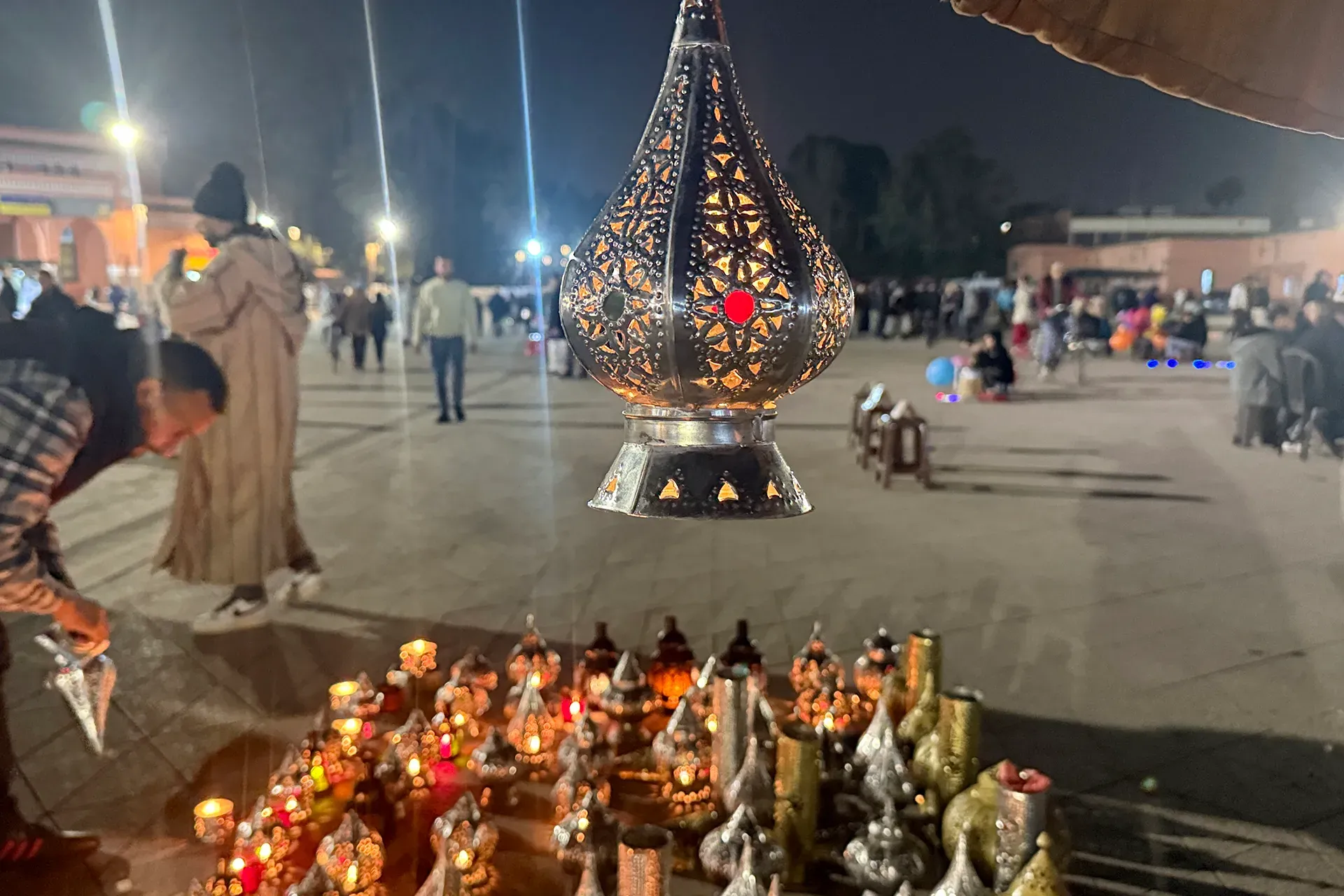
For the artisan, the value of the lantern transcends mere numbers. Each piece embodies hours of painstaking manual labor, beginning with drawing and perforating, followed by welding and polishing. When the lantern is lit for the first time, he feels as though all his effort has transformed into light. In one of the tourist pathways within the old city, vendor Abdel Wahid lays his lanterns on the ground, igniting some as evening descends. As groups of tourists pass by, the colorful glow instantly captures their attention. "A tourist may not know the story behind the lantern, but they are drawn to the light and its colors, and sometimes that's enough to make a purchase," Abdel Wahid explains.
He adds that displaying the lanterns in this manner compels him to light a number of candles daily, costing around 150 dirhams ($15), which increases expenses. However, the profits remain satisfactory and help him support his family. The sale of lanterns is not limited to direct market displays; artisan Abdel Ali prefers working on a pre-order basis, crafting pieces according to customer preferences. He has immense confidence in the quality of his work, sometimes suggesting customers test for water leakage through the welding joints to demonstrate the craftsmanship. "When a customer requests a special piece, they feel it has been made just for them, so I prefer working on one large lantern for several days rather than producing numerous small pieces," he elaborates.
Some artisans speculate that lantern-making arrived in the region centuries ago, influenced by Eastern styles, but over time it has acquired a local character, becoming an integral part of the Ramadan atmosphere in Morocco's old cities. Although Ramadan remains the peak season, the demand for lanterns is no longer confined to this month alone; Marrakech attracts visitors year-round, with increased interest during tourist seasons and weekends. "Ramadan remains the strongest season, but sales do not completely halt afterward, which has allowed some of us to transform this trade from a seasonal activity into a nearly permanent business," Abdel Wahid notes.
After midnight, both Abdel Wahid and Abdel Salam wrap up their work. The following day, Abdel Wahid merely sends a reminder for new orders to the artisan, while Abdel Salam prefers to return to the workshop in the afternoon to witness the birth of another lantern, readying himself for another journey through the alleys of the city, carrying with him a piece of the workshop's light and the spirit of a craft that renews itself with each Ramadan.
As reported by aljazeera.net.