
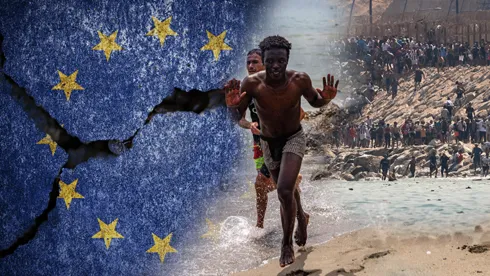

In a dramatic turn of events, a surge of tens of thousands of individuals made their way from Morocco into Ceuta, a Spanish enclave situated on the North African coast. This influx occurred through both maritime routes and a breach in the border fence, overwhelming Spanish security forces and filling reception centers to capacity. What started as a localized incident swiftly escalated into a pressing crisis, reverberating throughout Europe and raising urgent questions about border management and migration policies.
Understanding the Unique Geography and Political Context
Ceuta, along with its counterpart Melilla, represents one of the most perplexing borders in the world: a piece of European territory situated on African soil and encircled by Morocco. For migrants who successfully cross into these enclaves, it signifies entry into Spain and, by extension, the European Union. However, the true barriers to entry are not merely the physical fences and surveillance systems on the Spanish side, but rather the Moroccan security forces that control the other side of the border. The latest wave of crossings has left many questioning the reasons behind such a mass movement.
Initially, the sudden influx was attributed to social media rumors, smuggling networks, and a misinterpretation of a Spanish court ruling that limited the immediate return of migrants who arrived by sea. As the situation unfolded, there were growing suspicions regarding Morocco's role in the crisis. Reports indicated that while the Moroccan authorities did not premeditate the mass crossing, they had relaxed border controls significantly in the lead-up to the event, allowing the situation to escalate uncontrollably.
Political Implications and Broader Concerns
Ceuta's regional president, Juan Jesús Vivas, informed the European Parliament that approximately 100 individuals lost their lives during this border rush, with estimates suggesting that between 3,000 to 5,000 migrants remain within the enclave. In response, EU Migration Commissioner Magnus Brunner has called for leveraging trade and visa policies to exert pressure on Morocco, while Vivas has voiced his belief that Morocco is not a dependable partner in these matters. The crux of the crisis lies in the perilous question of how such a large number of people managed to converge on one of the most heavily fortified borders in the region simultaneously and what this means for Europe when a key ally in border management falters.
Since the refugee crisis of 2015, the EU has aimed to push its borders further south and east, investing heavily in countries of origin and transit. This investment has been directed towards training security forces, enhancing surveillance, combating smuggling, and facilitating the return of migrants to their home countries. In recent years, Morocco has become a pivotal partner in this strategy, receiving significant EU funding aimed at bolstering border management and dismantling smuggling networks.
Yet, this reliance on Morocco raises inherent vulnerabilities. When a country is entrusted with a segment of Europe's border control, it wields the power to dictate the strictness of enforcement, which can lead to sudden and unpredictable surges in migration. The precedent for this was set in May 2021 when roughly 8,000 people crossed into Ceuta amidst a diplomatic spat between Spain and Morocco concerning Western Sahara. This incident underscored the precarious nature of externalizing border management, as Morocco’s enforcement can be influenced by its geopolitical interests and relations with Spain.
In summary, the Ceuta crisis is emblematic of a broader, intricate relationship between migration, border management, and international diplomacy. As Europe seeks to stabilize its migration routes and manage its borders remotely, the potential consequences of relying on external partners become increasingly evident. The complexities of migration as a tool of foreign policy highlight the urgent need for comprehensive strategies that address not only the immediate challenges but also the underlying conditions driving people to seek refuge in Europe.
As reported by ynetnews.com.
