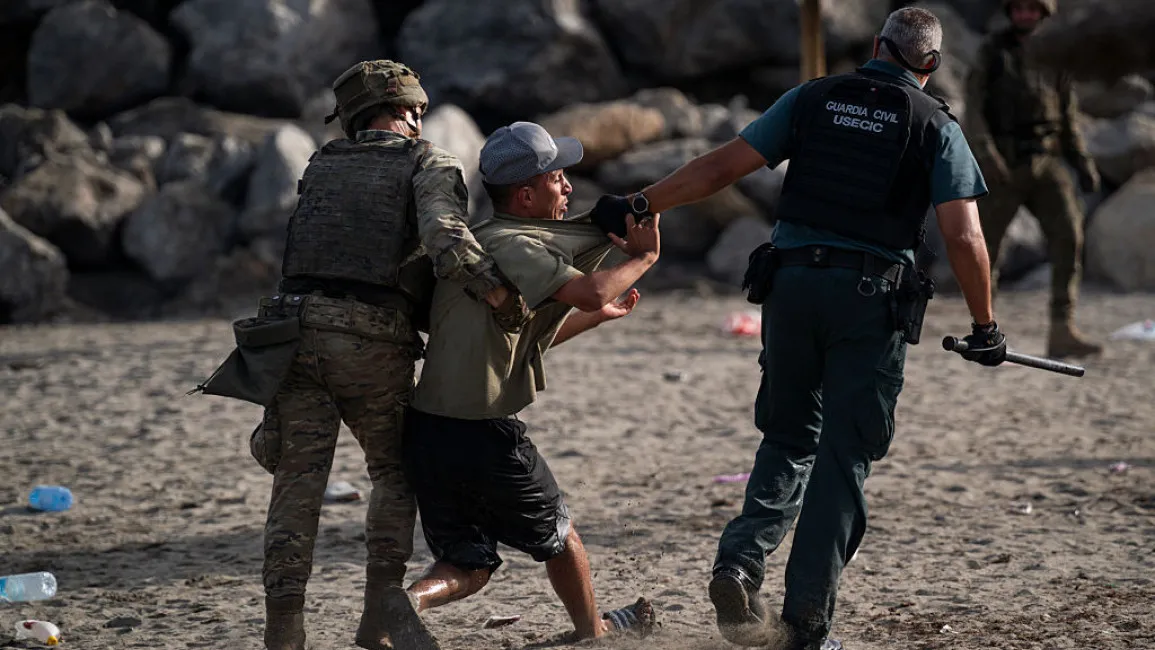

A surge of approximately 60,000 Moroccan migrants into Ceuta, a Spanish territory, culminated in a tragic death toll exceeding 140, igniting a far-right backlash across Europe and drawing widespread international commentary. Notably, former US President Donald Trump referred to this influx as an 'invasion,' while France imposed stricter border controls with Spain, Italy considered migration regulations, and German Chancellor Friedrich Merz urged Morocco to immediately repatriate illegal migrants. This unprecedented movement of people not only spotlighted the humanitarian crisis at hand but also reignited the longstanding political tensions between Spain and Morocco regarding the territorial status of Ceuta and Melilla, which are pivotal transit points for migration into Europe.
Ceuta, strategically positioned on North Africa's Mediterranean coast, lies approximately 140 miles northwest of Melilla, forming the European Union's only land borders with Africa. Despite being under Spanish control since 1580, the territory remains a contested region, with Morocco disputing Madrid's sovereignty. The recent mass crossing of migrants follows a significant ruling by the Spanish Supreme Court, which declared that authorities could not summarily return migrants intercepted at sea back to Morocco. Spanish Prime Minister Pedro Sanchez attributed the surge to trafficking organizations exploiting this ruling, which seemingly undermined Morocco's typically stringent border enforcement.
The failure of Moroccan border guards to effectively manage this influx raises questions about the motivations behind the crossing. Historically, Morocco has employed heavy-handed tactics to deter migrants from approaching Ceuta, but a shift in border control policies during a prior diplomatic dispute in 2021 allowed thousands of migrants to enter the enclave within days. The current situation appears driven not only by external factors but also by domestic pressures within Morocco, where high unemployment and public discontent have prompted widespread protests against the government's handling of economic challenges. Concurrently, the potential for diplomatic leverage against Spain, as Morocco seeks to demonstrate its importance in European security, cannot be overlooked.
Reports have surfaced indicating that some migrants were influenced by social media claims suggesting that crossing into Ceuta would facilitate their transfer to mainland Spain. In a climate where political repression overshadows governmental support for citizens, many individuals may feel compelled to pursue desperate measures for a better future. Initial responses from Moroccan authorities were muted, and when they finally addressed the situation, the Interior Ministry attributed the crisis to misinformation and external trafficking networks, deflecting blame from its own role in the events.
Furthermore, allegations have emerged linking Israel to the crisis, with some activists suggesting that the Israeli government is manipulating the situation to undermine the pro-Palestinian stance of Prime Minister Sanchez. The deterioration of diplomatic relations between Spain and Israel has been marked by public criticisms from Israeli officials, who have accused Spain of failing to address its colonial enclaves in Africa. This diplomatic friction has created an environment ripe for speculation about external influences in the crisis. While some Israeli representatives distanced themselves from the harsh critiques of Spain, the broader context of international relations suggests that geopolitical dynamics are intricately woven into the migration narrative.
As the situation develops, the focus remains on understanding the factors that led to this tragic loss of life among migrants seeking refuge and opportunity. The urgent need for answers and accountability is paramount, not only for the victims and their families but also for addressing the broader implications of migration crises in a rapidly changing political landscape. Ultimately, whether the Moroccan authorities acted independently or if external forces played a role in this humanitarian tragedy, the quest for justice and clarity is essential to prevent future occurrences of such devastating events.
As reported by newarab.com.