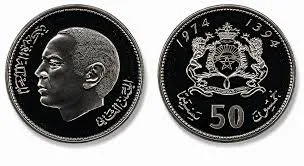

In the bustling streets of Casablanca, a tobacconist in the Roudani neighborhood candidly remarks, "I don’t have any half-dirham coins left. Take a chocolate, a piece of candy, or a stick of gum.” This statement reflects a growing frustration among vendors and customers alike, as many businesses are grappling with a notable shortage of coins, particularly the one-dirham denomination. A young employee from a newly opened convenience store on Rue d’Agadir echoes this sentiment, stating, “Sorry, but we are short of coins, including one-dirham coins. Management leaves us to deal with customers on our own.” This anecdote illustrates the challenges faced by everyday Moroccans as they navigate transactions without sufficient change.
One mother, expressing her exasperation, adds, “Count yourself lucky! In some supermarkets, they simply don’t give you your small change, as though that were perfectly normal.” However, the situation is not uniform across the city or the country. A resident of Boulevard Mohammed V humorously offers, “I have half-dirham coins to spare. Chehal bghiti? (How many do you want?)” highlighting the irony of the coin shortage amidst varying availability in different neighborhoods.
Understanding the Coin Circulation Crisis
In response to inquiries from TelQuel, Bank Al-Maghrib has acknowledged the difficulties surrounding the half-dirham coin's circulation. Despite having what they deem satisfactory stock levels, the central bank pointed out that the slow circulation of these coins—especially between informal and formal economic channels—has contributed to the ongoing issue. Each year, approximately 18 million half-dirham coins are introduced into the economy, with a staggering total of nearly 450 million of these coins reported in circulation by the end of May 2026. These coins represent roughly 13% of the total number of coins and 5% of their total value across Morocco.
Moreover, the amount of cash circulating in the economy has increased dramatically, soaring to 543 billion dirhams by the end of May, up from just 250 billion dirhams at the close of 2019. This surge has put pressure on the cash-handling infrastructure, yet Bank Al-Maghrib and local banks have managed to meet market demand under optimal conditions. In recent years, the number of Moroccan coins in circulation has increased at an average annual rate of 3%, culminating in approximately 3.4 billion coins valued at around 4.7 billion dirhams by the end of May.
Efforts to Improve Coin Circulation
Bank Al-Maghrib has undertaken significant measures to ensure that the needs of the market are met. Approximately 100 million new coins were injected into the Moroccan economy in each of the past two years, compared to around 90 million annually between 2021 and 2023 and 80 million per year before 2019. To contextualize these figures, the central bank often evaluates the number of coins in circulation per capita. According to the latest statistics from the High Commission for Planning (HCP), this metric indicates that Moroccans have an average of 128 dirhams worth of coins in circulation per citizen, or 175 dirhams per individual aged 15 and older. These levels are comparable to those seen in several emerging economies.
Looking ahead, Bank Al-Maghrib has laid out a strategic plan aimed at enhancing the circulation of coins while simultaneously increasing the volume of coinage it introduces into the market. This proactive approach is essential to alleviating the coin shortage and ensuring that transactions can proceed smoothly throughout Morocco.
As reported by telquel.ma.