
The Rising Costs of Jemaa el-Fna's Renovation
In the heart of Marrakech, the ongoing transformation of Jemaa el-Fna has become a subject of increasing concern as the public funds allocated for the project continue to escalate. Initially reported at 68 million dirhams, the estimated costs have surged to 114 million and now reach a staggering 160 million dirhams, depending on the scope of the project defined by various stakeholders. This dramatic increase has raised eyebrows among residents and observers alike, prompting questions about the financial transparency and accountability of such a significant investment.
In November 2025, the first vice president of the Marrakech municipal council announced that 68 million dirhams had been earmarked for the redevelopment of this iconic square. However, the main contract awarded to Al Omrane Marrakech-Safi alone accounts for 114 million dirhams. This discrepancy has led to further discussions regarding the overall budget for the project, with some presentations indicating a total budget of 160 million dirhams. It is important to note that these figures do not necessarily correlate directly to the same set of renovations; the higher budget may encompass a wider array of improvements beyond just the installation of new flooring. This sequence of increasing estimates has inevitably led to scrutiny regarding the actual costs of the renovation and how expenses are being allocated.
Criticism of the Renovation and its Aftermath
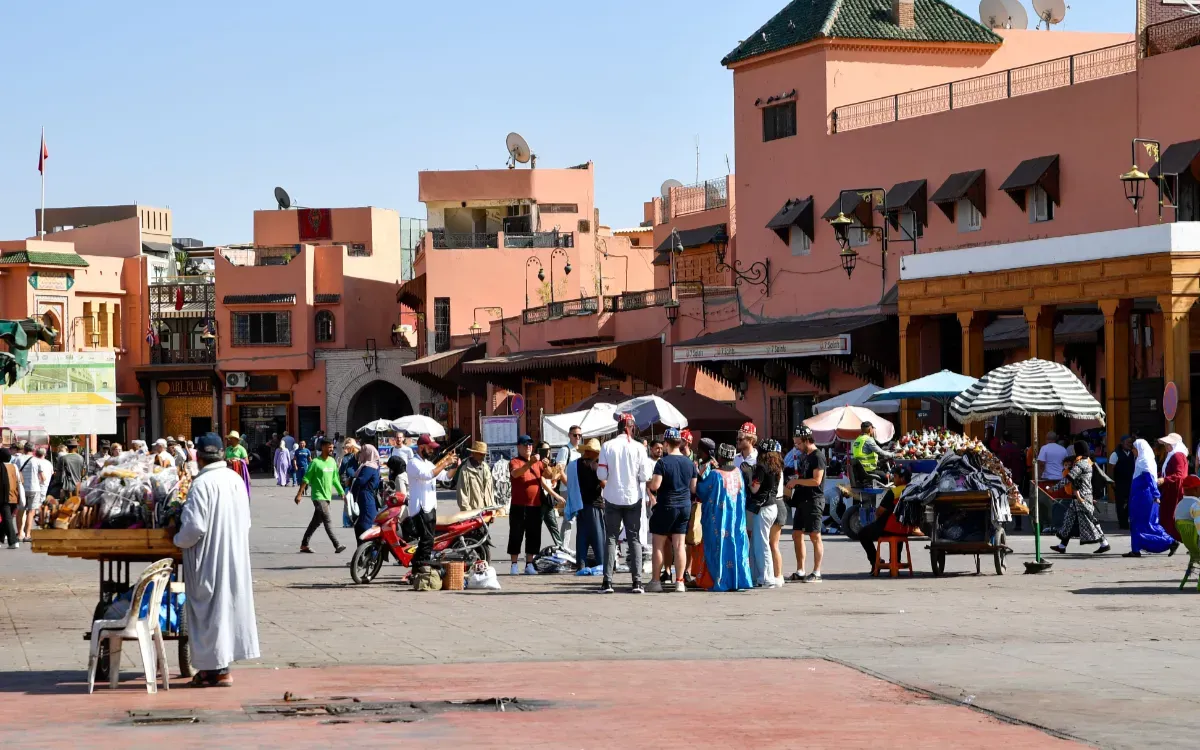
The renewed appearance of Jemaa el-Fna, while initially met with excitement, has also drawn substantial criticism. The newly installed natural stone pavement, which was purported to be suitable for the high foot traffic typical of the square, has quickly faced backlash for its dull and worn appearance in certain areas. Observations of cleaning and maintenance efforts have emerged since the installation, raising further questions about the appropriateness of the materials chosen for such a bustling environment, especially considering the numerous food stalls that populate the square.
Moreover, the renovation project does not solely focus on the flooring; additional kiosks are set to replace some existing stalls, and the overall program includes enhancements to pathways, horse-drawn carriage routes, public restrooms, and various visitor amenities. Critics are now voicing concerns not only about the necessary upkeep required post-renovation but also about the escalating costs associated with the redevelopment.
As the project progresses, the group Al Omrane Marrakech-Safi, which is overseeing the rehabilitation on behalf of the Marrakech urban municipality, is striving to revitalize Jemaa el-Fna, a site recognized as a UNESCO World Heritage cultural symbol. The urgency to maintain the square’s cultural significance while addressing the practical needs of its daily users remains a delicate balance that the authorities must navigate.
As reported by bladi.net.