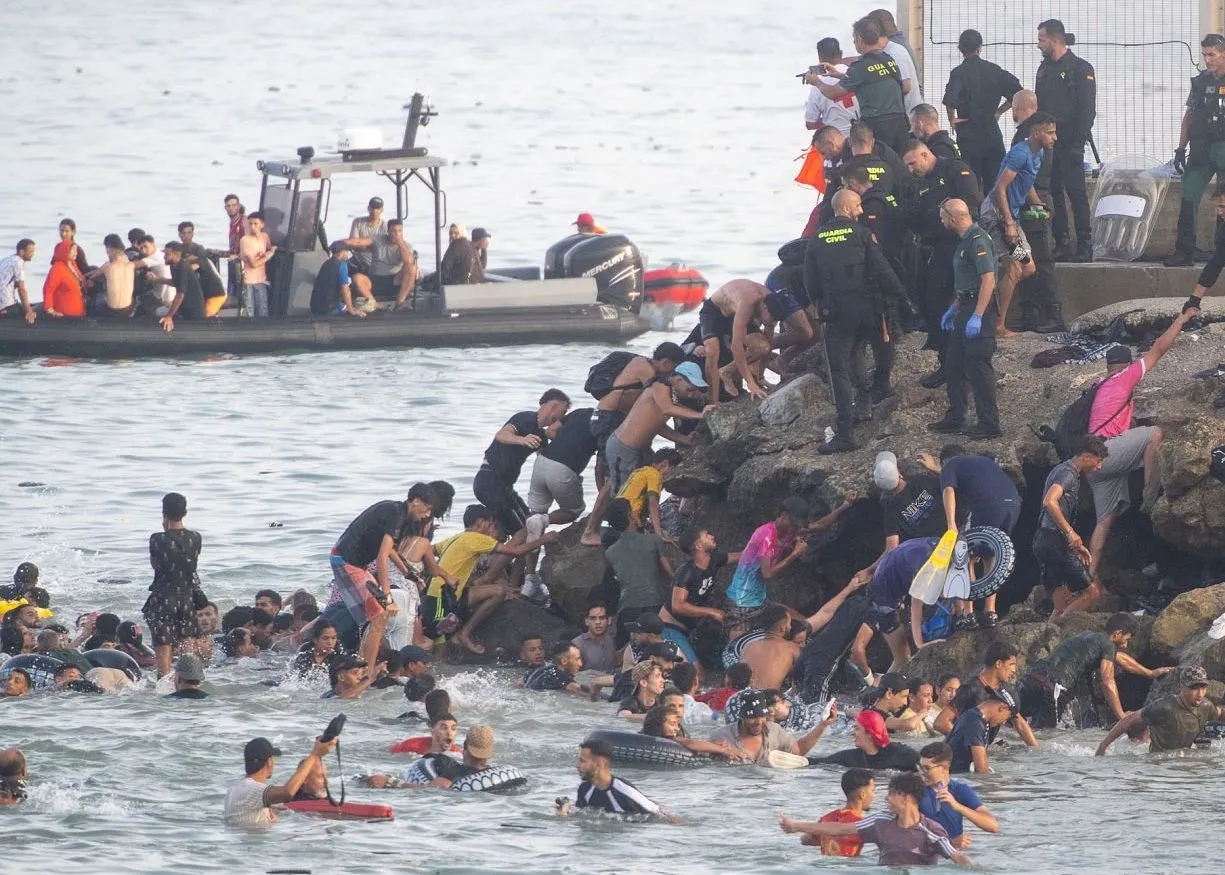

The Humanitarian Crisis Unfolding at Ceuta
In late July and early August, Morocco witnessed an unprecedented wave of migration as tens of thousands of individuals, including young people, families, and women, attempted to reach the Spanish enclave of Ceuta. This event marked one of the most tragic and significant mass migrations in recent history, with over 48,000 people managing to either swim across the sea or scale the walls separating Morocco from Spain, a city that, despite its historical ties to Morocco, remains under Spanish occupation. The scale of this exodus echoes similar events that occurred in the region in 2021, highlighting the ongoing struggles faced by migrants.
Tragically, during this perilous journey, around 90 individuals lost their lives, succumbing to drowning or the dire conditions of hunger and thirst. For those who successfully crossed, the ordeal did not end there; many reported experiencing violence, humiliation, and mistreatment upon their arrival in Ceuta. The situation quickly escalated into a major migration crisis, capturing the attention of both the Spanish government and the European Union. In response, the Spanish Prime Minister and the Minister of the Interior rushed to Ceuta to manage the unfolding crisis.
Systemic Issues Behind the Migration Crisis
The Spanish government opted for a security-based approach to this migration crisis, successfully containing the situation by deporting or expelling migrants who had arrived over the previous two days, aided by Moroccan authorities. Reports of the Spanish military and police escorting thousands back, coupled with Moroccan security forces using violence against them, paint a grim picture of the response to this humanitarian crisis.
This incident has prompted speculation regarding the motivations behind the mass migration. Some analysts suggest that Moroccan authorities may have orchestrated this scenario in retaliation against Spain, particularly in light of the Spanish government's diplomatic relations with Algeria and its position concerning the Polisario Front. Others have posited that there may be external influences at play, with suggestions of an Israeli motive to exert pressure on the Spanish government due to its support for Palestine.
Regardless of the underlying reasons, the recent events have illuminated several critical truths about the migration crisis. First, the economic and social conditions in Morocco—and by extension, North Africa—remain dire, characterized by high unemployment and poverty. This reality compels millions to seek a better life elsewhere, exposing the false narratives surrounding development and prosperity in the region. Second, the concept of the right to migrate is undermined by the harsh realities of closed borders and the systemic mistreatment migrants face upon arrival in Europe. Far from being a welcoming haven for those seeking refuge, the European response has largely involved efforts to repatriate migrants, often through violent means.
The harrowing images emerging from this crisis—of corpses, desperate individuals seeking safety, and the emotional toll of being forcibly returned—underscore the urgent need for change. The mass exodus from Ceuta has starkly revealed that the predominant response of European governments to migration continues to be rooted in security measures rather than humanitarian considerations. As these challenges persist, the role of organizations like La Via Campesina becomes increasingly vital, as they advocate for the rights of migrants and work against the racism and discrimination that many face globally.
As reported by viacampesina.org.