
Marrakech, often celebrated as the heart of Moroccan craftsmanship, is facing a significant decline in its traditional industries. Visitors to this vibrant city frequently find themselves enchanted by the historic souks, home to artisans skilled in various crafts such as leatherworking, metal forging, and textiles. However, beneath this captivating facade lies a troubling reality: many of these crafts are struggling to survive amidst economic downturns and changing consumer preferences, leading to the extinction of certain professions and a contraction of others.
Despite the influx of tourists, which some might argue indicates a flourishing economy, the traditional artisans are not reaping the benefits. This is largely due to speculative practices within the market, often referred to as "Maâlem Chkara," where the craftsman becomes merely an employee under the control of wealthy investors. The absence of a cohesive organization to protect the interests of these artisans has resulted in a fragile economic sector lacking strong social roots, making it vulnerable to various economic challenges. Today, certain markets carry only the names of the crafts without their true essence, as efforts to revitalize them through decorative signage fail to address the deeper issues at hand.
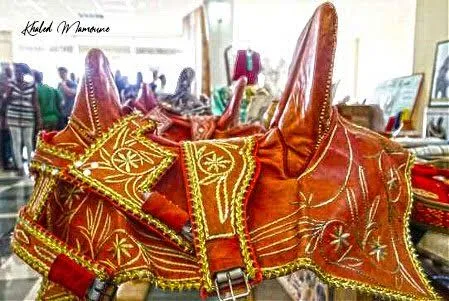
Among the crafts facing extinction are those of the saddle makers, weavers, and metalworkers, which once thrived in Marrakech. Currently, the number of saddle makers has dwindled to just two, who rely on self-funding for their operations. One artisan remarked on the necessity of borrowing funds to acquire essential materials while lamenting the difficulty of accessing bank loans due to the seasonal nature of their craft and the inconsistent liquidity of their products. The craft of saddlery is one of the oldest, tied closely to horseback riding and equestrian traditions, with historical roots tracing back to the Arab East and Turkey, evident in the embroidery techniques and quality materials used, such as silk and gold-threaded yarns.
The materials utilized in saddle making are both unique and traditional, including leather tanned through age-old methods found in regions like Tafilalet and the areas surrounding the Draâ River. Despite the challenges faced by this craft, artisans remain committed to sourcing high-quality materials for creating superior products, even as cheaper, chemically treated leathers flood the market. The trade sees a surge in activity post-harvest, particularly in good agricultural years, as farmers seek to purchase saddles for their horses to showcase during festivals and religious events, even as interest in equestrian games wanes among the youth of rural areas.
Historically, this craft flourished due to the Moroccan tribes' passion for traditional horseback games and the significance of horses in battles and warfare. A saddle serves not only as a functional item but also as a symbol of status, designed to assist the rider in performing various maneuvers. Demand for saddles peaks during the summer following harvests and during religious or national celebrations. Artisans once showcased exquisite decorations on saddles, utilizing luxurious materials like gilded silk and fine threads. However, modern societal developments and preferences for advanced alternatives have led to a decline in this craft.
The saddle-making process involves several stages, from preparing raw materials and determining product dimensions to assigning roles among artisans and trainees. Trainees often undergo traditional vocational training that can last from ten to thirty years. Leather, either from sheep or cattle, is a crucial raw material, with ready-made linings costing around eighty dirhams. Additionally, specific fabrics and intricate techniques are employed, such as using "zarzakh" to adhere fabric to leather and "rishm" for measuring decorative patterns. The skeleton of the saddle is crafted from sturdy materials, requiring specialized artisans skilled in working with leather and bone.
Despite the intricate craftsmanship involved, the profession faces an uncertain future, quietly heading towards a slow demise. The saddle itself, typically made to fit the horse's back in a semi-circular shape, is complemented by wooden pieces known as "qurbous" that provide stability for the rider. The saddle is adorned with leather and embroidered fabric, often incorporating seven layers of felt beneath it, with prices reaching up to four thousand dirhams. The manufacturing process follows strict stages, including cutting leather to size, reinforcing it with cardboard for durability, and applying decorative elements crafted by skilled needleworkers using gold-threaded yarns.
The accompanying products, such as the "dair"—a decorative piece worn by the rider—and a thick leather belt used to secure the saddle, also feature intricate decorations. While ordinary saddles are still produced in weekly markets outside the city, higher-end saddles are tailored to specific customer requests, often marketed as vintage or antique items. Unfortunately, the number of artisans specialized in this field has diminished significantly, leaving only a handful of individuals to carry on the legacy.
As reported by nichanealane.ma.