A Harsh Reality for Migrants in Ceuta
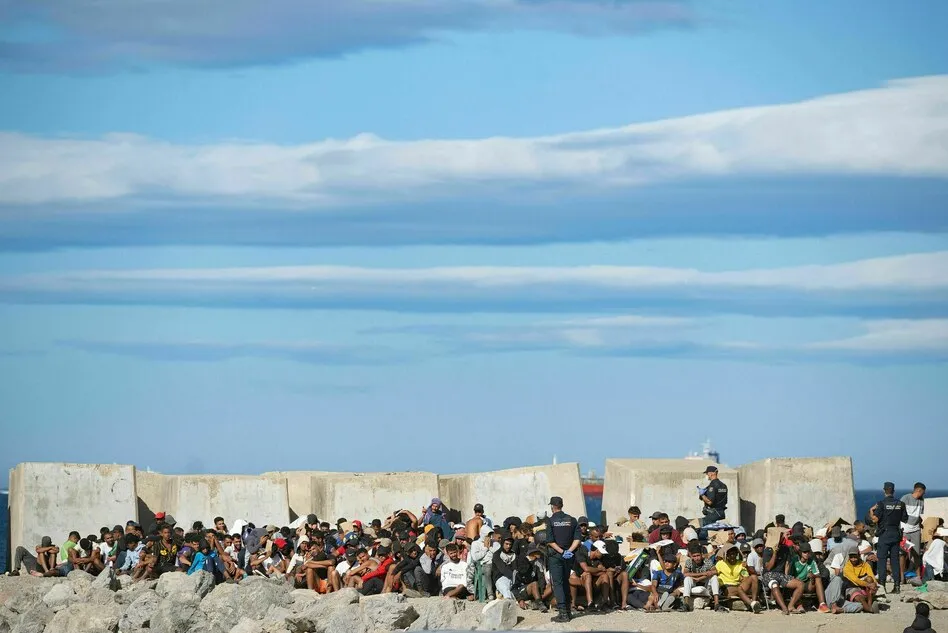
In August, filmmaker Viktor Schimpf undertook a personal journey to Ceuta, where he closely followed the lives of migrants arriving in this Spanish enclave. Upon his arrival, Schimpf was immediately struck by the overwhelming military and police presence, coupled with the sight of countless young men wandering the streets in apparent disorientation. Many migrants could be seen lying on the sidewalks in the early morning hours, while the area leading towards the Moroccan border became increasingly congested. The atmosphere was further marked by the incessant sound of sirens and the hovering helicopters overhead, painting a grim picture of the situation.
During his time in Ceuta, Schimpf documented the experiences of these migrants, many of whom have become an integral part of the local community. He observed that while there were significant numbers of Moroccans, there were also many migrants from Palestine and Sub-Saharan Africa living in the city. However, precise statistics on the demographics of the migrant population remain elusive.
Clashes and Community Dynamics
Schimpf noted that initial interactions between the migrants and local residents were marked by a degree of tolerance, though tensions have recently escalated. Many Spanish residents have expressed feelings of being abandoned and have begun to articulate fears of an invasion, leading to heightened anxiety as night falls. As darkness descends, the streets of Ceuta become eerily quiet, with locals retreating indoors and many shops closing during the day out of fear. The police and military often make surprise appearances at the beach to disperse sleeping migrants, which in turn fuels conflicts among the migrant community as they search for safe havens.
Through his lens, Schimpf captured moments of vulnerability and resilience. He recounted instances where he and the migrants he was with sought refuge in the outskirts of the city, where they found some support from local youth. This camaraderie among young men from Gaza and Morocco, who communicated in Arabic, contrasted sharply with the more isolated experiences of migrants in the city center, where Spanish is predominantly spoken.
Schimpf estimated that the current number of migrants in Ceuta ranges between 5,000 and 10,000. He highlighted the plight of unaccompanied minors, with reports suggesting that up to 2,000 minors are in Morocco, complicating the situation further. He mentioned a widespread rumor among migrants that they could stay in Ceuta for 30 days before being sent back to Morocco, though the specifics of such policies remain unclear. The lack of a coherent plan among the migrants he spoke to underscores the desperation and uncertainty they face.
Schimpf's experience in Ceuta also revealed disturbing health concerns, with accounts of scabies and tuberculosis outbreaks among densely packed groups of migrants. The unhygienic conditions, particularly near the beaches, posed significant public health risks, while the presence of police in the city center seemed to contribute to a cleaner environment, albeit at the cost of fewer migrants finding shelter there.
Despite the presence of local organizations providing some aid, the situation remains dire. Reports of violence and exploitation, including a disturbing allegation of a mass sexual assault involving minors, have surfaced, indicating a growing sense of insecurity within the migrant community. Overall, Schimpf's observations paint a picture of increasing hostility and fear, both among the local residents and the migrants themselves. The complexity of the situation reflects broader issues of migration, social integration, and humanitarian crises that require urgent attention.
As reported by taz.de.