The Vision of a Spain-Morocco Tunnel: A Long-Standing Dream
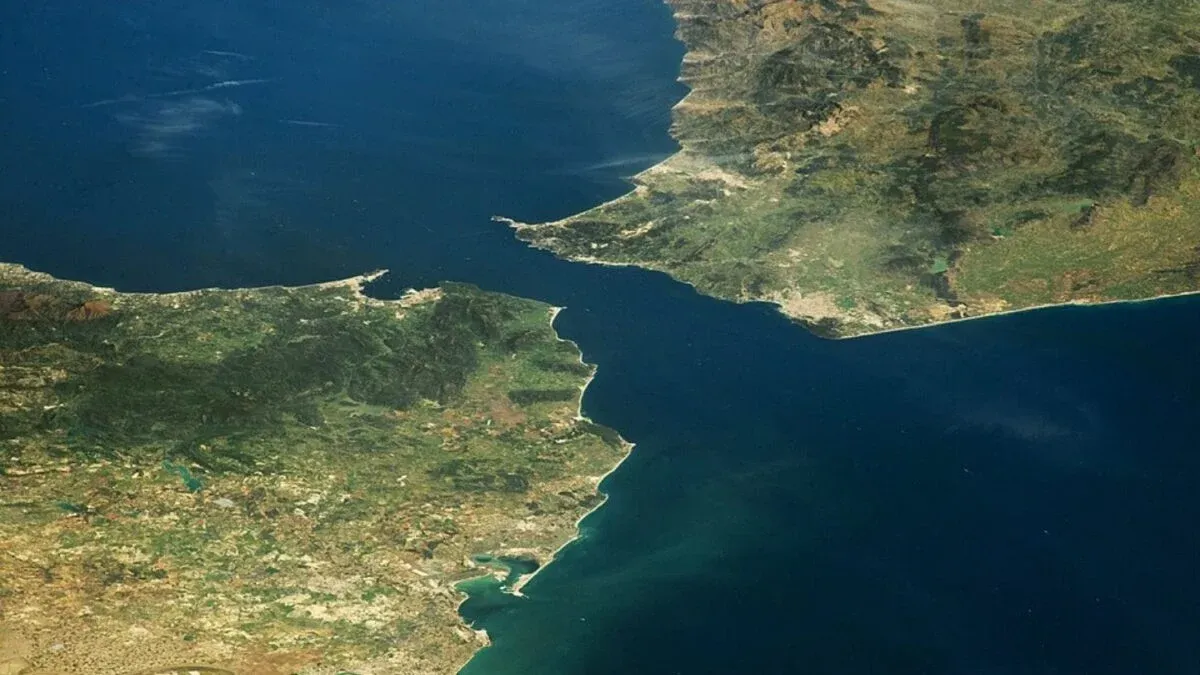
The concept of constructing a tunnel connecting Spain and Morocco has lingered for decades, evolving from a promising infrastructure project into what can only be described as a geographical obsession. This ambitious idea has repeatedly emerged, receded, and reactivated, residing in a limbo where grand visions that seem too logical to abandon coexist with the complexities that hinder their realization. The allure of the tunnel is compelling, particularly when gazing southward from Tarifa, pondering how Europe and Africa could be so close yet remain divided by mere water. However, the answer is not straightforward; beneath that water lies a substantial and intricate problem.
The Geological Challenges Beneath the Surface
The true adversary obstructing the project has never been merely financial constraints or political will. Instead, it is the unpredictable geological conditions of the seabed of the Strait of Gibraltar that pose the most significant challenge. Despite ongoing discussions about the feasibility of the tunnel, it has not been definitively canceled, but it is also far from being in a phase of active construction. Recent developments in 2026 have brought to light the Spanish government's decision to engage the CSIC in a new campaign to study the seabed at the Camarinal Sill, a crucial area for the proposed route. This development indicates that fundamental questions about the feasibility of the project remain unanswered.
Upon initial inspection, one might assume that the primary obstacle to constructing a subaqueous tunnel between Spain and Morocco is the depth of the water. While depth is indeed a factor, it is not the most critical issue. Historically, the proposed route has strategically avoided the most extreme depths of the Strait, focusing instead on the Camarinal Sill, where the seabed is comparatively shallower. However, “shallower” does not equate to “simple.” The underwater terrain reveals a complex mix of geological materials, including flysch complexes, sandy and clay layers, and more recent sediments, all of which contribute to unpredictable ground behavior over short distances. For engineers tasked with constructing a tunnel that may stretch for several kilometers, such geological variability is a source of significant concern.
Building a tunnel is not merely about drilling through rock; it involves creating a stable environment that must endure decades of pressure, moisture, deformation, and seismic activity. The geological history of the Strait of Gibraltar, characterized by its tectonic complexities, serves as a reminder that the earth beneath is anything but static. Notably, the catastrophic Lisbon earthquake of 1755 looms large in discussions of large-scale infrastructure projects in this region, reminding us that the ground is always in motion. Therefore, if the tunnel is ever constructed, it will have to exist alongside a dynamic environment for generations to come.
What makes this latest phase of the project particularly intriguing is the current context in which the tunnel's logic appears more appealing than ever. An electrified rail connection between Europe and Africa could revolutionize mobility, logistics, and emissions. It has the potential to decrease travel times, enhance trade exchanges, reduce reliance on ferries, and create an infrastructure that holds geopolitical and environmental significance. However, all of this hinges on one crucial condition: that the seabed does not transform this visionary idea into a financial and logistical quagmire filled with cost overruns, delays, and structural risks. We are still entrenched in the discourse of whether the marine ground will ever permit the construction of such a tunnel without incurring disproportionate costs.
There is an almost symbolic nature to this ongoing saga. The notion of a tunnel linking Spain and Morocco seems inevitable when viewed on a map, an idea so apparent that one struggles to understand why it has not yet materialized. Yet, the Strait of Gibraltar has consistently demonstrated a key lesson that geography imparts: visual proximity does not always translate into physical ease. Europe and Africa may seem just a stone's throw away, but beneath that seemingly brief passage lies one of the most challenging environments imaginable for a project of this magnitude. Thus, the project remains alive, caught in a paradox that has persisted for decades: it is alluring enough to avoid oblivion, yet difficult enough to prevent its realization.
Perhaps one day, a train will traverse beneath the Strait in just thirty minutes, and the idea will no longer seem like a geopolitical science fiction narrative. However, if such a feat comes to pass, it will not be merely due to overcoming distance; it will be because someone finally succeeded in convincing the seabed of Gibraltar to yield to such an ambitious endeavor.
As reported by es.gizmodo.com.