
Impact of Military Barriers and Landmines on Western Sahara
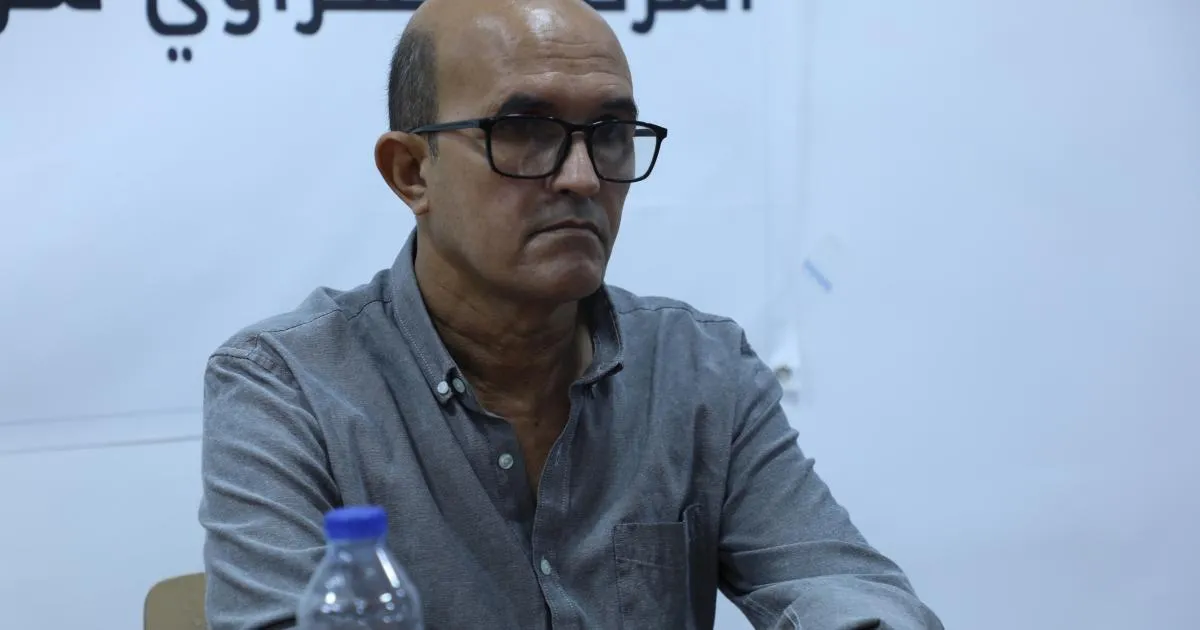
On September 19, 2026, in a significant address at the Ministry of Foreign Affairs, Mr. Ghaithi Ennah, the Director of Operations at the Sahrawi Coordination Office for Mine Action (SMACO), shed light on the dire consequences of the Moroccan military wall, landmines, and explosive remnants of war in Western Sahara. His insights revealed that these threats extend far beyond the immediate danger to civilian lives; they also encompass severe environmental degradation, disruption of natural ecosystems, and jeopardization of the livelihoods of local communities residing in affected regions.
Mr. Ennah's presentation was part of a conference aimed at unveiling the latest report from the Sahrawi Observatory for Natural Resources and Environmental Protection, titled “Plunder Footprint: The Environmental Cost of Natural Resource Exploitation in Western Sahara.” The event attracted a diverse audience, including researchers, experts, representatives from international organizations, civil society members, and media professionals, all gathered to discuss the pressing issues facing the region.
Challenges to Ecosystems and Communities
During his remarks, Mr. Ennah emphasized that the Moroccan military wall has significantly fragmented the natural environment. It disrupts the natural flow of valleys and floodwaters, obstructing the migration patterns of wildlife and cutting off access to vital water sources. This barrier impacts dozens of valleys and hundreds of wells, posing a serious threat to the ecological balance and water availability in the region.
Furthermore, the presence of landmines and explosive remnants of war continues to pose an ongoing threat not only to human life but also to the surrounding flora and fauna. These dangerous remnants can be displaced by natural elements such as rain, floods, and wind, leading to hazards being relocated to new areas, complicating mine clearance efforts and heightening risks for both humans and wildlife.
Additionally, Mr. Ennah pointed out that the military environment created by the wall and the accompanying dangers has led to the displacement of hundreds of families from their homes. This has restricted communities from accessing their land, water sources, and traditional grazing areas, further exacerbating their vulnerability and hindering their livelihoods.
To tackle these pressing issues, Mr. Ennah called for a comprehensive approach that integrates mine clearance, education on mine risks, victim assistance, and environmental monitoring. He underscored the importance of international and humanitarian collaboration to protect both populations and the environment in the affected areas.
Emphasizing the need for an inclusive strategy, he argued that mine clearance is not merely about safeguarding human lives; it is also about preserving land and the environment, ensuring that future generations have the right to inhabit safe and thriving ecosystems. He advocated for the incorporation of environmental considerations in mine action programs and initiatives aimed at addressing explosive remnants of war.
In conclusion, Mr. Ghaithi Ennah highlighted that the military wall serves not only as a physical barrier disrupting the environment but also as a mechanism that conceals numerous human rights violations and the exploitation of natural resources in the Moroccan-occupied territories of Western Sahara. Therefore, addressing its environmental and humanitarian repercussions must be part of a broader strategy focused on safeguarding populations, natural resources, and ecosystems.
As reported by spsrasd.info.