
Emerging Financial Hubs in Africa
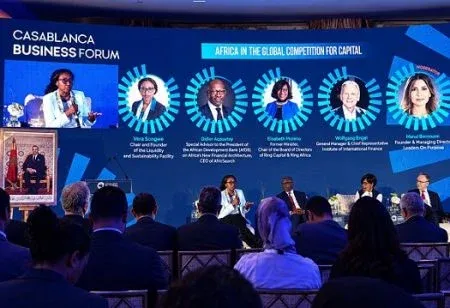
The African financial landscape is diverse, with cities like Casablanca, Johannesburg, Mauritius, and Kigali carving out distinct paths to establish themselves as key players on the continent. These cities have successfully attracted businesses and investors, but their next significant challenge lies in transforming this initial allure into robust market depth and a genuine capacity to facilitate capital circulation. This shift in focus was underscored during the Casablanca Business Forum on October 2nd, where discussions highlighted the urgent need to develop the institutions, markets, and financial instruments that can harness the existing savings within Africa. The timing for such a transformation is favorable, as noted by Saïd Ibrahimi, CEO of the Casablanca Finance City Authority, who remarked that "value chains are reshaping, capital is redeploying, and partnerships are diversifying."
Casablanca is keen to leverage these changes. The Moroccan city recently climbed 11 spots in the Global Financial Centres Index 40, published on September 16, reaching the 38th position globally. This achievement marks it as the top African financial center and the third in the Middle East and Africa region, trailing only Dubai and Abu Dhabi. This rise reaffirms Casablanca’s status as a burgeoning business hub, boasting over 300 member companies and approximately 9,400 employees, with its businesses operating across 53 African countries. According to Lamia Merzouki, Deputy General Director of CFC, nearly $20 billion in projects across Africa are currently managed by teams based in Casablanca. However, this leads to a critical realization: managing a project from Casablanca does not inherently mean that the capital was raised there, that the fund is domiciled in the city, or that the transactions were executed locally. The real differentiation between a business center and a financial hub now hinges on its ability to structure, intermediate, and reallocate capital effectively.
Diverse Models Across the Continent
Africa has not produced a singular model for financial hub development. Johannesburg remains a benchmark for financial depth, supported by substantial pension funds, insurers, asset managers, and a well-developed capital market bolstered by significant domestic savings. Mauritius, on the other hand, has charted a different course by specializing in the administration of funds, investment vehicles, and cross-border operations. Interestingly, Mauritius does not position this specialization as a direct competition with other hubs. Sanjay Bhunjun, Chairman of the Economic Development Board, referred to Mauritius as a "complementary partner" to major financial centers during a June interview with Gulf Business, particularly for investors seeking exposure to Africa.
Kigali, a more recent entrant, is focusing on building a specialization in asset management, fintech, and climate finance. In contrast, Casablanca is pursuing a more hybrid strategy, aiming to attract not only financial institutions but also multinational corporations, international firms, and regional headquarters. Lamia Merzouki elaborates on this by stating that while Mauritius targets specific niches, particularly in fund management and administration, Casablanca seeks to create a distinct identity that does not merely replicate the offshore or tax-centric model exemplified by Dubai. "We don't want to attract just for tax reasons," insists Merzouki, emphasizing the importance of establishing teams that lead the African operations of international groups.
This approach explains CFC's emphasis on both "people flow" and "capital flow," highlighting the mobility of talent alongside the flexibility in managing currencies. While this model has enhanced Casablanca's visibility, the pressing question remains whether it can also cultivate genuine financial depth.
The disparities in financial depth across Africa are striking. By 2025, the market capitalization of listed companies was expected to account for roughly 327% of South Africa's GDP compared to only 62.5% for Morocco. In the West African Economic and Monetary Union (UEMOA), the total capitalization of the Regional Securities Exchange (BRVM), including both stocks and bonds, represented about 18% of the regional GDP.
Similar gaps are evident in banking finance, with private sector credit nearing 78% of Morocco's GDP and approximately 89% of South Africa's GDP, contrasted with figures often below 30% in several West African economies. Lionel Zinsou, former Prime Minister of Benin and co-founder of SouthBridge, succinctly concludes that "finance should be treated as an industry." The capacity of an economy to finance its transformation relies less on the quantity of banks or funds it attracts, and more on the depth of its markets, the presence of institutional investors, and its ability to convert savings into credit and equity.
CFC acknowledges this reality, stating, "We are not engaged in deal-making. We are not a stock exchange." Its role is to create an enabling environment, attract key players, and facilitate operations; investment decisions ultimately rest with the banks, funds, and investors operating within the ecosystem.
The paradox of the African financial landscape lies in the continent's wealth of institutional assets, exceeding $2.1 trillion as managed by pension funds, insurers, and sovereign funds, according to the African Development Bank. Didier Acouetey, a special advisor to the president of the AfDB on the new African financial architecture, posits that the challenge is less about discovering new resources and more about better articulating the existing ones. Mobilizing just 20% to 30% of these assets, particularly by enhancing guarantee mechanisms, could create a significant leveraging effect.
However, the obstacles are not merely regulatory or financial. The Organisation for Economic Co-operation and Development (OECD) also notes a deficit in internal competencies; many African pension funds lack the necessary teams to assess infrastructure project risks or conduct due diligence on unlisted investments. Nigeria exemplifies this limitation, with regulations allowing certain pension portfolios to allocate up to 15% of their assets to private equity, yet alternative investments remain marginal in these portfolios. For African financial centers, the next battleground may not lie in continuing to attract increasing amounts of capital from London, New York, or Dubai, but rather in facilitating a greater circulation of African savings among African markets, as highlighted by Alain Ebobissé, CEO of Africa50.
CFC is collaborating with the AfDB on financial integration and the development of new instruments for mobilizing the private sector, while also aiming to foster a specialization in sustainable finance, particularly around carbon markets. The goal is to achieve 500 member companies by 2030.
As reported by agenceecofin.com.