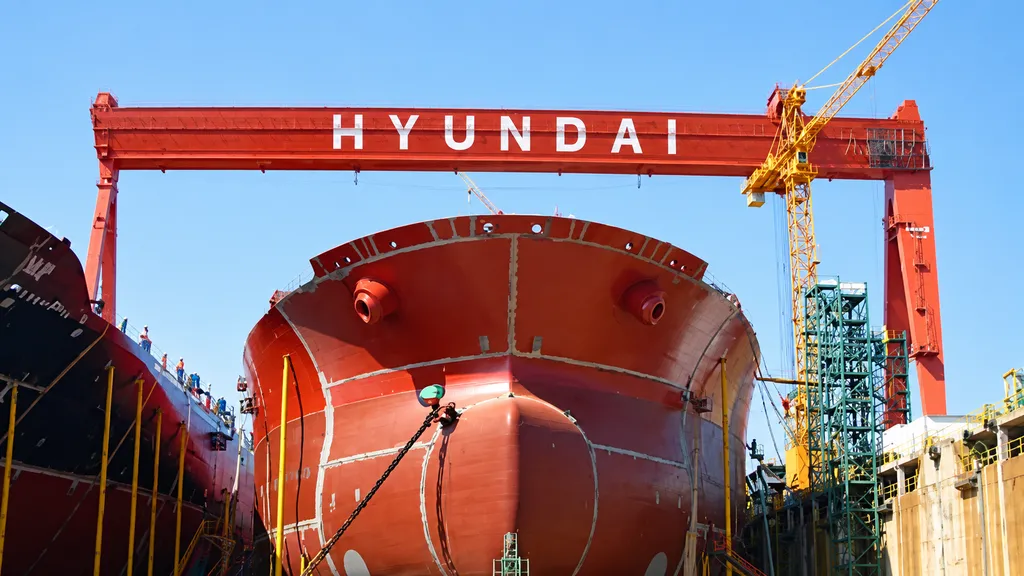

The National Ports Agency (ANP), the public entity responsible for port management in Morocco, has recently decided to abandon the thirty-year private concession originally planned for the new shipyard in Casablanca. Sources from South Korean industry have characterized this move as a significant shift towards the nationalization of strategic infrastructures, driven by concerns regarding sovereignty and security. This decision effectively suspends HD Hyundai Heavy Industries' ambitious plans to establish a construction, repair, and maintenance base for commercial and military vessels in Casablanca. The South Korean manufacturer had intended to couple this initiative with a groundbreaking project focused on the local production of offshore patrol boats for the Royal Moroccan Navy.
However, the term "nationalization" requires careful legal consideration, as the infrastructure in question is already under public ownership. The recent changes pertain specifically to its mode of operation, following the abandonment of the arrangement that would have entrusted its management to a private operator for three decades. As of now, details about the future operator, its status, capital, and any potential roles for foreign groups in shipbuilding, technical assistance, or maintenance remain unclear.
Details of the Abandoned Concession
Approximately 2.6 billion dirhams have been invested in the shipyard, which spans around 210,000 square meters and is designed for the construction and repair of merchant ships, fishing boats, and military vessels. South Korean industry publications report a dry dock measuring between 240 and 244 meters and an elevating platform with a capacity estimated between 9,000 and 9,700 tons. The facility is also equipped with the necessary infrastructure for outfitting and heavy interventions on ships.
Applicants for the concession were required to demonstrate at least ten years of experience in operating a shipyard, a stipulation that significantly narrowed the pool of potential competitors. A first attempt to award the concession had been initiated in 2019 but failed to yield results; the competition was revived on April 7, 2025. Naval Group from France, initially interested, withdrew before the final selection phase.
Three bids remained in contention: one formed by Somagec (Morocco), HD Hyundai Heavy Industries (South Korea), and Kuzey Star Shipyard (Turkey); another by Radi Holding (Morocco), Marina Meridional (Spain), and Ningbo Xinle Shipbuilding Group (China); and a third by San Giorgio del Porto (Italy). The consortium involving HD Hyundai proposed a royalty ranging from 2% to 2.5% of the shipyard's annual revenue. The choice of Somagec was motivated by local anchorage, with South Korean industrial sources attributing over two hundred completed projects in Morocco to the company, particularly related to the Casablanca port's infrastructure.
The competition intensified in early 2026 when the consortium led by Radi Holding detailed its project, which included ship construction, repair, and dismantling, promising to establish a local supply chain around Casablanca. South Korean industry sources ceased to view the HD Hyundai consortium as the clear frontrunner at this point.
For HD Hyundai, the economic stakes extended far beyond the perceived concession fee. Casablanca was poised to become a sustainable foothold between the Atlantic and the Mediterranean, catering to vessels servicing Western Europe and Africa, generating revenue from new construction, repairs, technical overhauls, and military vessel maintenance. This strategy aligned with the South Korean group's international expansion policy, with sector analyses highlighting Casablanca among HD Hyundai's foreign projects, alongside cooperative ventures in Saudi Arabia, India, Peru, and the Philippines, all based on the same premise: combining Korean expertise with local production and ensuring sustained access to construction and maintenance markets.
The Military Patrol Boats: A Proposal Without Orders
The military aspect represented the most original component of the offer. HD Hyundai had proposed to build offshore patrol boats directly in Casablanca for the Royal Moroccan Navy after identifying Moroccan interest in this category of vessels, according to South Korean industry sources. Therefore, the company aimed to transform the shipyard's operations into a gateway to the Moroccan military naval market, while retaining some of the maintenance and repair work for future vessels locally.
Offshore patrol boats are designed for extended maritime surveillance missions, policing maritime spaces, protecting exclusive economic zones, and conducting rescue operations. However, the Moroccan project cannot currently be linked to a specific HD Hyundai model, as sources from South Korea do not provide details regarding displacement, length, number of units, armament, or contractual value. Consequently, it is not possible to directly associate the Casablanca initiative with the patrol boats previously sold by the manufacturer to other navies.
Nevertheless, the economic rationale for the manufacturer was clear: local production would have provided the shipyard with military contracts from the outset, followed by recurring revenue from maintenance, repairs, and potentially upgrades over the vessels' lifespans. Morocco would have simultaneously established an industrial base for building military vessels domestically rather than relying solely on ships delivered from foreign yards.
HD Hyundai also linked its proposal to a transfer of technology and the gradual establishment of a Moroccan shipbuilding network. The shipyard was envisioned to handle both commercial and military vessels, which would distribute fixed infrastructure costs across multiple customer categories, granting the South Korean group a permanent industrial presence in African markets.
However, no orders for patrol boats have been finalized. South Korean industry sources indicate the absence of a market for the Royal Armed Forces, no funding, no construction schedule, and no firm commitment regarding a specific number of vessels. They only establish that HD Hyundai had proposed to the ANP to integrate local construction into its shipyard project and that the Royal Navy had shown interest in this type of vessel.
The abandonment of the concession, therefore, currently removes the industrial support for this military proposal. Nonetheless, a representative from HD Hyundai Heavy Industries has left the door open for the group to reconsider its involvement, stating that "the bid evaluation process has indeed been interrupted, and once the new strategic direction and project structure have been defined, we will examine our participation."
South Korean industrial sources attribute the Moroccan decision to a political reassessment regarding control over a strategically significant infrastructure rather than to the technical or financial quality of the three final bids. They now envisage, without mentioning any concluded agreement, closer forms of cooperation: supplying equipment, assisting in facility operations, providing naval repair technologies, construction management software, or separate contracts for building maintenance.
The shift in model raises broader industrial questions beyond just the identity of the future manager. If the state maintains direct control over the shipyard while acquiring necessary technologies and skills from abroad, HD Hyundai could return as a technical partner or builder without securing the thirty-year concession it initially sought. A new competition would then determine whether its offshore patrol boat project can be separated from the shipyard's operations and continue in another form.
As reported by barlamane.com.