
The Transformation of Football into a Geopolitical Tool
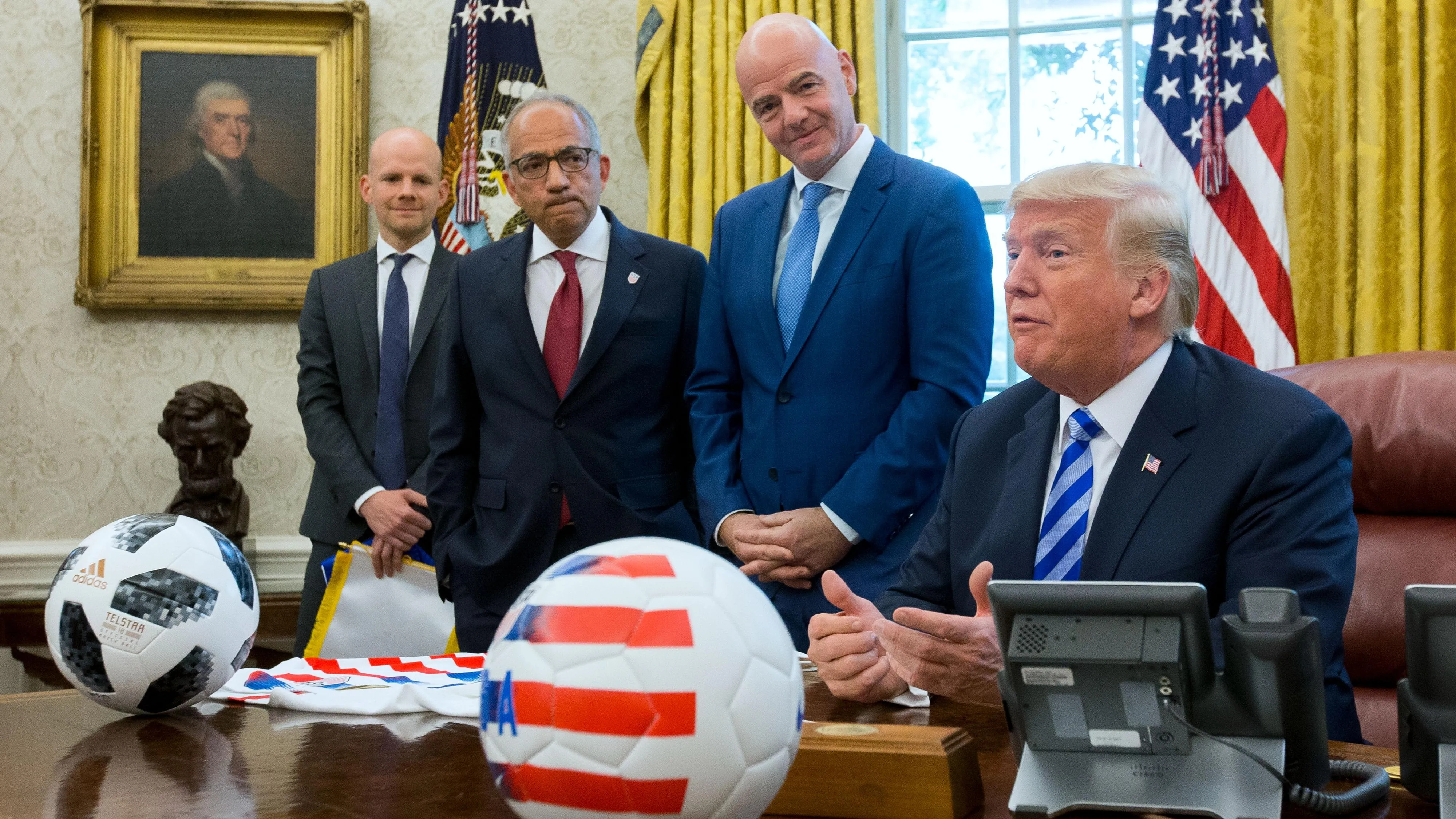
The phrase "They have also stolen our football" serves as an apt title for a book by Ángel Cappa, who was the assistant coach to Jorge Valdano at Real Madrid. This sentiment is echoed by Samuel Ortiz, a professor at the University of Alicante and a specialist in geopolitics, as he examines the intricate maneuvers of FIFA President Gianni Infantino. Over the years, sports have transcended their role as mere games, evolving instead into pivotal instruments of power in its broadest context. Recent events have starkly illustrated this evolution: from the withdrawal of a red card issued to Folarin Balogun, a U.S. player, at the behest of Donald Trump, to the commodification of the 2030 World Cup final venue, which Spain is set to host alongside Portugal and Morocco, all in exchange for support to secure Infantino's position at the helm of FIFA.
What has unfolded in recent days signals the culmination of FIFA's decline and the commercialization of football, a trend that traces back to the 1960s but has reached unprecedented levels today, according to Ortiz, who holds a doctorate in Geography and coordinates the book _Criminal Area: Football in Times of Globalization_. He notes that the controversies surrounding host country selections have a long history, revisiting debates that surfaced during Qatar's hosting of the 2022 World Cup and resurfacing again with Saudi Arabia's selection for the 2034 tournament, both absolute monarchies that disregard fundamental freedoms and rights. However, the sequence of events in these past two months marks a significant escalation.
Ortiz asserts that football is becoming a reflection of the current geopolitical power struggles, linking it to the recent influx of over 72,000 individuals into Ceuta. The rationale behind Morocco's decision to allow a mass of people to reach the Tarajal border without obstruction has been attributed to the fierce competition between Morocco and Spain over hosting the World Cup final in 2030. While the reality is far more complex, with experts highlighting additional factors such as Spanish Prime Minister Pedro Sánchez's visit to Algeria and Morocco's historical claims over two autonomous cities, it is evident that the Moroccan kingdom has been actively leveraging its influence to secure the prestigious event.
Morocco's Strategic Use of Football
The most recent and clear example of this is Morocco's decision to endorse Infantino, who is seeking re-election in 2027 after UEFA and other confederations rejected his controversial privatization plans for the World Cup. Just hours before Infantino backtracked on his controversial proposal, the Moroccan Football Federation issued a statement of support. Reports from _The Times_ suggest that Infantino may have promised Morocco the 2030 World Cup final in exchange for their vote in the upcoming FIFA elections, although the organization has denied these claims.
According to Ortiz, there appears to be a clear exchange of favors at play, illustrating how football can unveil the underlying power dynamics. The ties Infantino has cultivated with Morocco are markedly different from those with Spain and Portugal. On August 30, coinciding with the arrival of thousands of Moroccans seeking a better future, Infantino attended celebrations hosted by King Mohammed VI to mark his ascension to the throne. During this event, he proclaimed that the 2030 World Cup would be the best in history, partly because it would take place in Morocco, which he described as “the most beautiful country of all.” His enthusiastic declaration, “Moroccans are ready to welcome the world. Long live Morocco!” reflects this sentiment.
Football has become a vital instrument for Morocco in its quest to project influence and gain global legitimacy, as noted by Simon Chadwick, a professor of Sports Economics and Geopolitics at Emlyon Business School. While football serves to alleviate internal tensions and unify a diverse population, it also enables Morocco to reclaim its history and assert its identity, distancing itself from the colonial legacies of France and Spain. This strategy is exemplified by Morocco's deliberate efforts to encourage players of Moroccan descent born in Europe to compete for the national team, as highlighted by the remarks made by the President of the Moroccan Football Federation, Fouzi Lekjaa, during the World Cup.
The 2030 World Cup represents a significant showcase for Morocco, with hosting the final being the ultimate goal. Nevertheless, the final match appears to be edging closer to Spain, as RNE reported that the Santiago Bernabéu Stadium is likely to be the venue. To maintain Moroccan support during the turbulent FIFA elections, Infantino is expected to grant Morocco the hosting rights for the Club World Cup in 2029. Rather than signaling weakness, this maneuver is interpreted as yet another strategic move by the controversial president to safeguard his interests.
As reported by rtve.es.