
Germany's Pursuit of Skilled Labor from Abroad
The ongoing efforts by the German government to attract skilled labor from various countries, including Morocco, have sparked discussions and raised eyebrows among observers. Despite criticism regarding the effectiveness of these initiatives, statistics from the past years reveal a significant influx of migrants into Germany, totaling around 7 million in the last decade. However, the ambitious target of securing 500,000 skilled professionals has remained elusive, leading officials to explore recruitment from nations like South Africa and Morocco, which are reportedly abundant in skilled workforce. This raises questions about the government's alleged lack of interest in upskilling local unemployed individuals and those receiving social benefits, who could potentially fill these gaps more cost-effectively than recruiting abroad.
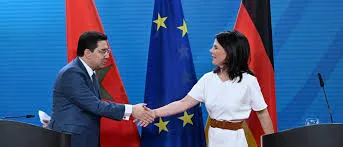
Many foreign nationals, including a notable number of Ukrainians receiving social benefits, are not being encouraged to enter the workforce. Instead, the government persists in its strategy of attracting skilled workers from countries facing economic challenges, high tax burdens, and energy insecurity. Wadepfuhl, a key figure in this initiative, has proclaimed Morocco as a vital partner for Germany and Europe, asserting that it serves as a gateway to Africa with established economic ties. However, the absence of Moroccan companies at the Hannover Messe 2026 contradicts these claims, raising skepticism about the depth of these partnerships.
Economic Relations and Skilled Labor Recruitment
Wadepfuhl's visit to Morocco focused on recruiting professionals from the health and care sectors, alongside other fields where a well-educated, young population is eager to work in Germany. This raises concerns about the tactics employed to attract these individuals, as it seems they may be lured by better benefits than those available to local workers. The German government is also keen to explore opportunities for German companies to engage in Morocco, but questions remain about the feasibility and interest surrounding this initiative.
In the realm of energy production, Germany faces significant challenges, prompting Wadepfuhl to emphasize the potential for collaboration in renewable energy with Morocco. Despite Morocco's sunny climate, which is ideal for hydrogen production and electricity generation, the reality suggests that such projects are still in their infancy. Moreover, the assertion that Morocco is a prime tourist destination is overshadowed by troubling economic indicators, including a low average annual income of €3,548, a 9% unemployment rate, and a corruption index ranking poorly compared to Germany.
Current data highlights Morocco's status as a developing country, with political stability barely above 50% and inadequate healthcare provisions. The stark contrast between the two nations' economic scales is evident, with Morocco's GDP at €142 billion compared to Germany's nearly thirtyfold larger economy. The trade figures also paint a clear picture, with Germany exporting goods worth approximately €1.7 trillion against Morocco’s €60 billion. Furthermore, the energy consumption disparities are alarming, as Germany’s energy needs far exceed Morocco’s production capabilities.
Healthcare metrics further illuminate the challenges faced by Morocco, with only 0.7 hospital beds per 1,000 inhabitants compared to Germany’s 7.5, and a mere 0.7 physicians per 1,000 residents versus Germany’s 4.5. The education system also lags, with just 50% of students remaining in school until age 15 and a literacy rate of approximately 73%. These challenges raise critical questions about the viability of Morocco as a reliable source of skilled labor and whether the German government’s interests align with the realities on the ground.
As reported by european-news-agency.de.