
The Gray Zone Tactics of Morocco Against Ceuta
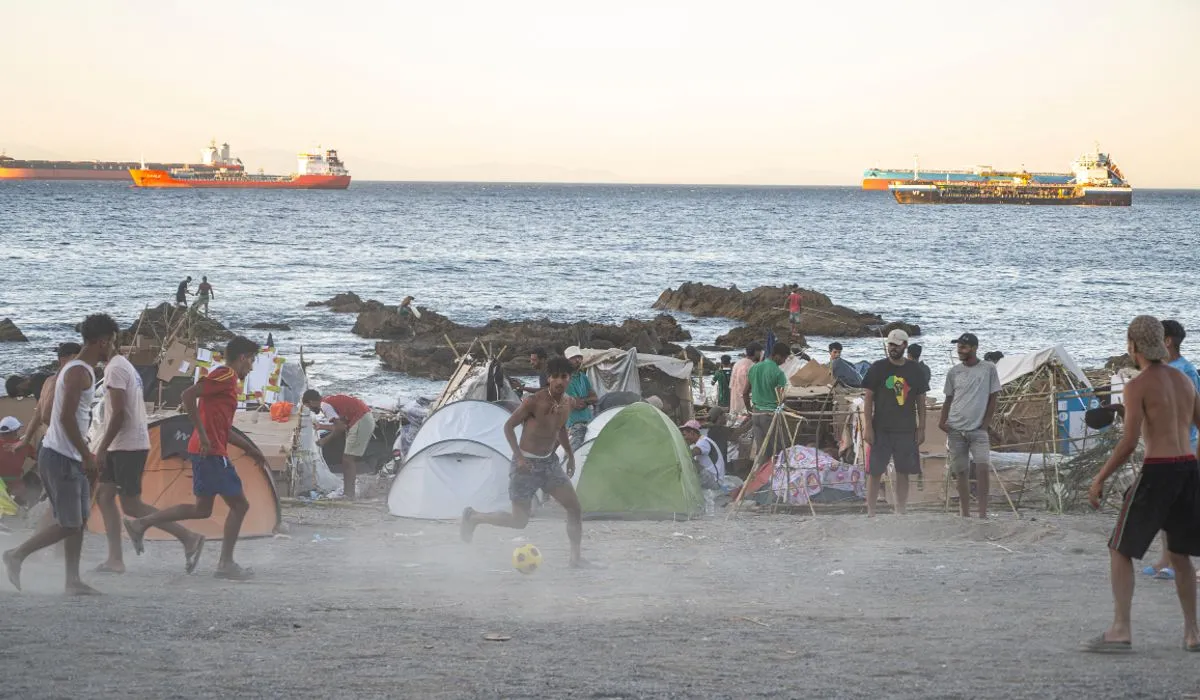
The recent surge of migration and aggression directed towards Ceuta has unveiled a long-standing yet rarely discussed issue regarding Morocco's strategic maneuvers in what is often termed the "gray zone." This term describes a precarious region that exists between peace and outright war, where Morocco has been executing various forms of aggression for decades, all aimed at territorial expansion at the expense of Spain. The gray zone includes a spectrum of hostile actions—covert cyberattacks, misinformation campaigns, economic coercion, sabotage, and manipulation of migration flows—each carefully calibrated to remain beneath the threshold that would provoke a military response from Spain, making it challenging to establish a definitive course of action in response to these threats.
The concept of the "salami strategy" is particularly relevant in this context. This approach entails incrementally altering perceptions of costs and benefits, thereby making previously unthinkable options appear acceptable. By exploiting vulnerabilities within legal, political, social, and economic frameworks, the aggressor can shift boundaries without resorting to open warfare. As articulated by Sun Tzu over two millennia ago, the most profound art of war is to subdue the enemy without engaging in battle. Although each individual act of aggression may seem minor in isolation, the cumulative effect can strategically undermine an opponent over time. States like Russia and China are known for their global gray zone aggressions, while Morocco occupies a notable position regionally.
Spain's Passive Response and Short-term Thinking
Despite the ongoing nature of these threats, Spain's defensive actions in the gray zone have been alarmingly inadequate. The government has consistently refrained from taking even passive defensive measures, such as strengthening border security or amending certain lenient laws that inadvertently favor aggressors. Prime Minister Sánchez has repeatedly yielded to Moroccan pressure without securing any significant counter-concessions, a pattern that only emboldens the aggressor to escalate its attacks, knowing there will be no repercussions. This continuous surrender has fostered a dangerous cycle of demoralization and a perception among the Spanish populace that resistance is futile.
Many speculate that Sánchez's excessive submission is influenced by compromising information gathered through surveillance tools like Pegasus. However, this notion of blackmail does not fully explain the long-standing pattern of cowardice and capitulation towards Morocco, which can be traced back to the 1975 surrender of Western Sahara. Previous administrations, while often yielding to Moroccan demands, at least managed to control the timing and presentation of their concessions. In stark contrast, Sánchez appears to concede preemptively, often expressing gratitude to Morocco for actions that undermine Spanish sovereignty. This raises questions about the motivations behind such submissive behavior.
One key factor in this ongoing conflict is the differing temporal perspectives of the parties involved. Morocco approaches the situation with a long-term strategy, while past Spanish governments operated with a short-term focus, and Sánchez appears to be improvising with an even shorter lens. This short-sightedness leads to a tendency to evaluate each gray zone incident in isolation, allowing the attacker to view the situation in its entirety, thereby gaining a strategic advantage. Political leaders who prioritize immediate gains may find the temptation to concede alluring, as the costs of addressing a specific gray zone aggression are often visible and immediate, whereas the long-term consequences of surrender only materialize over decades, typically under the watch of future administrations.
Spain’s history of capitulation to Morocco illustrates a troubling trend of neglecting the vital importance of national defense and strategic foresight. The failure to acknowledge and confront the uncomfortable truths of Spain's geopolitical reality has led to a pervasive sense of learned helplessness and a culture of cowardice. As the nation grapples with its identity and standing on the global stage, the concept of "good neighborly relations" with Morocco becomes ever more contentious. For true friendship to exist, there must be goodwill from both parties, which is impossible when one is intent on seizing territory from the other. Spain's ongoing denial of this reality only serves to perpetuate its vulnerability in the face of Moroccan aggression.
As reported by vozpopuli.com.