
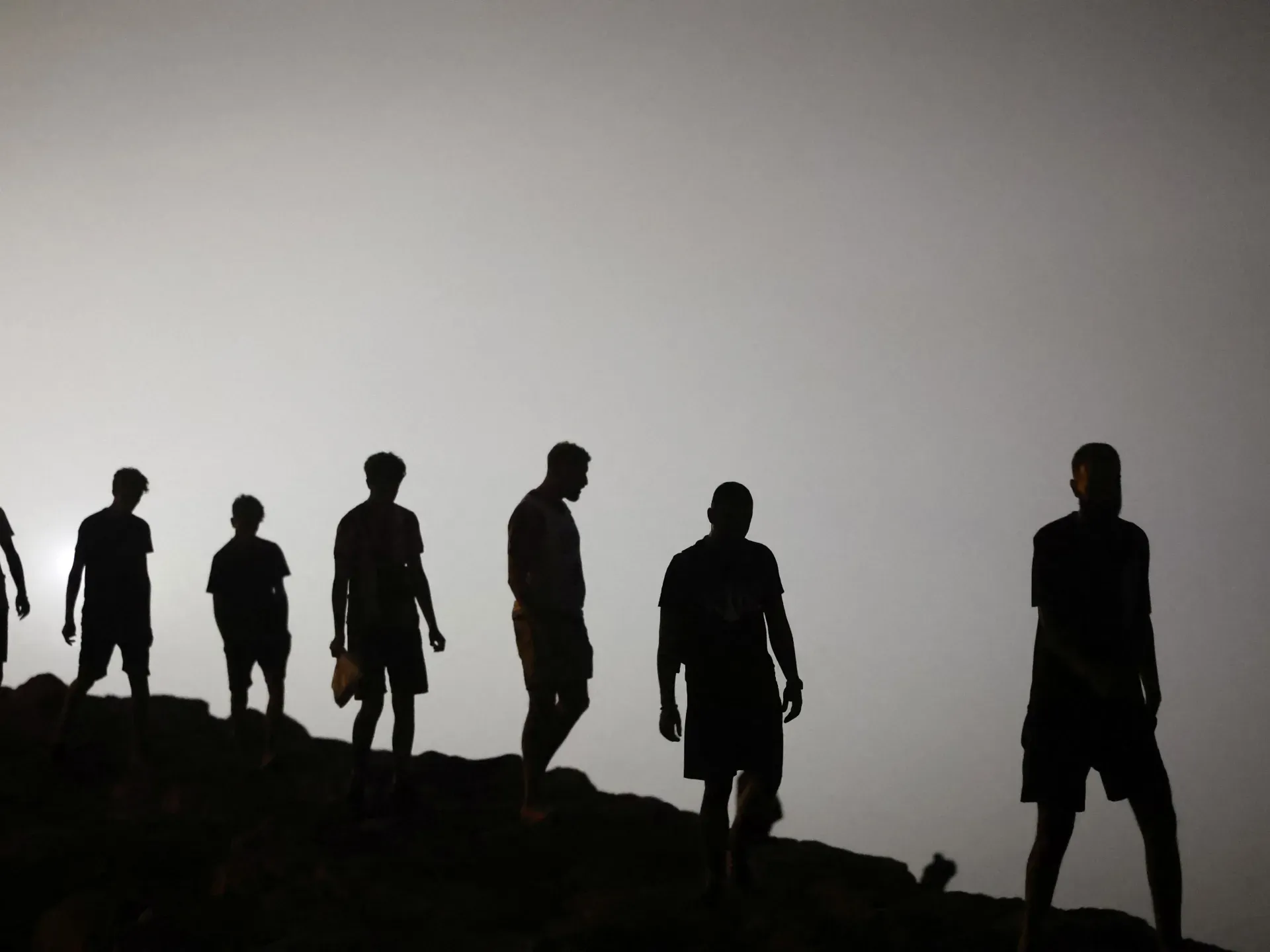

Recent viral videos and rumors regarding the opening of borders have prompted thousands of Moroccans dreaming of migration to head towards Ceuta, a Spanish enclave. However, many of these hopeful individuals returned home after a few days, sharing experiences that starkly contrasted with their expectations.
On the road leading out of Fnideq, young men were seen walking away from the border, while others waited for rides back to their hometowns. Just days earlier, this very route had been flooded with thousands of people rushing towards Ceuta, convinced that a rare opportunity had opened for them to enter Europe. Yet, those returning carried tales of hunger, exhaustion, and disappointment, revealing that the dream fueled by social media clips ended for many in a closed city with no access to the Spanish mainland.
Among those who made the trip was 23-year-old Mohammed Nias, a fruit vendor from Tangier. He hastily left his job upon hearing that the border with Ceuta had opened, marking his second attempt in five years to reach Spain in search of a better life. Accompanied by a friend, Nias crossed into Ceuta, but the reality he encountered was far from the images circulating on mobile phones. He reported spending two days without food and having to sleep in a forest, while some locals allegedly mistreated and chased him away. Upon returning to Morocco, Nias no longer spoke of his dream to reach Europe; instead, he cautioned others against repeating his experience.
Mohammed wasn't alone in making this impulsive decision influenced by online visuals. Ibrahim, a baker from Fes, also left his job, believing the journey would lead to new opportunities. However, he spent three days in Ceuta with nothing but water to sustain him. When hunger compelled him to seek even the simplest meal, he was shocked by the exorbitant prices, questioning how a tuna sandwich could cost 100 Moroccan dirhams (approximately $10.75).
Many migrants found that the issue was not merely entering Ceuta but realizing the impossibility of continuing to other Spanish cities. The area is bordered by both sea and land, with security forces heavily patrolling the routes leading to migrant reception facilities. Returnees described wet clothing, searching for water and food, and sleeping in open spaces. A worker at the Tangier-Med Port described Ceuta as "feeling like a prison, with nothing to do and everything closed."
Numerous returnees accused some residents of the El Príncipe neighborhood of attacking or expelling them. Moroccan Yassine Isho recounted his experience of being beaten and thrown out of the area, stating, "They imposed a blockade to force us to leave Ceuta ourselves... and they succeeded in their plan," referring to the widespread closure of shops.
In stark contrast to the narratives of returnees, local residents and shop owners in Ceuta offered a different perspective. The sudden influx of large numbers raised security concerns, prompting the local business union to call on commercial establishments to close until "safety can be assured." As calm began to return to Ceuta, some cafes reopened, while other shops remained shut, with owners expressing a desire to resume normal life but prioritizing the safety of their employees and customers.
Some locals noted that the scene not only instilled fear but also revealed the precarious conditions of the youth who rushed toward the border. A shopkeeper mentioned that the unexpected arrival of so many people frightened residents, but also sparked a degree of empathy among them.
On a different note, not all those crossing the border were unemployed. Saadi Trebak, a 38-year-old craftsman and father from Tangier, initially traveled to Fnideq with his children upon hearing rumors about the border opening. Upon realizing that people were crossing, he sent his children home and returned alone. Hoping that work in Spain would provide a better future for his children, Trebak returned only to find chaos, where securing food or using familiar payment methods proved challenging.
Among the migrants were minors, some of whom believed their age would protect them from being sent back. Sixteen-year-old Ayoub Al-Abed thought Spain offered an escape from unemployment and a chance for greater freedom, only to have his journey end with a return to Morocco.
As buses continued to transport returnees back to their towns and villages, the streets of Fnideq began to regain their tranquility. However, the crisis left its mark elsewhere; a hotel manager near the border reported that several workers had left their jobs during the peak of the migrant flow and had not returned, forcing management to seek replacements. While some migrants clung to the idea of staying in Ceuta, many made the decision to return home. Abdel Wahid Fattashi, who came from Morocco's capital, Rabat, summarized his experience by stating that the dream he initially pursued had faded away.
As reported by aljazeera.net.
