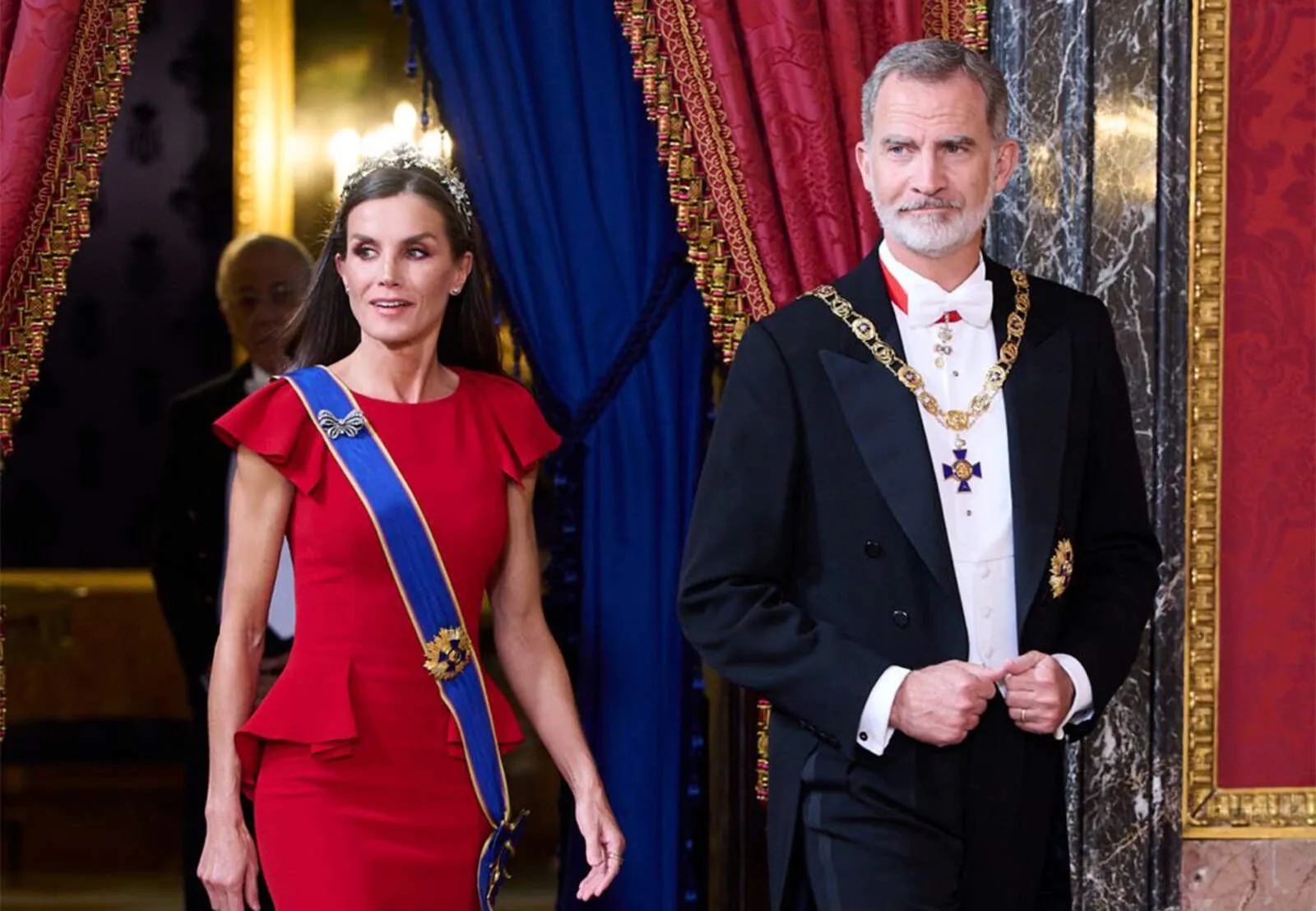

King Felipe VI and Queen Letizia's Upcoming Visit to Ceuta and Melilla
The announcement of the first official visit by King Felipe VI and Queen Letizia to the autonomous cities of Ceuta and Melilla, scheduled for October 13 and 14, has sparked considerable debate regarding its international ramifications. This historic trip comes nearly twenty years after King Juan Carlos I's visit, which at the time led to a significant diplomatic crisis with Morocco, as noted by the EFE News Agency.
It is essential to remember that this institutional agenda follows the arrival of 80,000 migrants in Ceuta on July 30 and 31, amidst a crisis that remains unresolved. Initially, the Spanish Government had not included this visit in the royal agenda, which adds an additional layer of complexity to the situation.
On Thursday, it was confirmed that the Spanish royal couple would visit Ceuta and Melilla, a decision made public by sources from the Royal Household. Following this confirmation, various international relations experts have expressed that the monarchy's presence in these autonomous cities is likely to heighten tensions in the bilateral relationship between Spain and Morocco.
Implications for Spanish-Moroccan Relations
From an analytical standpoint, it is assumed that Moroccan authorities will perceive this visit as a reaffirmation of Spain's sovereignty over these territories. Pablo Sapag, a professor at Complutense University and an expert on Africa and the Arab world, warns that this visit will hardly be understood in Morocco as a mere internal gesture of support following the Ceuta crisis.
Given that there is almost unanimous agreement in Morocco regarding territorial claims over Ceuta and Melilla, Sapag suggests that the royal presence could be manipulated as a direct assertion of Spanish identity in these areas. Conversely, some analyses emphasize the need to normalize the royal agenda across the national territory. Juan Luis Manfredi, a professor of International Studies and researcher at the University of Castilla-La Mancha, argues that this trip should be seen as a step towards normalizing the monarch's activities.
Manfredi posits that more frequent visits to Ceuta and Melilla would help make the royal presence in Spanish territory feel more natural. However, the professor also highlights that the visit conveys a deliberate message of foreign policy, projecting Spain's control and involvement in the strategic matters of the Strait of Gibraltar.
Concerns have been raised regarding Morocco's reaction post-visit, with some speculating about potential unrest or further incursions. There are fears that this visit could be a political trap orchestrated by Prime Minister Pedro Sánchez in collusion with the Moroccan government, creating a scenario that could lead to protests or even invasion. While welcoming the royal visit, there is a call for heightened military and security presence along the perimeter and border, alongside vigilant intelligence services.
Despite skepticism surrounding the motivations behind the visit, it is vital to recognize that Ceuta and Melilla are Spanish territories, and the king's visit is generally viewed positively by residents. Affirming that Ceuta has always been, and will continue to be, a part of Spain emphasizes the necessity for proper protection as an EU border.
As reported by elfarodeceuta.es.